Few bike companies blend innovation, racing heritage, and everyday usability as seamlessly as Specialized. Since 1974, the Morgan Hill–based brand has shaped multiple categories—road, gravel, XC, trail, enduro, e-MTB, and commuter—through a relentless engineering mindset. Specialized doesn’t just update bikes; it builds around specific performance goals, tuning every detail until the ride feels dialed.
By 2026, Specialized stands as one of the most influential premium brands in cycling. The catalog is massive, the technology stack is deep, and the ride feel across categories remains strikingly consistent: fast, intuitive, and meticulously refined.
Brand Overview
| Category | Details |
|---|---|
| Founded | 1974 |
| HQ | Morgan Hill, California, USA |
| Key Categories | Road, Gravel, XC, Trail, Enduro, DH, E-MTB, Urban, Commuter, Components |
| Flagship Models | Tarmac SL8, Aethos, Roubaix, Diverge, Crux, Stumpjumper, Stumpjumper EVO, Epic, Epic EVO, Turbo Levo, Turbo Kenevo, Turbo Vado, Turbo Como |
| Market Position | High-end performance brand with a deep engineering culture |
Specialized operates at the premium end of the market, with bikes designed around speed, efficiency, and precise handling. It’s a brand heavily shaped by racing, but with technology that translates cleanly to everyday riding.
Heritage & Brand Evolution
Specialized started as a component importer before moving into its own frame and product development. The early catalog leaned on road and touring, but the real turning point arrived in 1981 with the Stumpjumper, the first mass-produced mountain bike. That moment helped define MTB as a mainstream sport.
Since then, Specialized has expanded into biomechanics research, carbon manufacturing, suspension design, and electric drive systems.
Notable Milestones
- 1981: Stumpjumper launches
- 1993: Body Geometry program begins, bringing medical research into bike fit
- 2002: Epic introduces inertia-valve suspension to XC racing
- 2010–2020: Turbo e-bikes become category leaders in refinement
- 2024: Tarmac SL8 emerges as a hyper-efficient all-round race platform
By 2026, Specialized is defined as much by its engineering labs as by its racing palmarès.
Design Philosophy
Specialized builds around three consistent pillars:
1. Rider-First Engineering
Frames receive size-specific layups, so a 5’4″ rider and a 6’3″ rider get the same handling personality. It’s one of Specialized’s biggest differentiators, especially in road and XC.
2. Body Geometry
Specialized backs its fit and ergonomics with pressure mapping, medical testing, and long-term studies. Saddles, grips, shoes, and cockpit shapes follow actual data—not trends.
3. Purpose-Built Performance
Specialized doesn’t lean on “one bike fits all.” Every model targets a narrow performance band. A Crux does not pretend to be a Diverge; a Stumpjumper EVO does not try to be a Stumpjumper.
This segmentation helps each platform feel intentional.
Technology & Engineering Insight
FACT Carbon & Frame Architecture
Specialized’s FACT carbon program focuses on:
- Targeted stiffness zones
- Consistent weight distribution
- Aerodynamic shaping where relevant
- Predictable ride feel across sizes (Rider-First layups)
On the road side, the tube shaping on the Tarmac SL8 and Aethos shows how different objectives—speed vs. purity—lead to very different carbon maps.
Suspension Systems
FSR Four-Bar
Used across much of Specialized’s MTB line, FSR keeps the suspension active under braking and separates pedaling forces from shock motion. The feel is predictable and supportive.
Future Shock
Used on the Diverge and Roubaix, this system places suspension above the head tube, improving vertical compliance while keeping handling sharp.
SWAT
Integrated storage compartments tucked into the downtube on many MTB and gravel models. It’s practical and keeps weight centered.
Turbo E-Bike Systems
Specialized develops its own motors and controllers rather than outsourcing entirely. Key elements:
- Quiet, natural power delivery
- Broad tuning through the MasterMind TCU
- Deep integration with geometry and chassis design
The Turbo Levo and Kenevo lines demonstrate how well power, suspension, and handling can be balanced when one company designs the whole system.
Sustainability Efforts
- Packaging reduction
- Recyclable materials where applicable
- Longer product cycles
- Expanded repair and warranty channels
Not marketing fluff—these initiatives are baked into manufacturing.
Key Specialized Models (2026)
Tarmac SL8 — Road Racing
The flagship road race bike: aero efficiency without the harshness of many race frames.
Where it shines: racing, fast group rides, big climbs.
Aethos — Lightweight Purist Road
Ultra-light, minimal, and designed for pure ride feel rather than aero gains.
Where it shines: responsive climbing, long mixed-pace rides, classic road feel.
Roubaix — Endurance Road
Comfort-oriented with generous tire clearance and Future Shock compliance. Feels fast without beating the rider up.
Where it shines: long-distance road, rough pavement, all-day events.
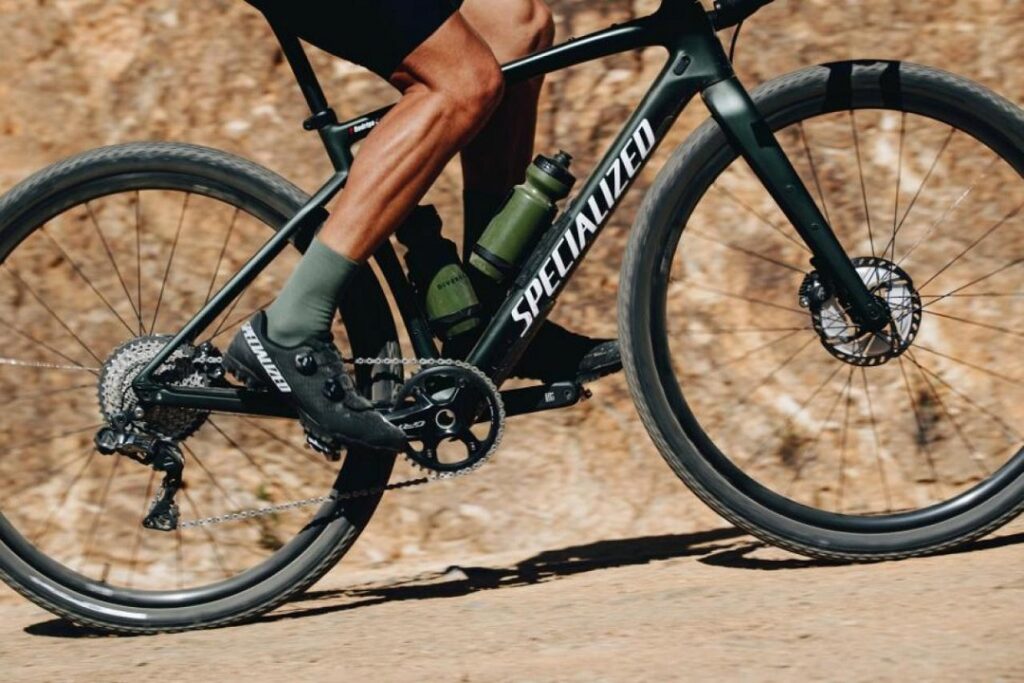
Diverge — Gravel All-Rounder
A do-everything gravel platform with SWAT storage and Future Shock. Stable, comfortable, and adaptable.
Where it shines: mixed terrain, big adventure miles, fast gravel.
Crux — Lightweight Gravel / CX
Race-tuned, ultralight, and incredibly responsive.
Where it shines: gravel racing, cyclocross, aggressive riding.
Stumpjumper — Trail Benchmark
A balanced trail bike known for its climbing efficiency and lively feel.
Where it shines: all-purpose singletrack, riders who want one MTB to cover most terrain.
Stumpjumper EVO — Aggressive Trail
More travel, more adjustability, and a chassis tuned for bigger terrain.
Where it shines: steep lines, modern enduro-light riding, technical descents.
Epic / Epic EVO — XC Podium Machines
The Epic remains a race-ready XC platform with sharp handling and efficient pedaling.
Where it shines: fast XC courses, endurance events, riders chasing speed.
Turbo Levo — E-MTB Flagship
One of the most refined e-MTBs available, combining custom Turbo motors, adjustable geometry, and a balanced chassis.
Where it shines: advanced trail riding, long days with heavy elevation.
Turbo Vado / Turbo Como — Commuters
Refined urban e-bikes with smooth power, integrated lights, and daily-use durability.
Where they shine: commuting, fitness rides, car-replacement setups.
Ride Impressions & Real-World Behavior
Across categories, Specialized bikes tend to share distinct behavior traits:
Handling
Precise without being twitchy. Sharp turn-in for road bikes; composed steering on the MTB side.
Acceleration
Efficient pedaling platforms and dialed stiffness zones give the bikes a lively, responsive feel.
Suspension Feel
MTB models lean toward a supportive mid-stroke and predictable tracking—easy to trust on technical features.
Compliance
Between Rider-First layups, Future Shock, and purposeful carbon tuning, comfort is part of the performance recipe rather than an afterthought.
E-Bike Behavior
Turbo motors are smooth to the point of feeling nearly invisible, with smart ramps and excellent traction management.
The ride personality is consistent: refined, intuitive, and engineered to feel fast.
Who Specialized Suits Best
| Rider Type | Why It Works |
|---|---|
| Racers | Geometry, stiffness, and aero shaping tuned for speed |
| Performance Enthusiasts | Precise handling and advanced carbon platforms |
| Trail Riders | Balanced suspension and modern geometry across Stumpjumper/EVO lines |
| Gravel Riders | Diverge and Crux offer both comfort and race capability |
| Commuters | Turbo Vado/Como deliver polished daily performance |
| E-MTB Riders | Levo/Kenevo feel natural, tunable, and capable on real terrain |
Specialized appeals to riders who value engineering quality and refined ride feel more than bargain-focused component lists.
Strengths & Tradeoffs
Where Specialized Excels
- Industry-leading carbon engineering
- Highly refined suspension systems
- Polished e-bike platforms
- Strong global dealer network
- Excellent ergonomics and fit from Body Geometry research
- Consistent, predictable ride feel across categories
Where It Shows Limits
- High pricing, especially on top-end builds
- Fewer true entry-level options
- Some model overlap (Stumpjumper vs. EVO, Diverge vs. Crux)
- Value-focused riders may find better on-paper component specs elsewhere
How Specialized Compares
| Brand | Focus | Advantage | Drawback |
|---|---|---|---|
| Specialized | Performance & engineering | World-class tech & refinement | Pricey across the lineup |
| Trek | Broad accessibility | Massive dealer support, versatile | Conservative designs |
| Giant | Value + performance | Great price-to-spec ratios | Less boutique appeal |
| Canyon | Direct-to-consumer | Exceptional value | Limited in-person support |
| Santa Cruz | Premium MTB focus | Superb suspension feel | Very expensive |
Specialized is the “innovation-first” option: not the cheapest, not always the trendiest, but extremely well developed.
Pricing & Value
| Category | Price Range | Notes |
|---|---|---|
| Entry-Level | $1,000–$2,500 | Mostly alloy bikes; still performance-leaning |
| Mid-Range | $2,500–$5,000 | Strong balance of tech and value |
| High-End | $6,000–$14,000+ | Race-tier carbon; e-MTBs and S-Works builds |
Specialized pricing reflects heavy R&D investment and deep engineering—every platform has a clear purpose and refinement level.
Final Thoughts on Specialized
Specialized continues to push performance cycling forward. The bikes feel crisp, predictable, and highly engineered. From road racing to gravel exploration, XC speed to trail play, and premium e-bikes that feel impressively natural, Specialized offers platforms that reward skilled riders while staying accessible enough for committed enthusiasts.
If you want a bike that blends top-tier engineering with refined on-trail or on-road behavior—and don’t mind paying for that polish—Specialized remains one of the strongest, most complete premium brands in 2026.
FAQ
Are Specialized bikes worth the price?
Yes—riders seeking performance, refined design, and strong dealer support typically find good long-term value.
Are Specialized bikes good for beginners?
Yes. Entry-level models like the Sirrus, Rockhopper, and base Diverge builds are beginner-friendly.
Are Specialized e-bikes reliable?
Specialized e-bikes are considered some of the most refined and reliable, thanks to their tuned motors and robust diagnostics.
Is Specialized good for mountain biking?
Very much so. The Stumpjumper, Epic, and Levo lines are industry benchmarks.
How does Specialized compare to Trek or Giant?
Specialized leans more premium and innovation-focused, while Trek and Giant emphasize broader range and value.
Related Content:
- Trek Bikes Review
- Giant Bicycles Review
- Norco Bikes Review
- Best Gravel Bikes Guide
- Best E-Bike Brands Guide
Why Trust This Review?
BestBikeBrands is built by lifelong cyclists with decades of real-world experience — in the shop, on the trail, and behind the wrench. Our goal is simple: to help riders choose the best bikes and gear with confidence, backed by expert insights and hands-on testing. Learn more about us →