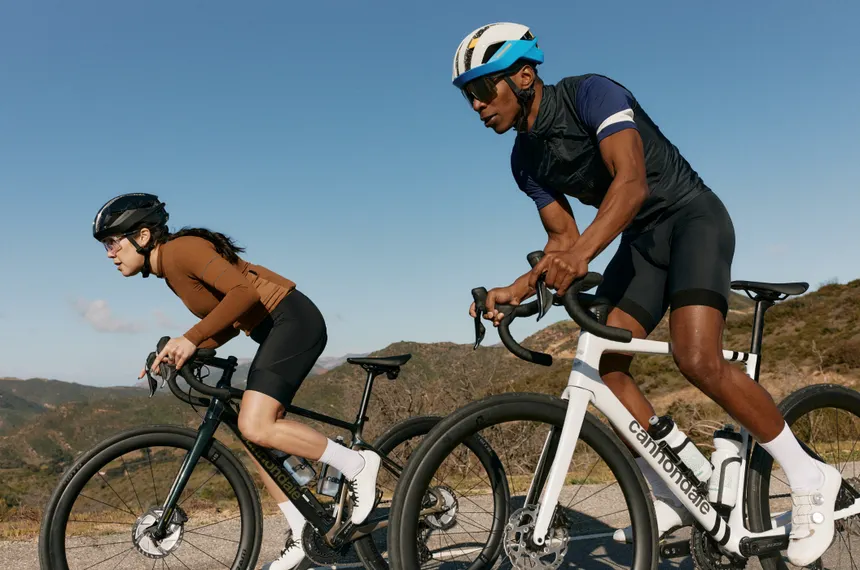
Cannondale has built a reputation as the brand that’s never afraid to try something different. From oversized aluminum in the ’80s to the still-iconic Lefty fork, from race-ready SuperSix EVO road bikes to the gravel-focused Topstone and practical Tesoro Neo commuters, Cannondale has spent decades treating engineering as its calling card rather than a marketing angle.
What makes Cannondale interesting in 2026 is how broad the range has become. You still get the wild ideas and performance platforms, but you also get approachable hybrids, urban e-bikes, and fitness bikes that feel easy to live with. It’s one of the few brands that can genuinely serve both racers and everyday riders without losing its identity.
Brand Overview
Core Facts
- Founded: 1971
- Headquarters: Wilton, Connecticut, USA
- Core Categories: Road, Gravel, XC, Trail, Enduro, Urban, Fitness, E-Bikes, Kids
- Key Models: SuperSix EVO, Synapse, Topstone, CAAD, Habit, Scalpel, Moterra, Tesoro Neo X, Quick
- Positioning: Innovation-forward, performance-focused, but accessible across a wide range of budgets
Cannondale sits in a sweet spot: more experimental than Trek and Giant, more widely available and versatile than many boutique labels. The result is a lineup that feels distinctly “Cannondale” without being limited to just racing or just mountain bikes.
History & Legacy
From Outdoor Gear to Aluminum Pioneers
Cannondale originally produced camping gear, bags, and trailers before ever touching frame tubes. When the brand did enter the bicycle world in the early 1980s, it did so by challenging the status quo: oversized aluminum frames at a time when steel ruled high-performance bikes.
Those early frames felt different—stiffer, lighter, and more immediate. That willingness to push materials helped define Cannondale’s personality for the next four decades.
Key Milestones
- 1980s: Aluminum road and MTB frames reset expectations around stiffness and weight
- 1990s: CAAD series (Cannondale Advanced Aluminum Design) becomes a benchmark for alloy race bikes
- 2000s: Lefty fork and distinctive frame designs cement Cannondale’s reputation as a true engineering shop
- 2010s: Major advances in carbon layups and integration, plus early adoption of modern gravel and endurance platforms
- 2020–2026: Expansion in gravel, e-bikes, urban, and fitness segments; continued refinement of SuperSix EVO and Topstone
That history of experimentation—sometimes polarizing, often ahead of its time—is what still shapes Cannondale’s engineering-first image today.
Design Philosophy
Cannondale’s approach to product design is built around three clear themes.
1. Innovation With a Job to Do
Cannondale experiments a lot, but the goal is always performance, not novelty. Examples:
- CAAD series: Decades of alloy refinement, still a go-to for riders who want race-level feel without carbon.
- Lefty fork: A single-sided fork that delivered stiffness and weight savings while turning heads.
- Asymmetrical rear triangles and BB areas: Stiffness and power transfer first, styling second.
The brand’s best ideas tend to stick around because they make bikes ride better, not just look unique.
2. Performance That Stays Accessible
Despite the race pedigree, many Cannondale bikes are built to be friendly:
- Stable front ends
- Endurance-oriented geometries on Synapse and many hybrids
- Mounts for racks, fenders, and bottles where they actually help
- Multiple spec tiers so the same frame can serve entry to expert levels
That accessibility means you don’t have to be a racer or tech nerd to enjoy the bikes.
3. Smooth, Predictable Ride Feel
Across categories, Cannondale typically aims for:
- Lightweight frames that respond quickly when you accelerate
- Composed, intuitive handling—especially for intermediate riders
- Clear feedback from the road or trail without feeling harsh
They’re not trying to build the wildest geometry in the room; they’re trying to build bikes that feel “right” when you roll into a corner or stand up to sprint.
Technology & Innovation
Aluminum Heritage: The CAAD Story
The CAAD line is one of the most respected aluminum platforms in cycling.
CAAD trademarks:
- Stiff under power, but not bone-rattling
- Impressive frame weights for alloy
- Geometry that’s genuinely race-capable
- A long history of being the “smart money” race bike
Even in 2026, CAAD remains a benchmark for riders who want sharp performance without carbon prices or complexity.
Carbon Development: SuperSix and Beyond
Cannondale’s carbon work focuses on:
- Targeted stiffness zones around the BB, head tube, and chainstays
- Controlled compliance at the seat tube and seatpost
- Aero tube profiles that don’t ruin overall ride quality
The SuperSix EVO is the clearest expression of this: a bike that’s light, aero, and composed without feeling like a compromise in any one direction.
Suspension Platforms
While the Lefty fork no longer dominates the lineup, Cannondale’s mountain bikes still carry a lot of thoughtful engineering.
Scalpel (XC Race)
- Flex-pivot design that saves weight
- Efficient under pedaling, especially in long race efforts
- Snappy steering for tight, technical XC courses
Habit (Trail)
- All-round trail kinematics tuned for both fun and efficiency
- Modern geometry that doesn’t demand elite skills to enjoy
- A great “daily driver” MTB for riders who like variety in their trails
Jekyll (Enduro – where offered)
- High-pivot layout on recent versions
- Improved rear-wheel path for traction on steep, rough terrain
- Stable at speed while remaining manageable in tighter sections
Kingpin Suspension (Topstone Carbon)
Kingpin is one of Cannondale’s most clever ideas in the gravel world.
- A pivot at the seat tube/top tube junction
- Flex engineered into the stays and seat tube
- Up to ~30 mm of rear compliance without shock hardware
It gives Topstone Carbon models a calmer, more controlled ride over washboard, rough gravel, and broken pavement while keeping weights in check.
OutFront Steering Geometry
Cannondale’s OutFront concept uses longer fork offset combined with specific head angles to keep steering stable at speed but manageable at low speeds and in technical sections. You see versions of this idea across gravel, XC, and trail platforms.
E-Bike Systems
Cannondale’s e-bikes rely heavily on Bosch and Mahle systems:
- Bosch: Full-power, high-torque setups for platforms like Moterra and Tesoro Neo X
- Mahle: Lightweight systems for sleeker road and gravel builds
That choice keeps service, diagnostics, and long-term support straightforward for riders and dealers.
Popular Cannondale Platforms (2026)
SuperSix EVO – Road Race
A race bike that balances aero, stiffness, and weight with impressive composure.
Ideal for:
- Road racing and crits
- Fast group rides
- Riders who want a single road bike that can do it all at high speed
Synapse – Endurance Road
More relaxed than SuperSix, but still efficient and responsive.
Ideal for:
- Long endurance rides and mixed surfaces
- Fitness riders who want comfort without feeling slow
- All-day road exploration with room for bigger tires and mounts
Topstone – Gravel & Adventure
Topstone, especially in Kingpin-equipped carbon trims, has become one of the defining gravel platforms.
Ideal for:
- Gravel races and events
- Bikepacking and backroads exploration
- Riders who want genuine comfort and control on rough surfaces
CAAD Series – Performance Aluminum Road
Still one of the best arguments for high-end alloy.
Ideal for:
- Budding racers who want a race-capable bike on a sane budget
- Riders who prefer metal frames but want modern performance
- Training bikes that don’t feel like a downgrade
Habit – Trail MTB
A balanced, versatile trail bike suitable for a wide range of terrain.
Ideal for:
- General trail riding
- Riders progressing from beginner to advanced singletrack
- Those who want a “do-most-things-well” MTB
Scalpel – XC Race MTB
Sharpened for speed, built around weight and efficiency.
Ideal for:
- XC and marathon racing
- Fast, technical cross-country loops
- Riders who prioritize pedaling response above big-hit capability
Moterra – Full-Power E-MTB
A robust Bosch-powered e-MTB platform.
Ideal for:
- Aggressive trail and enduro-style e-riding
- Big vert days with repeated climbs and descents
- Riders who want a capable assisted MTB that still feels like a “real bike”
Tesoro Neo X – Adventure E-Commuter
A fully equipped, go-anywhere e-commuter.
Ideal for:
- Daily commuting with cargo and rougher routes
- Mixed-use riders who want touring, trekking, and city function
- Riders replacing car trips with a serious e-bike
Quick Series – Fitness & Hybrid
Lightweight, efficient, and approachable bikes for fitness and city use.
Ideal for:
- New riders and returning cyclists
- Fitness rides, bike paths, and short commutes
- Riders who want road-like efficiency with a more upright fit
Performance & Ride Character
On the Road
- SuperSix EVO / CAAD: Sharp, responsive, and stable at speed
- Synapse: Calmer, more forgiving, but still efficient when you push
On Gravel
- Topstone: Confident front end, excellent comfort from Kingpin on carbon models, and a balance of stability and agility that suits varied terrain.
On the Trail
- Habit / Scalpel / Moterra:
- Predictable handling that doesn’t punish mistakes
- Good balance between traction and pop
- Geometry that feels modern but not extreme
Across the board, Cannondale bikes tend to communicate what the surface is doing without beating up the rider. That combination is especially noticeable for intermediate riders who benefit from feedback but don’t want a harsh ride.
Who Cannondale Suits Best
Road & Endurance Riders
- SuperSix EVO and CAAD for performance and racing
- Synapse for comfort-heavy road and endurance efforts
Gravel Riders
- Topstone is one of the strongest all-round gravel platforms available, particularly for riders who appreciate comfort and long-distance stability.
Trail & XC Riders
- Habit for all-purpose trail riding
- Scalpel for riders who care most about speed and efficiency
E-Bike Riders
- Moterra, Tesoro Neo X, and Topstone Neo cover aggressive trail, adventure commuting, and gravel-adjacent e-riding.
Fitness & Urban Riders
- Quick and Cannondale’s city/fitness range work well for daily rides, errands, and entry-level fitness without intimidation.
Strengths & Weaknesses
Strengths
- Strong identity rooted in engineering and innovation
- Excellent road and gravel platforms, especially SuperSix EVO, CAAD, and Topstone
- Aluminum heritage that still matters in 2026
- Broad accessibility via fitness, hybrid, and commuter lines
- Predictable, rider-friendly geometry
- Robust e-bike range using Bosch and Mahle systems
- Solid value in the mid-range, where many riders actually buy
Weaknesses
- Top-end pricing can climb quickly, especially on flagship models
- MTB lineup doesn’t have the cult following of brands like Santa Cruz or Yeti
- Not as customizable as brands with in-depth paint/build configurators
- Some models feel visually less distinctive than older “wild Cannondale” eras
Where Cannondale Sits Among Competitors
Compared to Other Full-Line Brands
- Trek: More conservative design language, enormous dealer reach; Cannondale feels more experimentally engineered.
- Specialized: Very high-end, innovation-heavy; Cannondale often comes in slightly cheaper but with comparable performance on certain models.
- Giant: Exceptional value and scale; Cannondale offers a bit more distinctive engineering personality.
- Canyon: Incredible value via DTC; Cannondale counters with in-person dealer support and easier service.
- Orbea: Highly customizable and boutique-feeling; Cannondale is more widely stocked and easier to find globally.
In short, Cannondale is a top-tier choice for riders who want a recognizable brand, real engineering depth, and a broad range of options without committing to either ultra-boutique or ultra-mainstream.
Pricing & Value
Typical Ranges
- Entry-Level: ~$700–$1,500
- Fitness bikes, hybrids, basic alloy road and MTB
- Mid-Range: ~$1,600–$4,500
- CAAD, Synapse, alloy Topstone, mid-tier Habit and Scalpel builds
- High-End: $5,000–$12,000+
- SuperSix EVO, Topstone Carbon, premium MTBs and race builds
- E-Bikes: ~$2,500–$9,000+
- Tesoro Neo X, Moterra, Topstone Neo, city and trekking models
The sweet spot for Cannondale is mid-range: frames and geometry from the same engineering teams behind the flagship bikes, but at prices that make sense for committed enthusiasts.
Final Thoughts on Cannondale
Cannondale has spent decades proving that big brands don’t have to play it safe. The company’s history is filled with bold ideas, and that spirit still shows up in the modern range—whether it’s Kingpin gravel suspension, refined CAAD alloy frames, or e-bikes that feel genuinely sorted.
What sets Cannondale apart in 2026 is how complete the lineup feels. You can start on a Quick or a Tesoro Neo for commuting, move into a Topstone or Synapse for long-distance rides, and end up racing on a SuperSix EVO or Scalpel—all without leaving the brand. The ride character stays consistent: smooth, predictable, and designed to help riders progress.
For anyone who wants a bike shaped by real engineering, not just branding—and who appreciates a range that covers performance, practicality, and everyday use—Cannondale remains a very strong choice.
FAQ
Are Cannondale bikes good quality?
Yes. Cannondale is known for strong engineering, reliable components, and consistent frame quality across price points.
Is Cannondale good for beginners?
Absolutely. The Quick, Synapse, and CAAD lines offer accessible handling and great value.
Are Cannondale road bikes competitive?
Yes. The SuperSix EVO is one of the most balanced and competitive race bikes available.
Is Cannondale a good gravel brand?
Very much so. The Topstone is one of the top gravel platforms on the market, especially with Kingpin suspension.
Are Cannondale e-bikes reliable?
Yes. Cannondale primarily uses Bosch and Mahle systems, both known for strong reliability and range.
How does Cannondale compare to Trek or Specialized?
Cannondale leans more experimental and innovative, while Trek emphasizes stability and Specialized emphasizes cutting-edge premium design.
Related Content:
- Specialized Bikes Review
- Best E-Bike Brands Guide
- Best Bike Chain Lube
- Best Gravel Bikes Guide
- Marin Bikes Review
Why Trust This Review?
BestBikeBrands is built by lifelong cyclists with decades of real-world experience — in the shop, on the trail, and behind the wrench. Our goal is simple: to help riders choose the best bikes and gear with confidence, backed by expert insights and hands-on testing. Learn more about us →