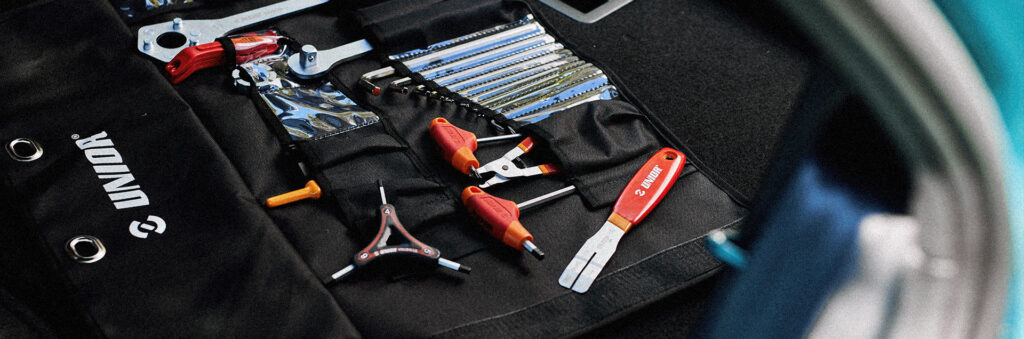
Unior has a way of earning trust the slow, old-fashioned way: you use the tool, it fits the way it should, it doesn’t slip, it doesn’t flex, and six months later it still feels the same. No drama, no weird tolerances, no “good enough.” Just a tool that behaves like it was made by people who expect it to be used all day, every day.
That’s the lane Unior lives in. Not “Instagram tool jewelry.” Not bargain-bin stuff you replace every season. Real workshop gear—built to take abuse, built to stay accurate, built to keep your hands from hating you at the end of a long day.
In 2026, that matters more than it used to. Bikes have never been more capable, but they’ve also never been more specific. Press-fit standards, one-piece cockpits, internal routing, wide-range drivetrains, hydraulic everything, delicate finishes, expensive fasteners… the margin for “close enough” is smaller. Riders are wrenching at home more often, and shops are expected to turn work around faster. Tools are either part of the solution—or part of the problem.
Unior is firmly in the solution category.
Brand Snapshot
- Founded: 1919
- Based in: Zreče, Slovenia
- What they’re known for: professional bicycle tools, shop systems, hand tools, torque tools, wheelbuilding tools, workstands, master kits
- Where you see them: race pits, WorldTour mechanics’ benches, independent shops, serious home workshops
Unior isn’t a cycling-only brand that popped up because bike tools became trendy. They’re a long-running industrial toolmaker that has been forging steel since before most of the modern bike industry even existed. The bicycle line is an extension of what they already do well: design, metallurgy, forging, and making tools that survive real use.
That heritage shows up in the feel. A Unior tool tends to feel dense and sure, like it was designed with repetition in mind.
A Short History (And Why It Matters)
Unior started as a forging company in Slovenia in the years after World War I. Over time it expanded into general industrial hand tools—wrenches, pliers, drivers, sockets—the stuff that lives in factories and repair shops. Long before cycling became a key category for them, they were already making tools for environments where failure isn’t just annoying, it’s expensive.
Their bicycle-specific line grew alongside modern service needs: more complex drivetrains, more delicate interfaces, and more standards that require dedicated tools. If you’ve been around a busy shop, you know the difference between tools built for occasional use and tools that can live on a bench eight hours a day. Unior’s bike tools feel like they came from that second world.
And because Unior is also used outside cycling, they’ve always had a pretty clear baseline: if the tool wouldn’t survive industrial use, it doesn’t belong in the catalog.
What Unior Gets Right (Without Making a Big Speech About It)
1) Fit that doesn’t make you nervous
The best tools disappear in your hand. You don’t think about them, because they engage properly and stay put.
Unior’s stuff—especially the tools that interface with expensive bike parts—tends to have that feeling. Lockring tools seat cleanly. Bottom bracket tools don’t wobble. Hex and Torx interfaces feel properly cut instead of “kinda shaped like it.”
That translates directly into fewer rounded bolts, fewer damaged lockrings, and fewer “why won’t this come off” moments.
2) Steel that doesn’t feel soft
This is the part people don’t talk about much, but every mechanic notices it. Some tools feel like they’re made from metal that wants to deform. Unior tools tend to feel harder, more resistant to twisting, more stable when you apply torque.
They use proven steel blends—chrome-vanadium, chrome-moly—made for longevity and load. It’s not glamorous, but it’s the difference between a tool that stays sharp and one that slowly turns into a rounded-off approximation of itself.
3) They think about hands, not just specs
Some brands build tools like display pieces. Unior builds tools like someone is going to use them with cold fingers, sweaty gloves, or greasy hands.
Handles are shaped to be held for long stretches. Grip materials are practical. Edges don’t bite. Profiles are designed so you can actually get leverage without smashing your knuckles.
You don’t really appreciate ergonomics until you’ve had a long day of stuck pedals, seized seatposts, and brake bleeds. That’s when tool comfort becomes more than a nice bonus.
4) Their ecosystem is real
A lot of brands sell individual tools and call it a “system.” Unior actually builds a workshop ecosystem: stands, storage, kits, trays, modular benches, portable race setups. It’s designed so a working mechanic can build a repeatable workflow.
That’s why you see Unior in race environments. Not because they’re the flashiest, but because they’re consistent and they think in systems.
The Unior Tool Categories That Matter Most
Unior makes a lot, and not all of it is equally relevant depending on who you are. Here’s where they really shine.
Shop Stands and Workshop Setup
If you’ve ever tried to do real service work with a cheap stand, you already know: a wobbly stand makes everything harder. It turns simple jobs into annoyances, and annoying jobs into full-on rage.
Unior’s stands are built like shop fixtures. Stable base, solid clamping, predictable movement. They’re not trying to be ultralight. They’re trying to keep a bike steady while you actually work on it.
For shops, this matters. For home mechanics, it’s one of those upgrades you don’t regret once you’ve done it.
Unior also offers full shop layouts—modular panels, drawers, boards—built around how mechanics move through tasks. If you’re setting up a real workshop, that ecosystem is one of their biggest strengths.
Master Tool Kits
Unior master kits are the kind of purchase that feels expensive right up until you use them every week for three years and realize you stopped replacing things.
The best ones aren’t just a pile of random tools. They’re thoughtful collections: the tools you actually reach for, organized in a way that makes sense. For mobile mechanics and race techs, those kits are a known quantity—open the case and you know what you’ve got.
If you’re a home mechanic who likes to work properly, a master kit is also a clean way to avoid the “I own five mediocre chain tools” phase of tool collecting.
Chain Tools and Drivetrain Service
This is one of the categories where Unior tends to win people over.
A good chain tool isn’t just about breaking chains. It’s about smooth threading, consistent pin alignment, and not feeling like you’re about to snap something when you apply force.
Unior’s better chain tools feel controlled and tight. Replaceable pins and serviceable parts mean they don’t become disposable when one wear item goes. And because drivetrain service is so common, this is where durability becomes real value.
Cassette and Bottom Bracket Tools
These are the tools that quietly prevent expensive mistakes.
A loose-fitting lockring tool can chew a lockring fast. A sloppy bottom bracket interface can slip and damage cups. A slightly off tolerances can turn a simple job into a headache.
Unior’s CNC-machined interfaces tend to be clean, accurate, and stable. It’s not sexy, but it means you’re less likely to damage parts during installation or removal.
If you work on a lot of modern bikes—especially ones with integrated or tight-clearance setups—this accuracy becomes a big deal.
Pliers, Wrenches, and “Everyday Hand Tools”
Unior’s industrial heritage shows up strongly here.
Pliers feel precise at the hinge and don’t loosen quickly. Wrenches feel like they were forged, not stamped. These aren’t category-defining “bike-specific” tools, but they’re the tools you use constantly: cable work, brake hardware, accessory installs, random adjustments.
For mechanics, those daily-use tools matter as much as the specialty stuff.
Wheelbuilding Tools
Unior makes solid wheelbuilding tools: nipple wrenches, spoke tools, truing-related gear. They’re built for repeatability—tools that don’t round nipples and don’t flex when you’re trying to make fine adjustments.
Wheelbuilding is one of those disciplines where tool quality shows up immediately. If you build or true wheels often, you’ll appreciate tools that don’t fight you.
What It’s Like to Use Unior Long Term
The best description is: they feel consistent.
Some tools feel great new and slowly get sloppy. Unior tools tend to keep their character. That’s the whole point. Their value isn’t just that they work today—it’s that they work the same way after thousands of uses.
You also notice fewer “near misses.” Less slipping. Less rounding. Less guessing. And because bike components are expensive, avoiding one stripped bolt can pay back the cost difference between good tools and mediocre tools.
Who Unior Makes the Most Sense For
Unior isn’t for every rider. It’s for people who actually use tools.
It’s a great fit if you are:
- a working mechanic in a shop
- a mobile mechanic building a reliable kit
- a serious home wrench who maintains multiple bikes
- someone who hates replacing tools
- a rider who’s tired of cheap tools damaging expensive parts
It’s probably not the best fit if you:
- only do basic adjustments twice a year
- want the lightest possible travel tools above all else
- care more about aesthetics than longevity
- prefer cheaper tools you don’t mind replacing
The Trade-Offs (Because Nothing’s Perfect)
They can feel heavy
Unior tools tend to have substance. That’s good in a shop, but if you’re building an ultralight travel kit, there are lighter options.
Some specialty tools aren’t cheap
The value is there, but the upfront price can sting—especially for niche interfaces you don’t use often.
Availability can vary
Depending on where you live, some Unior items are easier to find than others. In certain regions, you’ll see full catalogs; in others, only the most common tools.
They’re not chasing “boutique”
If you want tools that look like jewelry, there are brands that lean harder into that. Unior leans into function. That’s the appeal, but it’s worth stating clearly.
Unior Compared to the Other Big Names
Park Tool is everywhere, broad, accessible, and often the default. Some Park tools are excellent. Some are “fine.” Unior tends to be more consistently industrial-feeling.
Abbey is boutique, beautiful, extremely precise, and priced like it. Unior often lands closer to Abbey performance than you’d expect, without the same premium markup.
Pedro’s is friendly, ergonomic, and great for many home mechanics, but Unior generally holds up better under constant professional use.
Unior sits in a very practical sweet spot: serious tools, real durability, professional feel, without drifting into pure luxury pricing.
Final Thoughts
Unior is the brand you buy when you’re tired of tools being the weak link.
Their stuff doesn’t try to impress you with gimmicks. It earns its place by working cleanly, lasting a long time, and helping you do precise work without collateral damage. In a world where bike parts are more expensive and service standards are higher, that kind of reliability isn’t a luxury—it’s sanity.
If you want tools that feel right in the hand, hold tolerances, and keep doing their job year after year, Unior is one of the safest bets you can make.
And once you’ve built a small core set of Unior tools—the ones you grab every week—it’s hard to go back.
FAQ
Are Unior tools good for professional mechanics?
Yes. Unior tools are widely used by professional bike mechanics and race technicians thanks to their durability, precise tolerances, and consistent performance under daily workshop use.
Are Unior tools worth it for home mechanics?
Yes. While they’re priced above entry-level brands, Unior tools offer long-term value. For home mechanics who work on bikes regularly, the durability and precision easily justify the investment.
Do Unior tools have replaceable parts?
Many Unior tools do. Chain tool pins, some punch tips, and components on truing and wheel tools are replaceable, which extends tool life and reduces long-term cost.
How do Unior tools compare to Park Tool?
Unior typically offers tighter tolerances and more robust forging, making them especially appealing to professional users. Park Tool, on the other hand, has a broader catalog and more widespread retail availability.
Where are Unior tools made?
Most Unior bicycle tools are manufactured in Slovenia using European steel and in-house forging and machining.
Are Unior tools heavy?
Some Unior tools are slightly heavier than ultra-light or boutique alternatives, but the added mass contributes to durability and a solid, confidence-inspiring feel in the hand.
Who are Unior tools best suited for?
Unior tools are ideal for professional mechanics, serious home wrenchers, mobile mechanics, and anyone who values high-quality, long-lasting workshop equipment.
Related Content:
- Best Comfort Saddles
- Park Tool Brand Review
- Best Bike Accessory Brands
- Topeak Brand Review
- How To Lube A Bike Chain
Why Trust This Review?
BestBikeBrands is built by lifelong cyclists with decades of real-world experience — in the shop, on the trail, and behind the wrench. Our goal is simple: to help riders choose the best bikes and gear with confidence, backed by expert insights and hands-on testing. Learn more about us →