If you’ve been around bikes long enough, you’ve probably owned Topeak without even meaning to. A floor pump that never quits. A mini pump that doesn’t chew up valve stems. A multitool that actually fits the bolts it claims to fit. That’s the Topeak reputation in one sentence: gear that works, keeps working, and doesn’t make your ride harder than it needs to be.
Topeak isn’t a “lifestyle” accessory brand. It’s a problem-solving brand. The stuff feels drawn by someone who has stood on the side of the road in the rain, hands cold, trying to fix a flat with whatever they had in their pocket. Pumps, tools, racks, bags, fenders, repair stands — Topeak has lived in that unglamorous middle ground for decades, quietly making the little things better.
In 2026, the company is still doing what it’s always done: refining the staples, expanding the modular systems, and leaning into modern needs like tubeless repairs and e-bike load capacity — without losing the core feeling that Topeak products are built for real use, not shelf appeal.
This review walks through Topeak’s background, the design philosophy that shows up across their catalog, and the product families that make them such a default choice for commuters, tourers, and home mechanics.
Brand Overview
- Founded: 1991
- Headquarters: Taichung, Taiwan
- Core products: Pumps, tools, bags, racks, fenders, repair stands, storage
- Global reach: Sold broadly worldwide, with deep shop presence and strong parts availability
Topeak’s tagline-style mindset has always been pretty direct: “Prepare to ride.” Not in a motivational-poster way — in the practical sense of being the rider who’s ready for the flat, the loose bolt, the sudden rain, the grocery run, the multi-day trip that turns into a multi-week trip.
What’s consistent about Topeak is the way products feel in the hand. The plastics don’t feel brittle. The hinges don’t feel like they’ll snap. The threads don’t feel crunchy. Even when it’s not the lightest or the flashiest option, it tends to be the option that makes you relax a little because you know it’ll do its job.
The Topeak Design Personality
Topeak doesn’t chase “cool.” It chases useful. And it has a particular way of being useful: not just adding features, but making the feature actually pleasant to use.
Utility first
Topeak’s best products don’t require a learning curve. You can hand a JoeBlow to someone who hasn’t touched a pump in ten years and they’ll figure it out in 10 seconds.
Durability without making everything a brick
Some brands make “durable” by overbuilding until the item is heavy and awkward. Topeak usually threads a nicer needle: sturdy where it matters, simple where it can be, and rarely fragile.
Modularity as a long-term strategy
A lot of the Topeak catalog makes more sense when you realize it’s not random — it’s ecosystems:
- MTX / QuickTrack for racks and trunk bags
- Ninja for hidden on-bike tools
- RideCase for phone mounting
- Tubi for tubeless repair
If you buy into one system and like it, the next purchase usually slots right in.
Quiet refinement
Topeak is the kind of brand that will change a tool’s ergonomics or a pump head design and you won’t notice until you realize you’re not swearing at it anymore.
A Short History of Why Riders Trust Them
Topeak built its reputation the old-fashioned way: shops stocked it because it didn’t come back broken, and riders recommended it because it didn’t fail at the worst time.
A few moments that helped cement the brand:
- the Alien multitool era, when Topeak became “the multitool company” for a generation of riders
- the JoeBlow floor pumps, which basically became the default floor pump in countless garages and shop floors
- the rise of MTX/QuickTrack, which made commuter cargo feel less janky and more secure
- the later move into bikepacking bags, tubeless repair, and e-bike-capable racks, which kept the brand current without forcing a personality shift
Pumps: The Category Topeak Owns in People’s Minds
A lot of riders think “Topeak” and immediately picture a floor pump. Fair.
JoeBlow floor pumps
The JoeBlow lineup has become the definition of “buy it once, stop thinking about pumps.”
What makes them so universally liked:
- stable base that doesn’t skitter
- gauges that are actually readable
- handles that don’t feel flimsy
- pump action that stays smooth even after years of use
- heads that don’t make you fight the valve
Some models are geared toward tubeless riders (like the Booster style concept), and others are the classic “everyday pump that just works” models you see everywhere.
Who they suit: basically everyone — commuters, home mechanics, racers, families with multiple bikes.
Mini pumps
Topeak’s mini pumps tend to feel like someone actually tested them in ugly conditions.
Common Topeak mini-pump wins:
- integrated hose options that protect the valve stem (especially important on Presta)
- better hand feel than the tiny “finger shredder” pumps
- materials that don’t feel disposable
They’re rarely the absolute smallest, but they’re often the most usable.
Who they suit: commuters, touring riders, anyone who’s had a mini pump fail once and decided never again.
CO₂ inflators
Topeak’s inflators lean practical rather than precious: minimal parts, solid control, less drama. They’re popular because they’re predictable — and predictability is the whole point of CO₂.
Bags and Racks: Where Topeak Feels Like an Engineer’s Brand
A lot of racks and trunk bags on the market feel like compromises. Straps everywhere, bags that sway, mounts that rattle.
Topeak’s commuter gear became popular because it reduced all that nonsense.
MTX TrunkBags + QuickTrack
This system is the reason Topeak is such a default commuter recommendation.
The appeal is simple:
- bag slides on and locks in a defined way
- it doesn’t flop around like a strap-on bag
- it comes off quickly when you arrive
- many versions expand, some with fold-out pannier sections
- works especially well if you’re using Topeak racks designed for it
If you ride daily, that “click on / click off” convenience is not a small thing. It changes how often you actually use the bike.
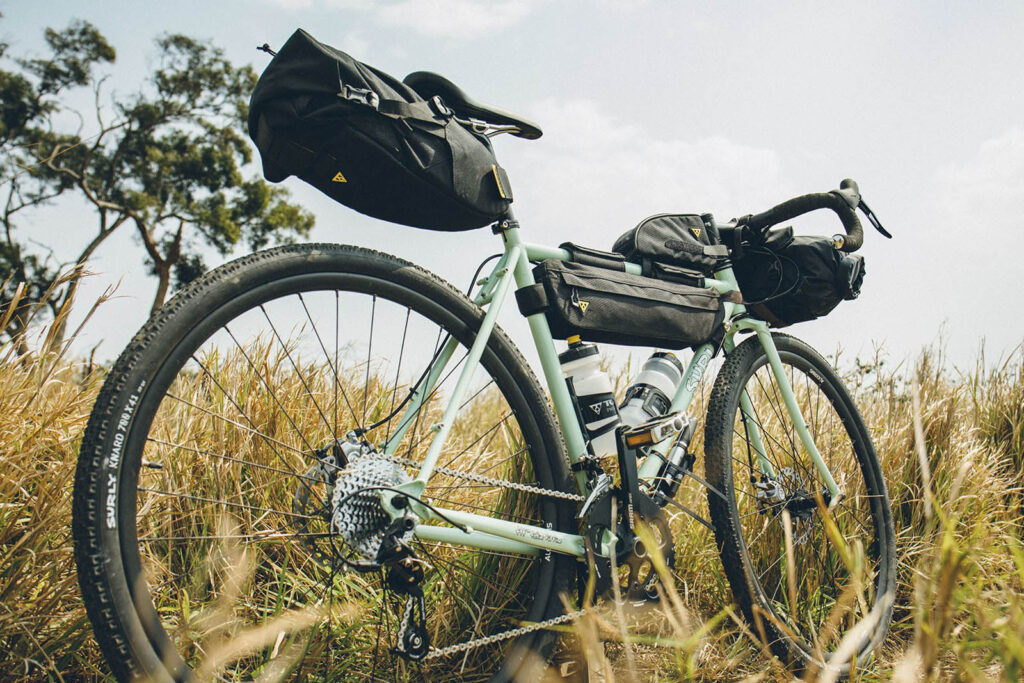
Bikepacking bags (BackLoader / FrontLoader style)
Topeak entered bikepacking later than some brands, but the bags tend to follow the same Topeak logic: secure mounting, durable materials, and little details that prevent annoying problems (like packing air out, or keeping straps from slipping).
They’re built for riders who want gear that survives rough routes without needing babying.
E-bike-ready racks
E-bikes changed rack expectations. Loads are heavier, frames are bulkier, sometimes battery placement complicates fit.
Topeak’s e-touring rack direction is basically an answer to that: higher load capacity, better clearance, and commuter practicality for bikes that already weigh a lot.
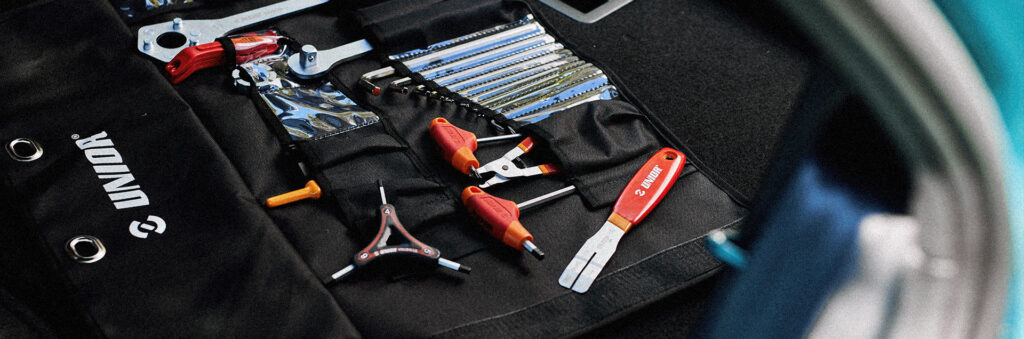
Tools: The “You’ll Be Glad You Had It” Category
Topeak tools are rarely jewelry. They’re more like: this is the thing you actually want when something goes wrong.
Alien multitools
The Alien series became iconic because it packed a ton of function into a tool that was still reasonably usable — not just technically “included.”
Why riders still love them:
- you get real leverage
- the chain tool is actually there when you need it
- it covers most common roadside problems
- it holds up
Ninja hidden tools
The Ninja concept is classic Topeak: solve a real problem (carrying repair gear) without making the bike look like a pack mule.
The best part isn’t the stealth aesthetic — it’s that you’re more likely to have the tool when you need it because it lives on the bike.
Torque tools and workshop gear
Topeak’s torque tools and workstands tend to hit that sweet spot where a home mechanic can own something precise without buying pro-shop level equipment for everything.
If you ride carbon components or just care about not over-tightening things, a compact torque tool stops being “extra” pretty quickly.
Fenders and the Little Stuff That Keeps You Riding
Fenders are one of those accessories people only care about after they get soaked once.
Topeak’s fender reputation comes from being:
- easy to fit
- stable once installed
- practical coverage for the categories they target
They also do a lot of the small add-ons that commuters quietly rely on: mounts, adapters, covers, organizers, top-tube bags, small storage solutions — the stuff that turns “bike” into “usable daily transport.”
What Topeak Gets Right
In 2026, the big themes for Topeak are basically:
- tubeless reality (more repair options, better inflation tools)
- e-bike practicality (racks and cargo thinking catching up to heavier bikes)
- refined modular systems (more “works together” products, less one-off weirdness)
- sustainability via longevity (not trendy, but arguably the most meaningful: gear that lasts)
Topeak doesn’t usually reinvent everything at once. They keep the core products strong and quietly improve the ecosystem around them.
Who Topeak Is For
Topeak tends to land best with riders who care more about function than flex:
- Commuters who need racks, fenders, bags, and a pump that’s always ready
- Touring riders who want tools and systems they can trust far from shops
- Gravel and bikepacking riders who need durable, strap-secure gear
- Home mechanics who want shop-adjacent tools without buying pro-only equipment
- E-bike riders who carry heavier loads and need stronger accessories
The Honest Downsides
Even good brands have quirks.
Price
Topeak usually isn’t the cheapest option. It’s often the “reasonable premium” option — still accessible, but rarely bargain-basement.
Proprietary systems
QuickTrack and Ninja are great… if you’re using Topeak gear. If you want maximum cross-brand mix-and-match, proprietary systems can be limiting.
Looks
Topeak looks like Topeak: practical, slightly industrial, not trendy. If you want accessories that feel like fashion objects, you’ll probably lean elsewhere.
Topeak vs. Other Big Names
- Lezyne: often prettier, more CNC “luxury tool” vibe; Topeak is usually more utility/modular
- Blackburn: tough, straightforward; Topeak tends to offer deeper system integration
- Park Tool / PRO: workshop-first; Topeak sits more in the rider + home-mechanic overlap
- Ortlieb: luggage king for waterproof touring; Topeak is broader across categories, with more rack/tool ecosystem focus
Topeak’s advantage is breadth and consistency — they’re not only great at one thing.
Closing Thoughts
Topeak has earned its reputation the boring way: by not failing. By making things that don’t rattle loose, don’t break early, don’t leave you stranded, and don’t make you hate your life during a roadside fix.
It’s not the loudest brand in cycling accessories. It doesn’t need to be. The whole point is that you stop thinking about the gear and start thinking about the ride.
If you want, tell me who the article is for (commuters, gravel/bikepacking, home mechanics, or “all-around riders”) and I’ll tailor this into an even longer 2000+ word full brand review while keeping this same voice.
Related Content:
- Best Comfort Saddles
- Best Helmet Guide
- Best E-Bikes Under $1000
- Best Gravel Bikes Guide
- How To Lube A Bike Chain
Why Trust This Review?
BestBikeBrands is built by lifelong cyclists with decades of real-world experience — in the shop, on the trail, and behind the wrench. Our goal is simple: to help riders choose the best bikes and gear with confidence, backed by expert insights and hands-on testing. Learn more about us →