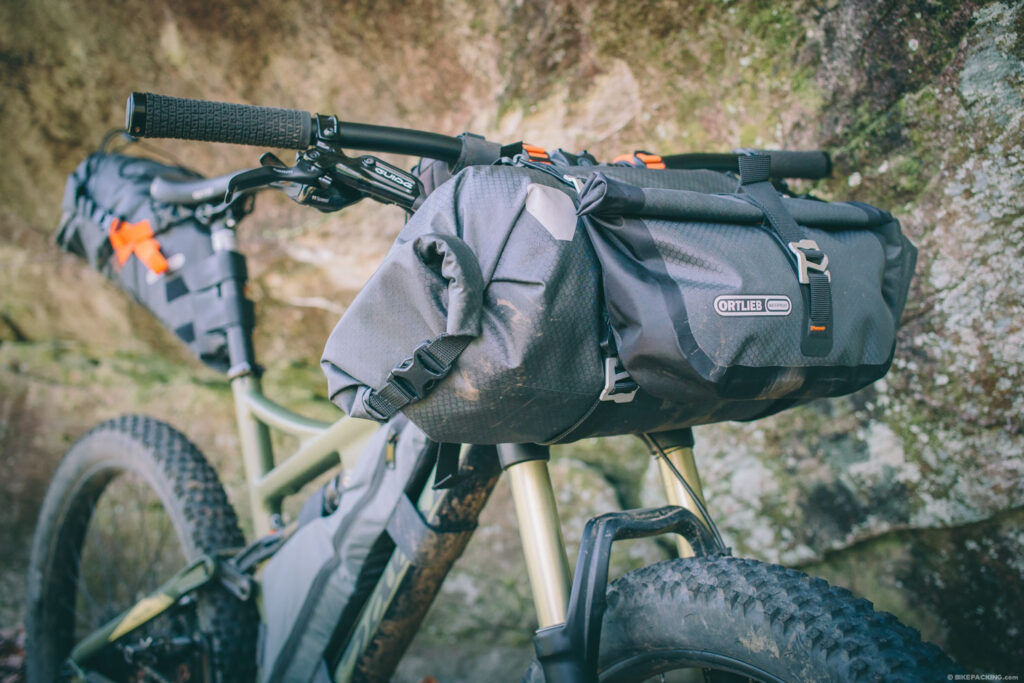
Why Riders Worldwide Rely on Ortlieb for Commuting, Touring, and Bikepacking
Ortlieb occupies a specific and well-defined position in cycling luggage. For more than forty years, the German manufacturer has focused almost exclusively on waterproof carrying systems for bicycles and human-powered travel. While many brands treat panniers and bikepacking bags as accessories, Ortlieb treats them as primary equipment—components that must function reliably regardless of weather, terrain, or duration of use.
Founded in 1982, Ortlieb built its reputation on a simple premise: fully waterproof construction, durable materials, and designs that remain serviceable long after purchase. In 2026, Ortlieb products are used daily by commuters in wet climates, long-distance tourers crossing continents, and bikepackers operating far from resupply points. The brand’s continued relevance comes not from rapid reinvention, but from steady refinement of a narrow set of design principles.
This review examines Ortlieb’s engineering approach, construction methods, major product lines, and practical strengths and limitations, with an emphasis on real-world use rather than marketing claims.
Brand background and manufacturing approach
Ortlieb was founded by Hartmut Ortlieb after a rain-soaked touring trip exposed the limitations of conventional panniers. Early prototypes were made from repurposed truck tarpaulin, sealed by welding rather than stitching. That construction method—refined and industrialized over time—remains the foundation of Ortlieb’s products today.
Key characteristics of the company as of 2026:
- Family-owned and operated
- Manufacturing based entirely in Germany (Heilsbronn, Bavaria)
- No outsourced bag production
- Emphasis on repairability and long service life
- Gradual transition away from PVC-heavy coatings toward polyurethane-based alternatives
Ortlieb employs several hundred people and produces a focused but extensive range of waterproof bags for cycling and related activities. The company’s internal development process prioritizes mechanical reliability and compatibility over trend-driven redesigns.
Construction methods and materials
Ortlieb’s reputation is primarily built on how its products are made rather than on styling or feature density.
Welded seam construction
Instead of sewn seams sealed with tape, Ortlieb uses radio-frequency (RF) welding to fuse coated fabrics into a single continuous structure. This eliminates needle holes and reduces the number of potential failure points. In practical terms, seam failure is rare even after years of use.
Coated fabrics
Most Ortlieb bags use polyester or nylon base fabrics laminated with either PVC or polyurethane coatings. While PVC-free materials are increasingly common across the lineup, Ortlieb continues to use heavier laminates where abrasion resistance and long-term durability are prioritized.
These fabrics are:
- Fully waterproof
- Highly abrasion-resistant
- Stiff enough to hold shape under load
- Less prone to delamination than many ultralight alternatives
Roll-top closures
Ortlieb relies almost entirely on roll-top closures for main compartments. While this approach limits quick one-handed access, it offers consistent waterproofing even in prolonged rain or brief submersion. The absence of zippers in primary closures is a deliberate design choice.
Hardware and fasteners
Mounting hardware is typically glass-fiber-reinforced nylon combined with stainless steel or anodized aluminum elements. Hardware components are standardized across generations, which simplifies replacement and repair.
Mounting systems and on-bike integration
Ortlieb’s pannier mounting systems are one of its most important functional differentiators.
QL2.1 system
The QL2.1 (Quick-Lock) system is used on most rear and front panniers. It consists of adjustable hooks that clamp onto rack tubing and release via a single pull handle.
Key attributes:
- Tool-free adjustment
- Compatibility with a wide range of rack diameters
- Stable under load and rough surfaces
- Easy removal for off-bike carrying
QL3.1 system
QL3.1 is a rack-mounted interface that leaves the bag exterior free of hooks. This system is cleaner visually and improves comfort when bags are carried off the bike, but requires a compatible rack.
Bikepacking attachment systems
Ortlieb’s bikepacking bags use reinforced straps, internal stiffeners, and anti-slip surfaces. These designs prioritize stability over ultralight weight, which reduces sway but adds mass compared to minimalist competitors.
Major product categories
Ortlieb’s catalog is broad but internally consistent. Most products fall into one of four categories.
Rear and front panniers
The Back-Roller and Sport-Roller families remain Ortlieb’s most widely used products.
Characteristics:
- Fully waterproof roll-top construction
- Symmetrical design for left or right mounting
- Replaceable hooks and mounting rails
- Load stability suitable for commuting or expedition touring
These panniers are often chosen for long-distance travel because they maintain waterproof performance for many years with minimal maintenance.
Commuter and urban bags
Urban-oriented products adapt the same waterproof construction to everyday use.
Examples include:
- Backpack–pannier hybrids
- Messenger-style laptop bags
- High-visibility commuting options
These designs trade some internal organization for weather resistance and durability, reflecting Ortlieb’s prioritization of protection over convenience features.
Bikepacking systems
Ortlieb’s bikepacking line includes handlebar packs, seat packs, and frame bags. Compared to ultralight bikepacking brands, Ortlieb’s designs are heavier but notably more rigid and abrasion-resistant.
Common traits:
- Large roll-top volumes
- Conservative attachment methods
- High resistance to prolonged vibration and dust ingress
Duffels and auxiliary bags
Rack-top duffels and dry bags are often used in combination with panniers. These products extend carrying capacity without introducing new closure systems or materials.
Waterproof performance in practice
Ortlieb rates most of its products between IP64 and IP67, depending on closure and intended use. In real-world terms, this means:
- Continuous heavy rain does not penetrate when roll-top closures are used correctly
- Road spray and standing water do not affect contents
- Short submersion during river crossings is generally tolerated
Unlike water-resistant bags that rely on DWR coatings or seam tape, Ortlieb’s waterproofing does not degrade significantly with age. Bags manufactured decades ago often remain waterproof unless physically damaged.
Durability and long-term ownership
Durability is one of Ortlieb’s strongest attributes, but it comes with trade-offs.
Longevity
Many users report 10–20 years of regular use with minimal functional degradation. Fabric abrasion eventually occurs, but failure is gradual rather than catastrophic.
Repairability
Ortlieb offers:
- Replacement hooks and rails
- Strap and buckle kits
- Professional factory repairs
- Patch kits for field use
The ability to repair rather than replace is central to the brand’s long-term value proposition.
Weight considerations
Ortlieb products are heavier than ultralight bikepacking bags and minimalist panniers. The added mass comes from thicker laminates, welded seams, and robust hardware. For riders prioritizing durability over minimal weight, this is generally an acceptable compromise.
Comfort and off-bike usability
Ortlieb panniers and backpacks are functional when carried, but comfort is secondary to weather protection.
Observations:
- Backpack-style products include padding and ventilation, but airflow is limited compared to non-waterproof designs
- Panniers convert easily to shoulder bags, but remain boxy
- Hardware is durable but can be noticeable when carried long distances
These limitations are inherent to fully waterproof construction rather than design oversights.
Sustainability and manufacturing ethics
Ortlieb’s sustainability strategy is primarily structural rather than promotional.
Key aspects:
- Local manufacturing reduces transport emissions
- Long service life reduces replacement frequency
- Repair programs extend product lifespan
- Increasing use of PVC-free coatings
Rather than focusing on recycled materials alone, Ortlieb emphasizes durability and repairability as primary environmental strategies.
Pricing and value over time
Ortlieb products are positioned at the higher end of the pannier and bikepacking market.
Typical pricing (varies by region):
- Rear pannier pairs: mid-to-high hundreds (USD equivalent)
- Bikepacking bags: premium relative to volume
- Commuter backpacks: higher than non-waterproof alternatives
While initial cost is high, long service life often results in lower cost per year of use compared to less durable alternatives.
Limitations and considerations
Ortlieb’s design approach is not universally optimal.
Common limitations include:
- Higher weight compared to minimalist luggage
- Limited internal organization in some models
- Conservative styling and color options
- Premium pricing
Riders prioritizing ultralight setups, rapid access, or highly segmented internal storage may prefer other brands.
Where Ortlieb fits best
Ortlieb is particularly well suited for:
- Daily commuting in wet climates
- Long-distance touring with unpredictable weather
- Riders who value repairability and long-term ownership
- Mixed-use scenarios where bags transition between bikes and off-bike carrying
It is less ideal for:
- Weight-critical racing or fast-and-light bikepacking
- Riders seeking frequent aesthetic updates or fashion-driven design
Closing Thoughts on Ortlieb
Ortlieb’s continued relevance in 2026 is the result of consistent engineering priorities rather than constant reinvention. The company builds waterproof luggage that prioritizes reliability, repairability, and functional longevity. For riders who view luggage as essential equipment rather than an accessory, Ortlieb remains a reference standard within the category.
FAQ — Ortlieb Brand Review
Is Ortlieb worth the price?
Yes. While more expensive upfront, Ortlieb bags routinely last over a decade — offering better long-term value than cheaper competitors.
Are all Ortlieb products made in Germany?
Yes. Every Ortlieb product is designed, welded, and assembled in Heilsbronn, Germany.
Do Ortlieb panniers fit any rack?
Yes. The QL2.1 and QL3.1 mounts are fully adjustable and fit nearly all standard rear and front racks.
Are Ortlieb bags completely waterproof?
Yes. Most have IP67 waterproof ratings, meaning full protection from rain, dust, and brief immersion.
Can you repair Ortlieb products?
Absolutely. Ortlieb sells spare parts and patch kits; many dealers also offer official repair services.
Related Content:
- Best Waterproof Bike Bags & Panniers
- Bike Touring Essentials & Preparation Guide
- Vaude Brand Review
- Topeak Brand Review
- Ortlieb vs Vaude Comparison
Why Trust This Review?
BestBikeBrands is built by lifelong cyclists with decades of real-world experience — in the shop, on the trail, and behind the wrench. Our goal is simple: to help riders choose the best bikes and gear with confidence, backed by expert insights and hands-on testing. Learn more about us →