Few component brands in cycling are as closely tied to rider confidence as Magura. For well over a century, the German manufacturer has focused on one thing above all else: control. Long before disc brakes became the standard, Magura was refining hydraulic systems for motorcycles, industrial applications, and eventually bicycles. That heritage still defines the brand today. In 2026, Magura stands as one of the most technically serious braking specialists in cycling—less concerned with trends, more focused on performance that holds up under real pressure.
Magura’s reputation wasn’t built through flashy sponsorships or rapid-fire product cycles. It was built by mechanics, racers, and everyday riders who learned they could trust Magura brakes when conditions were ugly, speeds were high, and consistency mattered more than outright bite. From downhill race courses to high-speed e-bikes, Magura systems are designed to deliver predictable power with minimal fuss.
Every lever, caliper, and master cylinder reflects a distinctly German approach to engineering: conservative where it needs to be, innovative where it counts, and relentlessly focused on durability. These are brakes meant to be used hard, serviced when necessary, and kept running for years—not replaced every season.
Brand Overview
- Founded: 1893
- Headquarters: Bad Urach, Germany
- Founder: Gustav Magenwirth
- Core Products: Hydraulic brakes, rotors, levers, suspension components, dropper posts, e-bike systems
Magura—short for Magenwirth GmbH & Co.—began as a mechanical engineering company, not a cycling brand. That background shaped everything that followed. Hydraulics weren’t an add-on; they were the foundation. When Magura entered the bicycle market, it brought decades of fluid-system experience that few competitors could match.
The company was an early pioneer of hydraulic rim brakes, followed by some of the first fully hydraulic mountain bike disc brakes. While others were still refining cable-actuated systems, Magura was already solving issues related to seal longevity, heat management, and modulation.
Today, Magura remains a reference point for braking performance—especially in gravity disciplines and e-bike applications, where control and heat resistance matter more than grams on a scale.
The Magura Approach to Engineering
Magura designs products the way an engineer expects them to be used: repeatedly, aggressively, and sometimes incorrectly. The brand’s philosophy is rooted in control, safety, and long-term function rather than marketing-driven innovation cycles.
Guiding principles include:
- Designing systems for consistent performance, not peak numbers
- Prioritizing rider feedback and feel over raw power claims
- Building modular components that can be serviced rather than discarded
- Keeping production in Germany to maintain tight quality control
Magura doesn’t chase trends like oversized rotors or ultra-short lever throws unless they offer measurable advantages. Improvements are incremental, deliberate, and usually backed by years of testing.
A Brief History of Meaningful Innovation
Magura’s development timeline reflects steady, purposeful progress rather than rapid reinvention.
- 1980s: Hydraulic rim brakes redefine MTB braking reliability
- 1990s: Introduction of fully hydraulic disc systems
- 2010s: Modular MT brake platform refined for trail, enduro, and DH
- HC3 lever: Adjustable leverage that actually changes brake character
- MDR rotors: Designed specifically to manage sustained heat, especially on e-bikes
- MCi integration: Fully hidden hydraulic routing for modern cockpits
Each step built on previous designs instead of replacing them outright.
Core Technologies That Define Magura
Hydraulic Systems Done Properly
Magura’s braking performance starts with its fluid and sealing systems. Royal Blood mineral oil is stable across temperature extremes, non-toxic, and resistant to moisture contamination. Combined with long-life seals and self-adjusting pistons, the result is a system that holds its feel over time.
Carbotecture® Construction
Rather than relying solely on aluminum, Magura uses a carbon-fiber-reinforced thermoplastic for many lever bodies and master cylinders. The material is lighter than aluminum, resists fatigue, and allows complex shaping without compromising strength.
Four-Piston Caliper Design
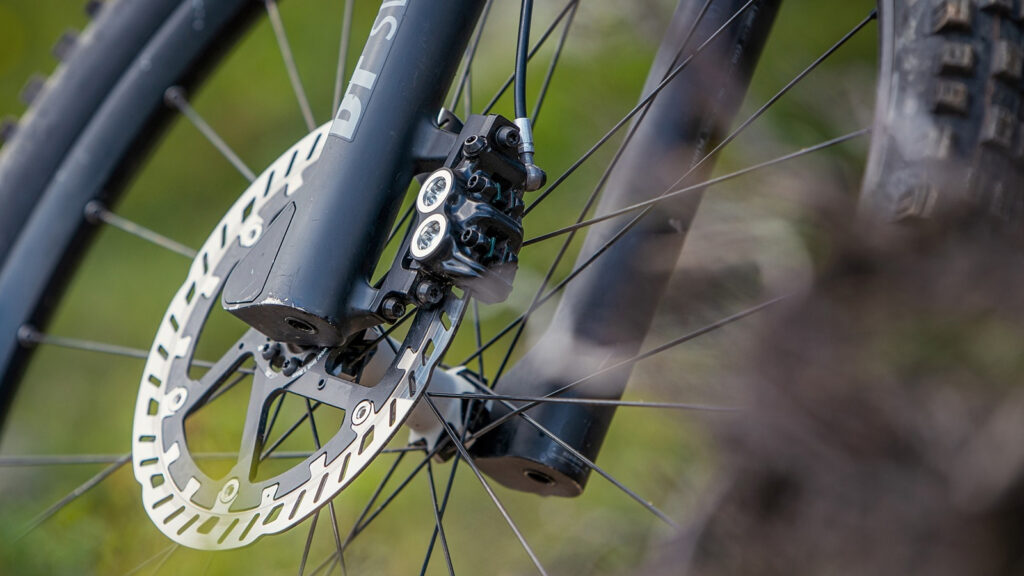
Brakes like the MT5 and MT7 use large, independently moving pistons to distribute force evenly across the pad. This improves modulation, reduces noise, and keeps braking predictable even during long descents.
HC3 Adjustable Lever
The HC3 lever allows riders to tune leverage ratio and reach independently. It’s not a gimmick—the difference between a softer, progressive feel and a firmer, more immediate response is obvious on trail.
MDR Rotors
Magura’s rotors are built with thermal stability in mind. Their thicker profiles and two-piece construction help manage heat during sustained braking, especially important for heavier bikes and e-MTBs.
Current Magura Brake Lineup
- MT7 Pro EVO: Maximum power and adjustability for downhill and aggressive riding
- MT5: Strong, affordable four-piston brake with excellent durability
- MT Trail Series: Balanced front/rear setups tuned for trail riding
- MT8 SL: Lightweight, race-focused brake for XC
- HS33 EVO: Hydraulic rim brake that still sets the standard for touring and urban use
One of Magura’s strengths is modularity. Levers, calipers, and rotors can often be mixed, allowing riders to tailor feel and performance without replacing entire systems.
How Magura Brakes Feel on the Trail
Magura brakes are defined less by instant bite and more by control. Power builds smoothly, making it easier to brake later and with more confidence. On long descents, the feel remains consistent—no wandering bite point, no sudden fade.
Noise levels are generally low, pad wear is even, and maintenance intervals tend to be longer than average when systems are set up correctly.
Magura Compared to Shimano and SRAM
Magura sits slightly outside the mainstream. Shimano emphasizes consistency and ease of use. SRAM leans into adjustability and a firmer bite. Magura focuses on modulation, heat control, and structural durability.
Each approach has merit, but Magura appeals most to riders who value feel and predictability over immediate power.
E-Bike Focus
Magura was ahead of the curve in e-bike braking. Reinforced calipers, heat-resistant rotors, and lever ergonomics designed for heavier systems make Magura a common OEM choice on European e-bikes. The brakes are built to handle sustained speed and weight without drama.
Sustainability and Serviceability
Most Magura components are rebuildable. Individual parts can be replaced rather than discarding entire systems, and long-term product support is a priority. It’s an old-school approach that aligns well with modern sustainability goals.
Who Magura Makes Sense For
Magura is best suited to riders who care deeply about braking feel and long-term reliability:
- Enduro and downhill riders
- E-bike riders dealing with weight and speed
- Trail riders who prioritize modulation
- Commuters and tourers wanting low-maintenance hydraulics
Where Magura Falls Short
- Smaller service network in some regions
- Parts availability can lag behind Shimano
- Bleeding process differs slightly from more common systems
- Premium pricing on flagship models
None of these are deal-breakers, but they’re worth knowing.
Closing Perspective
Magura doesn’t try to be everything to everyone. It focuses on braking, and it does so with a level of seriousness that shows in real-world use. The brand’s products reward riders who pay attention to setup and appreciate subtle differences in feel.
For riders who believe braking is as important as speed—and who want systems that perform the same on day one and day one hundred—Magura remains one of the most compelling options in cycling.
Related Content:
- How To Adjust Your Gears
- Shimano Brand Review
- SRAM Brand Review
- Colnago Bikes Review
- Best Bike Chain Lube
Why Trust This Review?
BestBikeBrands is built by lifelong cyclists with decades of real-world experience — in the shop, on the trail, and behind the wrench. Our goal is simple: to help riders choose the best bikes and gear with confidence, backed by expert insights and hands-on testing. Learn more about us →