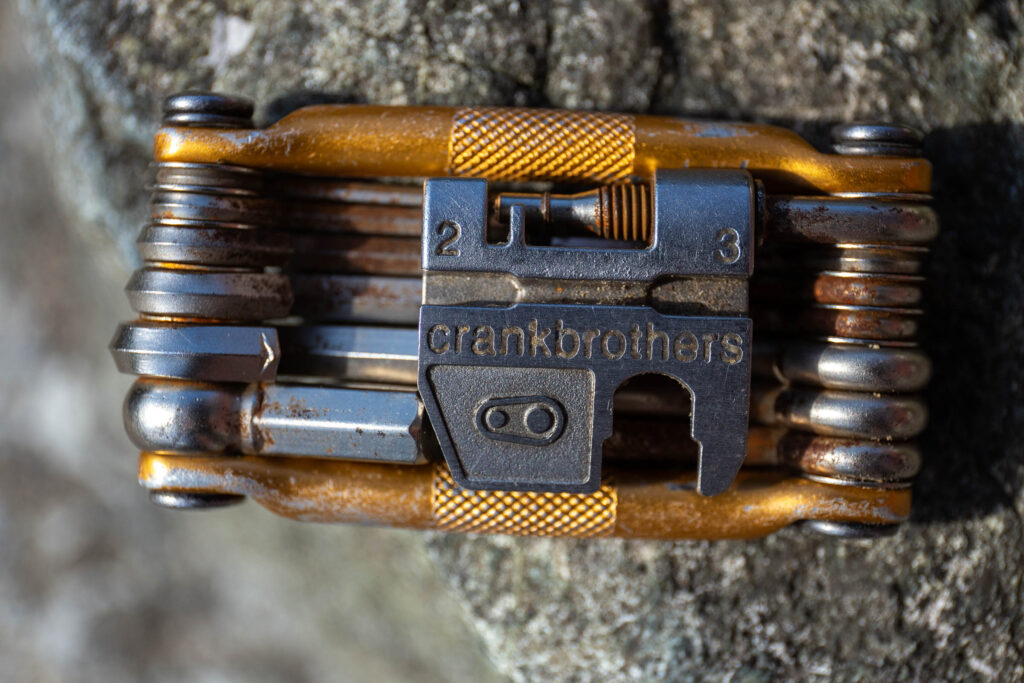
Few component brands are as easy to identify from across a parking lot as Crankbrothers. The shapes are distinctive, the finishes are deliberate, and the product range has always leaned toward a specific kind of rider: someone who cares how parts work, how they feel underfoot or in-hand, and whether they can be serviced without turning into a small project.
Crankbrothers has also taken a less common path in the cycling industry. Many companies begin with one category and gradually expand by following the conventional playbook—OEM volume first, then aftermarket prestige, then an endless catalog of adjacent accessories. Crankbrothers has never looked like that. The brand has stayed concentrated around a handful of core component families—pedals, wheels, droppers, and compact tools—then iterated hard on those families until the details were right. When the brand’s early products were criticized (fairly) for durability quirks, the response wasn’t a rebrand. It was a redesign: bearings, seals, service parts, and updated internals that changed how the gear held up over time.
In 2026, Crankbrothers sits in a mature phase. The pedal range is broad enough to cover XC, trail, enduro, DH, and commuters. The Synthesis wheel system has become a real alternative to the default “same rim front and rear” approach. The Highline droppers are established rather than experimental. The tools and pumps remain some of the most compact, neatly packaged options in the category, with a level of industrial design that’s hard to ignore.
This review covers the brand’s background, its design priorities, the current product families, where Crankbrothers hardware tends to work well, and the points that still deserve careful consideration before buying.
Brand Snapshot
- Founded: 1997
- Founders: Carl Winefordner, Frank Hermansen
- Headquarters: Laguna Beach, California, USA
- Ownership: Part of Selle Royal Group (distribution and business structure varies by region)
- Primary categories: Pedals (clipless and flat), wheels, dropper posts, tools, pumps, service kits
- Positioning: Premium functional components with a strong emphasis on serviceability and industrial design
Crankbrothers has always behaved more like a component design studio than a parts conglomerate. The catalog is not huge, but most items have clear intent and a consistent visual language—machined surfaces, controlled anodizing, minimal extra ornamentation, and parts that look like they were designed by the same group of people.
How Crankbrothers Got Here
Crankbrothers arrived during a period when mountain biking components were becoming more complex and, in many cases, more fragile. Their early success came from doing the opposite: simplifying.
The product most tied to the brand’s identity is the Eggbeater pedal. It was a minimalist clip-in design with four-sided entry and an open structure that shed mud well. It also looked like nothing else. In muddy cyclocross seasons and wet trail regions, the functional advantage was real: fewer clogged mechanisms and faster engagement when conditions were poor.
From there the pedal range expanded logically:
- Candy added a small platform around the Eggbeater mechanism for stability.
- Mallet grew into an aggressive platform clipless pedal for enduro and DH use.
- Double Shot created a dual-sided commuter/travel pedal (flat on one side, clip on the other).
- Stamp became the dedicated flat pedal family.
The brand’s expansion into wheels and droppers happened later, and it came with a different kind of scrutiny. Pedals are relatively easy to evaluate. Wheels and suspension-related components are not. Crankbrothers’ early wheel efforts (pre-Synthesis lines) did not achieve the same across-the-board acceptance as their pedals. The modern wheel identity is tied to the Synthesis concept, which is the first Crankbrothers wheel line that feels like it has a defined engineering premise rather than being a catalog requirement.
Design priorities that show up across categories
Crankbrothers products tend to share a few practical traits that matter more than the marketing language around them.
1) Simplicity of interface
Even when internals are complex, the user interface usually is not. Pedal entry is straightforward. Tool layouts are compact and logically grouped. Pumps store their hose without extra clips or caps.
2) Service as a normal part of ownership
Crankbrothers leans into rebuild kits and small replacement parts. That does not mean service is optional—pedals still require bearing and bushing attention, particularly in wet conditions—but it does mean the brand expects the parts to be kept in use rather than thrown away.
3) Controlled ergonomics
The brand’s ergonomics are usually conservative and repeatable rather than experimental. Mallet platform size is stable and predictable. Stamp sizes fit a range of shoes without needing a niche sole shape. Highline remote feel is not trying to reinvent how droppers operate; it’s aiming for consistent action and cable routing that doesn’t fight the installer.
4) Strong visual consistency
This matters more than it should, but it does affect purchasing in the component category. Crankbrothers parts are designed to look intentional on a bike. That tends to attract riders who care about build cohesion, especially in the aftermarket segment.
Product Lineup Overview
Crankbrothers’ catalog is best understood by category and use case rather than by “best to worst” ranking.
| Category | Main families | Primary use |
|---|---|---|
| Clipless pedals | Eggbeater, Candy, Mallet, Double Shot | XC to DH, gravel, mixed commuting |
| Flat pedals | Stamp | Trail, enduro, DH, general riding |
| Wheels | Synthesis (alloy and carbon variants) | XC/trail/enduro wheel systems |
| Dropper posts | Highline series | Trail/enduro/XC builds |
| Tools | M-series, F-series | On-bike and pack tools |
| Pumps/CO₂ | Klic series, inflators | Inflation, tubeless support |
| Service parts | Rebuild kits, pins, cleats, small hardware | Long-term ownership |
The most important thing to understand is that Crankbrothers is not an everything-brand. If you want drivetrains, brakes, suspension, or handlebars, you’re not shopping here. It’s a brand you add to a build for specific touchpoints: where you clip in, what your wheels feel like, what tool you carry, and whether your dropper behaves consistently.
Pedals In Detail
Eggbeater
Eggbeater is still the clearest expression of the brand’s design logic. Four-sided entry remains the core benefit. The open architecture still clears mud better than many traditional two-sided mechanisms.
Practical notes that matter in 2026:
- Mud performance remains a real advantage. If you ride in wet clay or sloppy shoulder seasons, Eggbeaters are still one of the least fussy clip systems.
- Feel underfoot depends on shoe stiffness. Minimal platform means the shoe sole matters more than it does on larger pedals. Stiff XC shoes make this a non-issue; softer shoes can feel vague.
- Cleat setup matters. Entry and release feel can change noticeably depending on cleat placement and wear.
Eggbeater makes the most sense for riders who prioritize engagement in poor conditions and don’t need platform support.
Candy
Candy exists for a reason most riders understand after one ride: small platform support changes the pedal feel in technical terrain. Candy keeps the same general engagement logic as Eggbeater but adds stability when your weight shifts around.
Candy tends to be a practical “default” for riders who want clipless efficiency but still ride trails with repeated hits and frequent body movement. It is also more forgiving for riders transitioning from flat pedals.
Mallet
Mallet is Crankbrothers’ gravity anchor. It is built around a clipless mechanism paired to a real platform, with pins and a concave profile designed to keep the shoe stable even before the cleat engages. The Mallet’s value is not just “more grip.” It is stability when clipping in late, stability when unclipping briefly in technical sections, and a consistent platform feel when riding rough trails at speed.
Two things usually decide whether Mallet is the right choice:
- How often you rely on platform support while still clipped. If you ride with a lot of foot repositioning, or you clip in/out frequently in steep tech, Mallet makes sense.
- Shoe choice. Gravity shoes with supportive soles pair well. An ultra-light XC shoe can work, but the pedal is built for a different style of riding.
Stamp (flat pedals)
Stamp is the flat pedal family, offered in multiple sizes. The sizing is not a gimmick; it changes contact area and support depending on shoe size. Riders with small feet often get better edge support from the smaller body, while larger shoes benefit from the larger platform.
What matters in Stamp setup:
- Pin height and placement. Stamp grip depends heavily on pin layout relative to the shoe tread.
- Concavity and shoe tread compatibility. Some shoes lock in perfectly; others skate slightly until pins are adjusted.
Stamps are common on builds where riders want flat pedal freedom but still want a premium body and pin system rather than a cheap composite pedal.
Double Shot
Double Shot is not a trail-first pedal; it is a practical option for riders who split time between commuting and clipped rides, or for travel bikes where you want flexibility without swapping pedals. The compromise is obvious: neither side is as good as a dedicated pedal, but the convenience is real for certain riders.
Wheel Systems: Synthesis
Crankbrothers’ wheel identity is now tied to Synthesis, and the key idea is simple: front and rear wheels do different jobs, so they do not need to be built the same way.
- Front wheel intent: compliance and tracking
- Rear wheel intent: stability, durability, and power transfer
This is implemented through rim tuning and spoke system choices rather than through an exotic new hub standard. In practice, riders who notice the difference tend to describe:
- A calmer front wheel that tracks through rough sections without deflecting as sharply
- A rear wheel that feels more supportive under pedaling load and in square-edge hits
A few practical notes:
- The perceived benefit is larger for riders on rough trails, higher speeds, and heavier impacts.
- On smooth XC courses, the difference can be subtle compared to tire choice and pressure.
- Hub specification can vary by build tier and market; engagement and service requirements depend on the exact hub used.
Synthesis wheels are not “automatic upgrades” for every rider. They make the most sense when you are already choosing a premium wheelset for a specific reason—impact resistance, better tracking, or a consistent feel under repeated hits—rather than for weight alone.
Highline Dropper Posts
Highline posts have become common on trail and enduro bikes because they tend to do the basics well:
- consistent actuation
- stable return speed
- predictable lever feel
- practical service path
Crankbrothers has also leaned into cartridge-style internals in certain versions, which can simplify servicing depending on the model. The trade-off is the same as with any cartridge-based approach: replacement can be straightforward, but you are usually buying a defined unit rather than rebuilding every internal component individually.
For buyers, the important questions are:
- Travel range and insertion depth compatibility with your frame. This is where most dropper purchasing mistakes happen.
- Remote ergonomics. Some riders prefer Crankbrothers’ lever feel; others prefer Shimano-style. It is worth testing if possible.
- Cable routing and service access. The post itself may be reliable, but routing through a complex frame can still create friction and return issues.
Highline is best understood as a solid mid-to-premium dropper option rather than an exotic outlier. It competes on reliability, aesthetics, and service approach.
Tools and Pumps
Multi-tools (M-series and F-series)
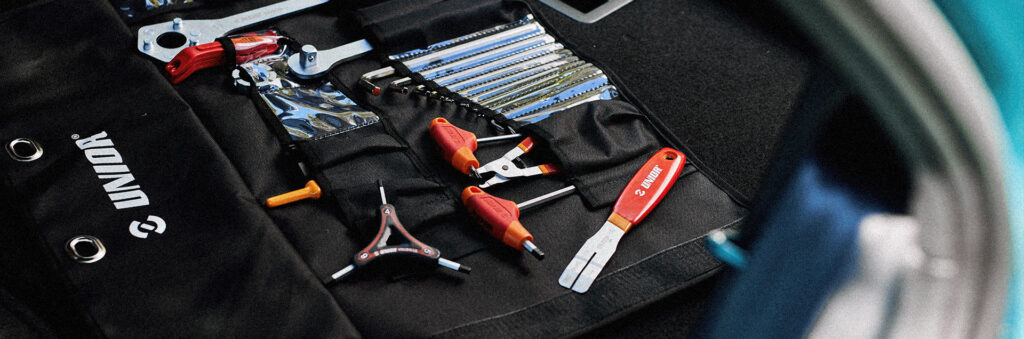
Crankbrothers tools tend to prioritize compact packaging and a clean fold. The M19 remains a common choice because it hits a practical balance: enough functions to solve common trail problems without becoming a heavy brick.
Things that matter more than function counts:
- bit quality and corrosion resistance
- chain tool usability (if included)
- how securely the tool folds and carries over time
Crankbrothers tools generally perform well here, especially for riders who carry a tool every ride and want something that doesn’t rattle apart.
Klic pumps and CO₂
The Klic line’s defining feature is how the hose stores and deploys. For riders who have damaged valves by forcing a pump head directly onto the stem, hose-based systems are a practical improvement. Floor pump versions also focus on stable base design and a gauge that is easy to read without needing to stand in a specific position.
CO₂ inflators are more about reliability than innovation. Crankbrothers’ versions are functional, and the decision usually comes down to whether you prefer their control feel and whether cartridges and heads are easy to source locally.
Reliability and Service Reality
Crankbrothers’ reputation used to be more mixed than it is now, particularly around pedal bearings and seals. In the current era, reliability is generally strong if the owner treats pedals like serviceable components rather than lifetime sealed units.
Practical ownership notes:
- Pedals: Wet riding and frequent pressure washing accelerate service intervals. Rebuild kits are part of the ecosystem; using them is normal.
- Cleats: Cleat wear changes engagement feel and release consistency. Replacement on schedule prevents “mystery” performance shifts.
- Pins (Stamp/Mallet): Pins are consumables for riders who strike rocks often. Keeping spares prevents long periods of uneven grip.
- Wheels: Normal wheel ownership rules apply—check spoke tension periodically, especially after early rides and hard impacts.
- Droppers: Cable condition and housing routing still matter as much as post internals.
Overall, Crankbrothers products are designed to be maintained. If the buyer expects “install once, ignore forever,” Shimano-style sealed simplicity may be a better fit in some categories. If the buyer is comfortable with occasional rebuilds to keep a part running for years, Crankbrothers aligns well with that mindset.
Competitive Context
Crankbrothers competes against brands with different priorities:
- Shimano: broad ecosystem, predictable engagement feel, high availability
- Time/Look (clipless): different engagement mechanics and long-running road/XC heritage
- HT / OneUp (flat): strong gravity focus, aggressive traction, often more utilitarian aesthetics
- DT Swiss / ENVE / Reserve (wheels): deep wheel specialization and large service networks
- Fox / RockShox OEM droppers: strong frame-integration presence through bike spec
Crankbrothers’ niche is not “best at everything.” It is a consistent approach to design and serviceability across a few key rider touchpoints.
Pricing and Value
Crankbrothers typically sits in the premium consumer range rather than in ultra-boutique pricing. The high end can get expensive (especially in lighter or premium-material pedal variants and carbon wheelsets), but the catalog also includes practical mid-tier options.
Cost-to-value tends to be strongest when:
- you plan to service the parts rather than replace them
- you choose the product that matches the use case (Mallet for gravity, Eggbeater for mud/XC, Stamp size matched to shoe)
- you care about consistent feel across multiple bikes and builds
Where Crankbrothers makes the most sense
Crankbrothers tends to fit riders who:
- want pedals with a specific feel and clear service path
- ride in wet conditions where mud shedding matters
- care about compact, well-designed trail tools that carry cleanly
- want a wheel system tuned for real trail impacts rather than purely for weight
- prefer a consistent visual and mechanical design language across components
For riders who prioritize maximum local parts availability in small markets, Shimano and other mainstream options can be easier to support. Crankbrothers support is generally good in major regions, but small-market inventory can be uneven depending on dealer presence.
Closing Thoughts
Crankbrothers in 2026 looks like a brand that has moved past its early growing pains and settled into what it does best: pedals with distinctive engagement characteristics, wheels designed around front/rear roles, droppers that prioritize practical reliability, and compact tools that work as intended. It is still not the obvious choice for riders who want the most conventional, least service-involved component ecosystem. For riders who value functional design and are comfortable treating wear parts as serviceable, the lineup remains one of the more coherent and durable options in the accessory-component space.
Related Content:
- Topeak Brand Review
- Best Helmet Guide
- Best Bike Accessory Brands
- Lezyne Brand Review
- How To Lube A Bike Chain
Why Trust This Review?
BestBikeBrands is built by lifelong cyclists with decades of real-world experience — in the shop, on the trail, and behind the wrench. Our goal is simple: to help riders choose the best bikes and gear with confidence, backed by expert insights and hands-on testing. Learn more about us →