In the world of road cycling, few names carry the same prestige, history, and mystique as Colnago. Founded in 1954 by Ernesto Colnago in Cambiago, Italy, the brand has become synonymous with Italian performance artistry—where hand-built precision meets race-bred innovation.
For more than seven decades, Colnago has supplied frames to some of the sport’s most legendary riders and teams, from Eddy Merckx’s era-defining exploits to modern WorldTour wins under UAE Team Emirates.
By 2026, Colnago sits at an interesting crossroads: it’s still trading on the romance of heritage and handmade craft, but it’s also leaning hard into modern carbon development, aero testing, and a more digital way of connecting bikes to owners. This brand review looks at Colnago’s story, current lineup, technology, strengths, weaknesses, and where the brand fits in premium road cycling right now.
The Colnago Story: A Legacy Built by Hand
Origins of a Legend
Ernesto Colnago didn’t begin as a “brand guy.” He began as a hands-on builder—a welder and race mechanic who understood what riders wanted because he lived in that world. When he opened his workshop in 1954, his early frames were for local racers, built one at a time, aligned and finished with a level of care that quickly made people talk.
That detail matters, because it shaped Colnago’s reputation in a way you can’t fake later. Colnago didn’t become famous because the logo looked good on a downtube. It became famous because riders felt the difference: the way a frame tracked through corners, the way it stayed composed under power, the way it held alignment after seasons of hard use.
By the 1960s, Colnago bikes were turning up in major European races. The partnership with Eddy Merckx pushed the company into cycling mythology. Merckx’s 1972 Hour Record on a Colnago-built steel frame became one of those moments that permanently attached the name Colnago to “fast” and “serious.”
Colnago’s identity formed early: not just “Italian,” but race-tested Italian, where feel and function mattered as much as visual beauty.
The Era of Innovation
It’s easy to assume Colnago is purely a tradition brand, but their rise wasn’t fueled by nostalgia alone. Colnago was aggressive about materials long before carbon became the default.
Steel gave way to experiments with titanium and aluminum, and then carbon—often earlier than many competitors were willing to commit. The Ferrari collaboration in the 1980s became a turning point. It wasn’t just a flashy co-branding deal; it helped accelerate Colnago’s understanding of composite structures, stiffness, and performance tuning.
Out of that era came bikes like the C40—one of the first carbon road bikes that didn’t feel like a fragile science project. Then came later icons like the C50 and C64, which became shorthand for “premium Italian carbon,” built with that uniquely Colnago mix of precision and personality.
And that’s the key point: Colnago’s innovation has never been innovation for its own sake. Even when they leaned into cutting-edge materials, the goal wasn’t to chase hype. It was to make bikes that felt cohesive—fast when you wanted fast, comfortable when you needed comfort, and stable when the road or the descent stopped being polite.
Modern Era: Digital Meets Handcrafted
Colnago’s modern chapter took a new shape after Chimera Investments LLC (UAE-based) acquired a majority stake in 2020. The brand didn’t suddenly become something else, but you can see the shift: more emphasis on contemporary race development, data-driven aero work, and a broader global strategy.
The current result is a two-lane identity that Colnago is very intentional about:
- C-Series: handmade prestige, Italian craft, small-batch energy
- V-Series: race-first carbon development, WorldTour-driven performance, modern integration
In plain terms: Colnago is trying to stay romantic without becoming dated—and trying to stay modern without becoming generic.
That’s harder than it sounds. Plenty of heritage brands either fossilize (beautiful, irrelevant) or modernize so aggressively they lose what made them special. Colnago’s 2026 vibe is essentially: keep the soul, sharpen the knife.
Colnago’s Current Lineup
Colnago’s catalog still feels curated, not sprawling. It’s not a brand that floods every category with ten near-identical models. In 2026, the core identity is still road-first, with a serious gravel presence and a quieter (but real) e-road/e-gravel footprint.
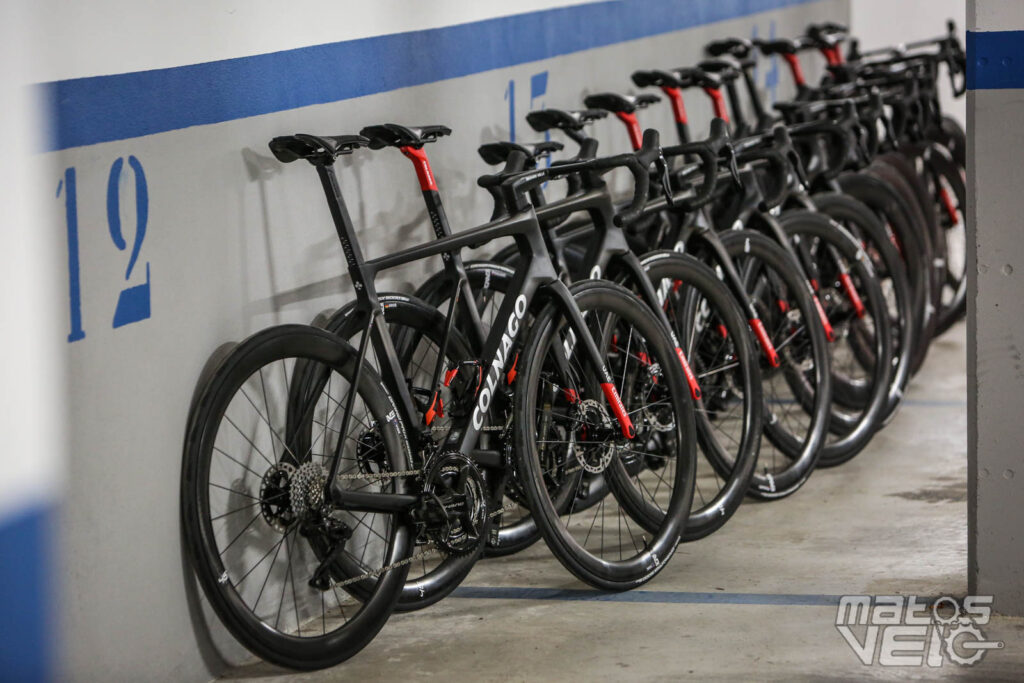
Colnago V4Rs
This is the headline race bike: the one shaped by pro racing demands, modern aero expectations, and that “no excuses” market segment.
Highlights:
- Full carbon monocoque frame aimed at stiffness and speed
- Integrated front end with the clean, modern cockpit approach
- Built around the realities of current racing: wider tires, wireless drivetrains, aggressive integration
- Tuned to be more than a wind-tunnel trophy—stable enough to race hard and descend with confidence
- Modern “race practicality”: clearance and compatibility that actually match what riders run now, not what brands wish riders ran
Best for: riders who want a true modern race bike—fast handling, high stiffness, and “pro-level” everything.
The V4Rs sits in a very specific world: riders who don’t just want a nice bike, they want the bike that lives at the sharp end of the peloton conversation. But the reason people actually love it isn’t just speed. It’s that it tends to feel composed at speed. A lot of ultra-modern aero race bikes can feel like they’re always itching to react. The V4Rs, when set up correctly, feels more settled—more “point it and commit” than “hold on and hope.”
Colnago C68
The C68 is the emotional center of Colnago’s lineup. It’s still “modern,” but it’s also clearly designed to feel like a continuation of the Colnago craft tradition—not a departure from it.
Highlights:
- Handmade in Italy, built around Colnago’s modular, lugged approach
- A focus on precision assembly, fit, and finishing detail
- A ride character that leans “all-day fast” rather than “ten-minute torture test”
- Modern routing and drivetrain compatibility without losing the boutique vibe
- NFC / app-based authentication angle (useful, but also a subtle flex in a counterfeit-heavy market)
Best for: riders who want a bike that feels like it has a story baked into it—something that’s as much about ownership pride as it is about watts.
The C68 is for the rider who still believes a bicycle can be an object worth keeping long-term. Not “I’ll flip it when the next version drops,” but “this is the one I’ll remember.” Colnago leans into that. The finishing and paint work matter. The frame feels intentional. And the ride tends to reward riders who do long days, varied roads, and real-world terrain—because it’s not built to feel impressive only on pristine tarmac.
Colnago G3-X
Colnago’s gravel approach feels very “Colnago”: not overly rugged-looking, not trying to cosplay as a mountain bike, but still capable enough for real-world gravel.
Highlights:
- Carbon frame built around endurance gravel use
- Tire clearance aimed at the modern gravel sweet spot
- Designed for both 1x and 2x drivetrains
- A ride feel that leans fast and responsive rather than ultra-plush and floaty
- More “performance gravel” than “bikepacking barge,” even though it can be built either way with smart parts choices
Best for: riders who want a premium gravel bike that still feels like a road brand’s gravel bike—in a good way.
If you’re the type of rider who wants gravel to feel like road riding—just with dirt, chatter, and bigger tires—the G3-X makes sense. It’s not trying to be a soft, couchy cruiser. It’s trying to be efficient and precise. The handling tends to feel closer to endurance road than to a drop-bar MTB, which is exactly the appeal for a lot of riders.
Colnago E64 & EGRV
Colnago’s electric bikes are not the loud, bulky kind. They’re built around the idea that an e-bike can still look and feel like a “real” bicycle.
Highlights:
- Discreet assist systems (Mahle-style approach)
- Lightweight for the category
- Minimal visual clutter
- App connectivity and tuning
- Built for “extend the ride” rather than “turn it into a scooter”
- A smart fit for riders who want assistance but still care about the ritual of riding a premium bike
Best for: riders who want subtle assistance for longer rides, hills, or keeping pace—without switching to a heavy, obvious e-bike experience.
This is an underrated corner of the market. Not everyone wants a full-power e-bike that feels like a different sport. A lot of riders want the same ride—just with a little extra margin on the climbs or at the end of a long day. Colnago’s approach is basically: keep the bike a bike.
Colnago Technology & Design Philosophy
Handcrafted Meets High-Tech
Colnago is one of the few brands that can truthfully sell both:
- artisanship (hand finishing, paint work, small-batch feel)
- hard performance R&D (CFD, wind tunnel development, pro feedback loops)
The important part is that they don’t hide either side. The C-Series leans into craft. The V-Series leans into results. Colnago wants you to pick which personality you relate to more—or own both, if you’re living the dream.
There’s also something subtly different about how Colnago handles “modern performance.” Some brands chase maximum stiffness everywhere, then try to soften the ride afterward with clever seatposts or compliance gimmicks. Colnago tends to tune the whole system more holistically, especially in the C-series: stability, comfort, responsiveness, and durability all negotiated together.
Aerodynamics and Integration
Modern high-end road bikes are all moving toward integrated cockpits and hidden cables. Colnago is fully in that world now. The upside is obvious: cleaner airflow, cleaner looks. The downside is also obvious: service becomes more “shop job” than “garage job,” especially for riders who like to do everything themselves.
Colnago tends to execute integration with a premium feel—less “forced” and more “intentional,” especially in how their frames still keep a sense of shape and proportion. Even when the bikes get aero and integrated, they don’t look like they were designed by a committee that only cared about drag numbers.
The Colnago App and “Digital Passport” Angle
The NFC chip / app authentication concept is a very modern Colnago move: part anti-counterfeit tool, part ownership flex, part resale confidence booster.
In a world where premium frames get faked—and where used-bike markets are huge—having a clean way to confirm identity and history is genuinely useful. It’s also very on-brand for Colnago: tradition, but with a modern stamp of legitimacy.
And realistically, that matters more now than it did ten or twenty years ago. A Colnago isn’t an impulse purchase. It’s a big, deliberate buy. Anything that adds confidence (especially in secondhand transactions) has real value.
Performance and Ride Quality
Road Handling
Colnago’s reputation for stability is real. Even when they build aggressive race bikes, the handling tends to feel composed rather than nervous. The V4Rs is designed to race, but not at the cost of turning the bike into a twitchy wind knife.
That stability shows up most clearly in two places:
- fast descending, where the bike feels like it wants to hold a line
- high-speed cornering, where it tends to feel predictable instead of reactive
The C-Series leans more toward that classic “smooth precision” feeling: not dull, not soft—just calm and confident when the roads get rough or the miles pile up.
Comfort
Colnago comfort has always been a part of the appeal, especially compared to some ultra-stiff, ultra-aero bikes that feel like they’re punishing you for choosing endurance over racing.
The C-Series, in particular, keeps that “all-day fast” vibe—responsive when you stand up and sprint, but less harsh when the road surface turns ugly. It’s not a plush cruiser. It’s just not trying to impress you by being brutally stiff.
Power Transfer
Colnago bikes tend to feel efficient under load. When you get out of the saddle, you don’t feel the bike twist or “give away” energy. But it’s not the same sensation as some hyper-stiff bikes where everything feels rigid to the point of harshness. Colnago’s stiffness usually feels like it’s placed where you want it—bottom bracket, head tube, key junctions—without turning the entire frame into a tuning fork.
The “Colnago Feel” (What People Actually Mean)
A lot of brand reviews throw around words like “lively” and “responsive,” but with Colnago there’s a specific character riders talk about:
- stable without being sleepy
- quick without being nervous
- fast without feeling fragile
That’s why Colnagos tend to have loyal owners. People don’t just like them; they keep them, talk about them, and often come back for another.
Strengths of Colnago
Heritage That Actually Matters
A lot of brands have history. Colnago’s history is deeply tied to top-level racing and meaningful innovations—especially the early carbon era and the legacy of bikes that became true reference points.
True Italian Craftsmanship (When You Choose It)
The C-Series isn’t “Italian branding.” It’s Italian building. That still matters in a market where “heritage” sometimes just means an old logo on a frame molded in the same factories as everything else.
Balanced Ride Feel
Colnago tends to nail the mix of stability, stiffness, and comfort better than many ultra-modern bikes that chase one performance metric too aggressively.
Innovation With Credibility
Colnago’s carbon story isn’t new. They’ve been in this world for decades. The brand doesn’t feel like it discovered aero in 2022 and decided to make it its personality.
Desirability and Resale
Colnago still carries status in a way few brands do. That isn’t just ego. It’s the reality of limited supply, strong brand recognition, and a collector-minded audience.
Premium Finishing
Paint, detail work, the overall “object quality”—Colnago is still a brand where aesthetics and finish feel like part of the point, not an afterthought.
Weaknesses of Colnago
Price
Colnago is not shy about pricing, and it can climb quickly once you leave the “frame-only fantasy” and start pricing a full build with premium wheels, cockpit, drivetrain, and finishing touches.
Availability
Depending on where you live, Colnago can be harder to find on the floor of a shop. That matters, because premium bikes are personal. People want to see them, touch them, sometimes ride them. Colnago isn’t always convenient.
Weight (Sometimes)
Colnago isn’t always chasing the absolute lowest weight numbers against the lightest bikes from Specialized, Trek, Cervélo, and a few boutique climber-focused builders. Whether that matters depends on your priorities. Plenty of riders would rather have the handling and stability.
Service Complexity
Integrated cockpits and internal routing are the modern tax on “clean.” Colnago pays it too. If you’re the rider who changes bars, swaps stems, or does all maintenance solo, some modern Colnagos will ask more of you.
Style Is Specific
Colnago looks like Colnago. Some riders adore that identity. Others want something more understated—or the opposite: flashier graphics. With Colnago, the visual language is strong, and it won’t be for everyone.
Colnago vs. the Competition
Colnago’s competition isn’t just about performance—it’s about why people buy a premium bike.
Colnago vs. Pinarello
Pinarello leans sharper and more overtly “pro race” in personality. Colnago often feels more balanced and less dramatic in its handling—still fast, but calmer.
Colnago vs. Specialized / Trek
Specialized and Trek bring massive R&D budgets, huge dealer networks, and aggressive product cycles. They’re easier to find, easier to service, and often more “systematized.” Colnago counters with boutique desirability, finishing, and a very particular feel that doesn’t try to be universal.
Colnago vs. Cervélo
Cervélo is the engineer’s brand—clinical speed, measured gains, aero logic everywhere. Colnago can absolutely be aero and fast, but it tends to carry more “human” personality in the ride experience and ownership culture.
Colnago vs. Bianchi
Bianchi shares the heritage appeal, often with a more classic emotional vibe and sometimes a slightly more relaxed positioning in the market. Colnago sits higher in perceived exclusivity and race lineage, especially in the modern era.
Colnago vs. Boutique Builders
A true custom builder can offer more personalization and uniqueness, but Colnago offers something those builders often can’t: global race mythology and an instantly recognized identity.
Colnago’s pitch is basically: you can buy speed anywhere—but you can’t buy this exact kind of speed anywhere.
Price Range
Colnago pricing lives in the premium world, and it’s not pretending otherwise.
- V4Rs (race carbon): $6,999–$15,000+
- C68 (handmade carbon): $7,500–$18,000+
- G3-X (gravel carbon): $5,000–$7,000
- E64 (e-road): $5,500–$6,500
- EGRV (e-gravel): $6,000–$7,000
Colnago is rarely the “value pick.” It’s the “this is the one I actually want” pick.
Who Should Buy a Colnago
Colnago makes the most sense for riders who care about more than speed-per-dollar.
Good fit if you’re someone who:
- values heritage and craft as part of the ownership experience
- wants a race bike with a calmer, more confident personality
- likes the idea of a frame that feels “kept,” not “consumed”
- wants a premium road brand that also offers gravel and subtle e-assist options
- cares about resale value and long-term desirability
- wants a bike that feels distinctive without screaming for attention
Less ideal if you:
- want the absolute lightest build for the money
- want maximum ease of service and DIY maintenance
- prefer mass-market support networks and easy local availability
- treat bikes as short-cycle upgrades rather than long-term partners
Final Thoughts on Colnago
Colnago is still Colnago in 2026—and that’s kind of the point.
The V4Rs is a modern WorldTour-level tool that feels built for today’s racing reality: aero, stiff, and integrated, without turning into a nervous, harsh machine. The C68 keeps the brand’s handmade prestige alive in a way that feels real, not manufactured. Add the G3-X and the quieter electric options, and Colnago’s lineup covers more ground than many people expect—without diluting the brand’s identity.
Buying a Colnago is rarely a purely rational decision. And honestly, that’s part of why people still want them. When you spend this kind of money, you’re not only buying performance—you’re buying the feeling that you chose something with identity, with continuity, with meaning that lasts beyond the current trend cycle.
Colnago is what happens when a race bike is also an heirloom object—and the brand still knows how to make both sides feel true.
Related Links:
Why Trust This Review?
BestBikeBrands is built by lifelong cyclists with decades of real-world experience — in the shop, on the trail, and behind the wrench. Our goal is simple: to help riders choose the best bikes and gear with confidence, backed by expert insights and hands-on testing. Learn more about us →