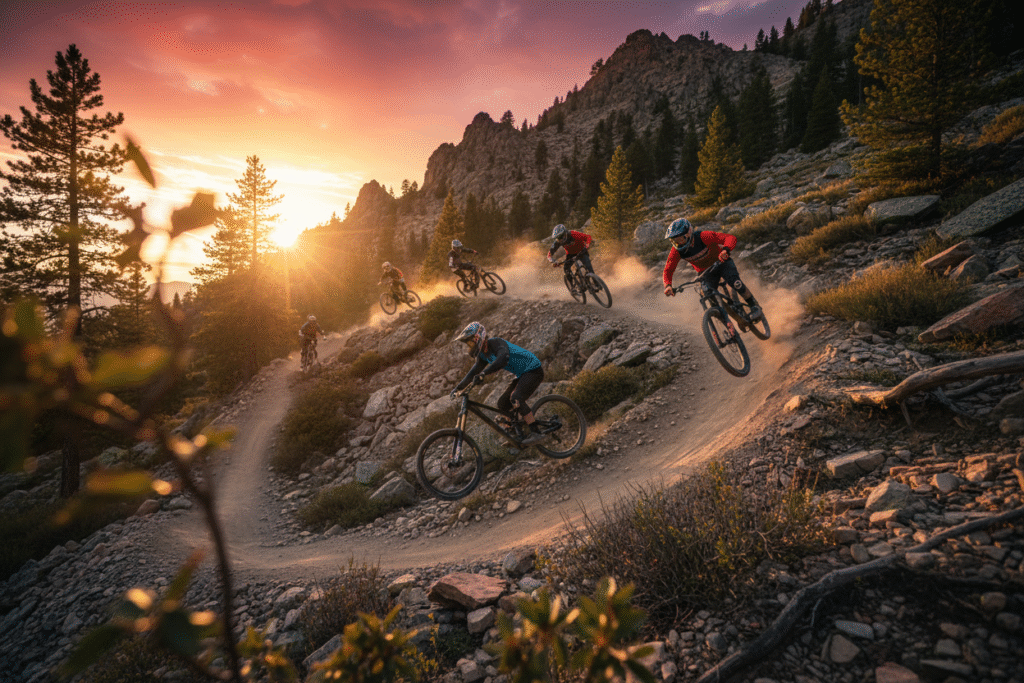
Banshee Bikes has never tried to be everything to everyone—and that’s exactly why riders who know, know. This is a brand built around hard riding, real terrain, and the assumption that bikes should survive mistakes, bad lines, and repeat punishment without falling apart. In a market full of polished marketing language and carbon obsession, Banshee has carved out a reputation by doing the opposite: focusing on geometry, suspension behavior, and frame durability first, then letting the riding speak for itself.
By 2026, that approach hasn’t softened. If anything, it’s become more deliberate. Banshee’s lineup remains tight and purpose-built, with refinements to tubing, suspension kinematics, and hardware that matter over years of use—not just the first few rides. These are bikes designed for enduro racers, bike-park regulars, freeriders, and technical trail riders who expect confidence at speed and composure when things get rough.
This review takes a grounded look at where Banshee came from, how they design their frames, what makes their suspension work the way it does, and who their bikes actually make sense for today.
Brand Snapshot
- Origins: Early 2000s
- Base: Vancouver, British Columbia
- Focus: Aggressive trail, enduro, freeride, downhill, framesets
- Known for: Rune, Spitfire, Prime, Titan, Legend DH, Paradox hardtail
- Positioning: Rider-driven, gravity-focused boutique brand
Banshee operates in a very specific space. They don’t flood the market with dozens of models, and they don’t chase every trend. Their bikes are mostly sold as framesets, appealing to riders who care about setup, suspension choice, and long-term ownership. Growth comes less from advertising and more from word of mouth—especially among riders who ride hard and talk honestly about what works.
Where Banshee Comes From
Banshee grew out of the freeride era, when mountain biking was less about measured efficiency and more about creativity, consequences, and commitment. The early 2000s were full of big drops, North Shore features, sketchy lines, and bikes that needed to survive repeated impacts. Banshee leaned directly into that world.
Early frames like the Scream and Chaparral weren’t subtle. They were strong, unapologetic, and built for riders who expected to break things. As riding styles evolved and enduro emerged, Banshee adapted—but without abandoning its roots. Instead of chasing ultra-light numbers, they focused on refining how bikes handled speed, steep terrain, and long descents.
The result is a modern lineup that still feels unmistakably Banshee: stable, confident, and tough, but far more refined than the early freeride tanks that built the brand’s reputation.
How Banshee Thinks About Bike Design
Banshee’s design philosophy is straightforward, but not simplistic. It’s built around a few core assumptions that show up consistently across the lineup.
Durability Comes First
Banshee frames are designed to last. Tube profiles, pivot hardware, bearings, and linkages are all chosen with repeated stress in mind. These bikes are meant to be ridden hard, serviced, and ridden hard again—not replaced every couple of seasons.
That focus on longevity is one of the reasons Banshee sticks with aluminum for full-suspension frames. It allows for controlled flex characteristics, predictable fatigue behavior, and easier repair or replacement when things go wrong.
Geometry for Real Speed
Banshee geometry is modern, but never extreme for the sake of numbers. Expect:
- Long reach without feeling stretched
- Slack head angles that stay calm at speed
- Steep seat tubes that actually help on climbs
- Low bottom brackets that keep the bike planted
The common theme is confidence. These bikes are designed to feel composed when trails get steep, rough, or fast—without becoming unwieldy in tighter terrain.
Suspension That Matches the Terrain
Rather than chasing anti-squat graphs or marketing buzzwords, Banshee tunes suspension for real riding conditions. Their bikes are meant to stay active under braking, supportive in the mid-stroke, and predictable when you hit something harder than expected.
The KS2 Suspension Platform
Banshee’s KS2 suspension is a dual-link system designed with aggressive riding in mind. The goal isn’t maximum efficiency at all costs—it’s balance.
Key characteristics riders notice:
- Strong mid-stroke support that keeps the bike from wallowing
- Good small-bump sensitivity for traction on technical climbs and rough descents
- Controlled progression that handles bigger hits without harsh bottom-outs
- Predictable behavior under braking
KS2 doesn’t demand constant tuning or maintenance, and it doesn’t feel overly sensitive to shock choice. That makes it appealing to riders who want to ride more and tweak less.
Frame Construction and Hardware Choices
Banshee’s frames are intentionally overbuilt compared to many carbon-focused competitors. That doesn’t mean careless weight—it means strategic reinforcement where it matters.
- Aluminum frames: chosen for durability and consistent ride feel
- Oversized pivot hardware: improves stiffness and bearing life
- High-quality bearings: longer service intervals, fewer creaks
- Replaceable parts: derailleur hangers, pivot hardware, and dropouts designed to be serviced
Many models feature adjustable dropouts, allowing riders to fine-tune chainstay length or axle standards. That kind of adjustability appeals to riders who are particular about setup—or who plan to keep a frame through multiple component standards.
The Current Banshee Lineup
While the catalog isn’t huge, each model serves a clear purpose.
Rune — Enduro (27.5”)
The Rune is built for steep, technical enduro terrain. It favors stability and control over playfulness, making it a favorite for riders who spend most of their time descending hard.
Spitfire — Trail / All-Mountain
The Spitfire is often described as the most “fun” Banshee. It’s poppy, agile, and still capable of handling serious terrain. For many riders, this is the sweet spot of the lineup.
Prime — 29er Trail / Enduro
The Prime blends 29er efficiency with gravity-focused handling. It’s fast, stable, and confidence-inspiring—especially on longer, rougher trails.
Titan — Long-Travel 29er Enduro
The Titan is built for speed in rough terrain. Think enduro stages, alpine descents, and riders who want maximum stability without stepping into full downhill territory.
Legend DH — Downhill
A purpose-built downhill bike with no compromises. Stable, predictable, and designed to handle bike-park abuse and race tracks.
Paradox — Hardcore Hardtail
The Paradox keeps things simple and aggressive. Modern geometry, stiff construction, and a ride feel that rewards precision and commitment.
How They Ride
Descending
This is where Banshee bikes feel most at home. They stay composed through rough sections, track well at speed, and don’t get deflected easily. The suspension and geometry work together to create a calm, planted feel.
Climbing
They’re not featherweights, but they climb better than their appearance suggests. Steep seat angles and supportive suspension keep the front wheel down and power transfer efficient enough for long climbs.
Stability vs. Playfulness
Longer-travel models lean toward stability and predictability. Shorter-travel bikes like the Spitfire offer more pop and agility, especially in corners and on flow trails.
Who Banshee Bikes Make Sense For
Banshee isn’t trying to convert casual riders. These bikes are best suited to people who know how—and where—they ride.
They’re a strong fit for:
- Enduro racers and aggressive trail riders
- Bike-park regulars
- Freeriders and technical line hunters
- Riders who prioritize durability over weight
- People who keep frames for many seasons
They’re less ideal if:
- You want the lightest carbon build possible
- You ride mostly mellow trails
- You want a massive dealer network and lots of stock builds
Strengths and Trade-Offs
What Banshee Does Well
- Exceptionally durable frames
- Confident, modern geometry
- Suspension that works in real terrain
- Adjustable setups for picky riders
- Boutique quality without extreme pricing
Where Compromises Exist
- Heavier than carbon-focused brands
- Limited availability depending on region
- Smaller model range
- Aluminum-only for full suspension
Where Banshee Fits in the Bigger Picture
Banshee sits in a niche that values riding feel and longevity over trends. Compared to bigger brands with massive marketing budgets, Banshee feels more personal and purpose-driven. Compared to ultra-boutique carbon brands, it feels grounded and practical.
If your priority is confidence, durability, and geometry that encourages commitment, Banshee occupies a very appealing corner of the market.
Final Thoughts
Banshee Bikes hasn’t survived by chasing what’s popular. It’s survived by listening to riders who actually push their equipment—and designing frames that can keep up. In 2026, that approach still feels relevant, maybe even more so as bikes become more complex and expensive.
These are not bikes for spec-sheet obsessives or showroom browsers. They’re bikes for riders who value trust: trust that the frame won’t flinch when the trail gets ugly, and trust that the bike will still feel right years down the line.
For riders who measure quality by how a bike behaves when things go wrong—not when everything goes perfectly—Banshee remains one of the most compelling choices in aggressive trail and gravity riding.
FAQ
Are Banshee bikes durable?
Yes. Banshee frames are known for being extremely durable and are built to handle aggressive riding, bike park use, and rough terrain over many seasons.
Are Banshee frames heavy?
They are slightly heavier than some carbon competitors because Banshee prioritizes aluminum construction and long-term durability. For most riders, the extra confidence is worth the small weight penalty.
Is Banshee a good brand for enduro riding?
Absolutely. Models like the Rune, Prime, and Titan are designed specifically for enduro and aggressive trail riding, with geometry and suspension tuned for steep, technical terrain.
Does Banshee make carbon frames?
No. Banshee currently focuses on high-quality aluminum frames (and steel in some hardtails). This aligns with their durability and serviceability philosophy.
Are Banshee bikes good for bike parks and freeride?
Yes. Banshee has deep roots in freeride and gravity riding. Frames like the Legend DH and long-travel trail models are well suited to bike park laps and big features.
Can I buy Banshee as a complete bike or frame-only?
Both. Many riders purchase Banshee as a frame-only and build custom, but select dealers and partners also offer complete bike builds.
Who are Banshee bikes best suited for?
Banshee is ideal for riders who prioritize aggressive terrain capability, long-term frame reliability, and modern geometry—especially enduro riders, bike park regulars, and hardcore hardtail fans.
Related Content:
- Transition Bikes Review
- Best Mountain Bike Brands
- Polygon Bikes Review
- Santa Cruz Bikes Review
- How To True a Wheel
Why Trust This Review?
BestBikeBrands is built by lifelong cyclists with decades of real-world experience — in the shop, on the trail, and behind the wrench. Our goal is simple: to help riders choose the best bikes and gear with confidence, backed by expert insights and hands-on testing. Learn more about us →