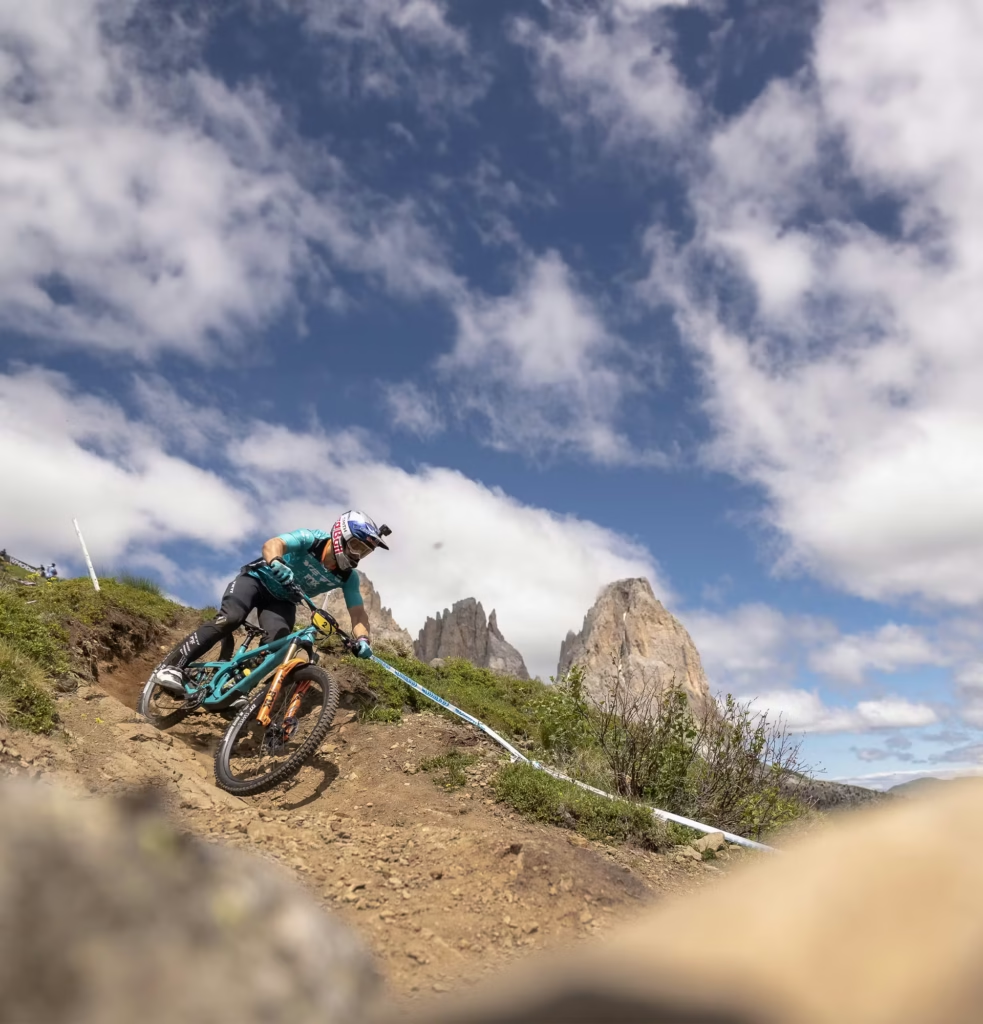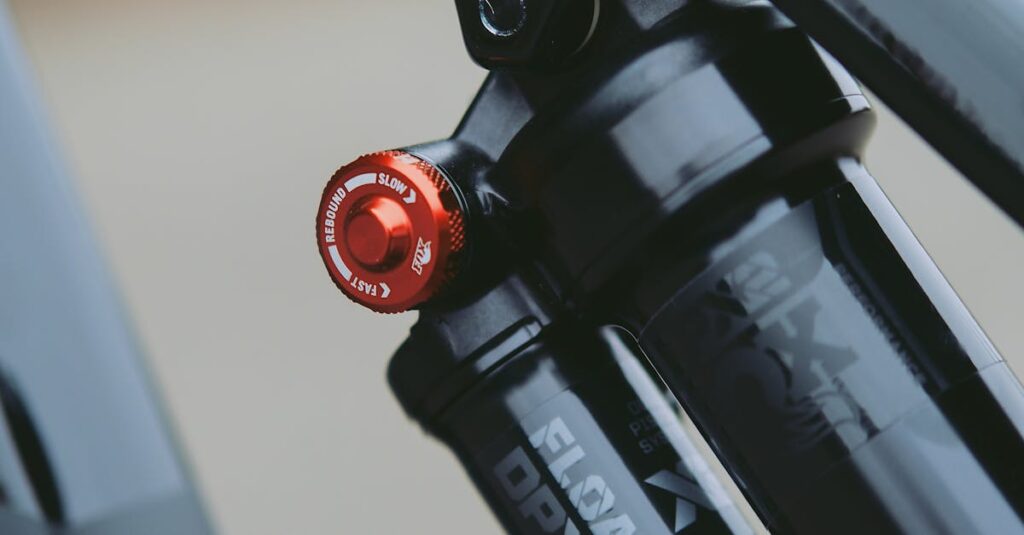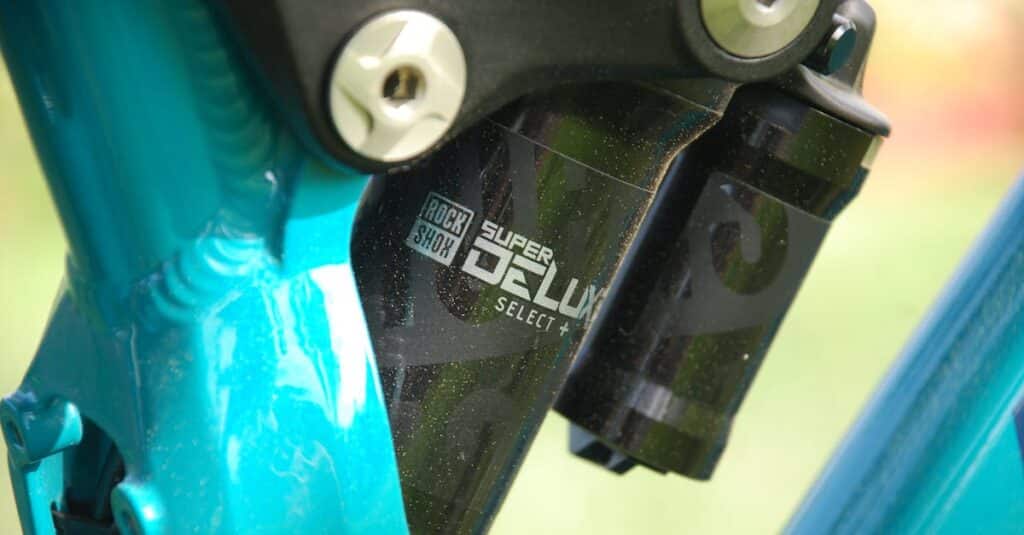
DW-Link and Switch Infinity are two of the most talked-about suspension platforms in modern mountain biking. Both are high-end, both are used on serious trail and enduro bikes, and both promise the same thing in different ways: efficient climbing, stable mid-stroke support, and confident, controlled descending on real trails.
DW-Link appears across multiple brands—most notably Pivot, Ibis, and historically Turner—while Switch Infinity is exclusive to Yeti’s SB series. Riders cross-shop these platforms constantly when choosing premium trail and enduro bikes, especially in the 120–170 mm range.
In this 2026 comparison, we’ll dig into how they differ in design, climbing, descending, small-bump sensitivity, support, maintenance, and ideal rider profiles. By the end, you’ll know which one suits your terrain and riding style better.
Key Takeaways
- DW-Link emphasizes pedaling efficiency, traction under power, and strong mid-stroke support.
- Switch Infinity prioritizes plushness, small-bump sensitivity, and a “bottomless” descending feel.
- DW-Link bikes generally climb better and feel snappier under pedaling.
- Switch Infinity bikes generally descend more smoothly and track better in rough terrain.
- DW-Link is lower maintenance and uses conventional hardware; Switch Infinity requires slider service and more attention.
- DW-Link is available across several brands; Switch Infinity is Yeti only.
- There is no absolute “best”—your choice hinges on whether you value efficiency and pop (DW-Link) or plush traction and descending comfort (Switch Infinity).
1. How the Kinematics Work
DW-Link: Dual Short Links with Tuned Anti-Squat
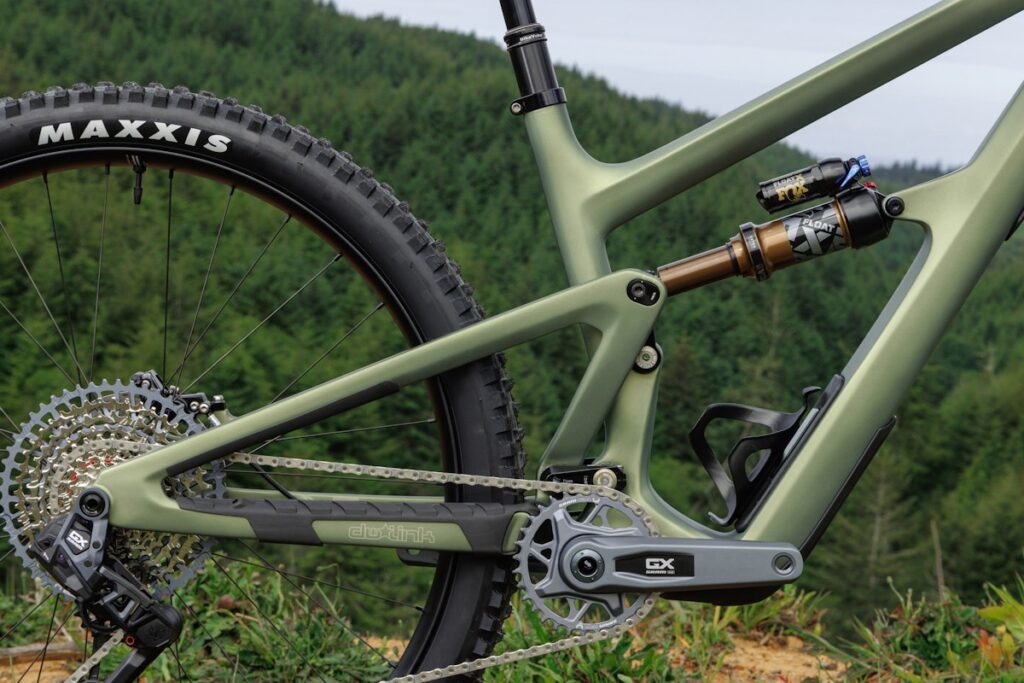
DW-Link uses two short, counter-rotating links that define the rear axle path and leverage curve. The design is focused on:
- High early anti-squat for efficient pedaling
- Controlled axle path to maintain traction under power
- Progressive leverage curve for support and bottom-out resistance
- A balanced mix of pedaling stability and active suspension
In practice, this means DW-Link bikes tend to:
- Pedal efficiently without excessive bob
- Sit higher in the travel while climbing
- Offer strong mid-stroke support for pumping terrain
- Resist blowing through travel on compressions
Switch Infinity: Translating Main Pivot on Kashima Rails
Switch Infinity uses a Fox-built translating pivot: the main pivot rides up and down on two Kashima-coated rails. The pivot moves in one direction through the early travel, then reverses direction deeper in the stroke—hence “switch infinity.”
Key characteristics:
- High anti-squat early in the travel for pedaling
- Reduced anti-squat deeper in the stroke for plushness
- Very low friction through the main pivot
- A smooth, “bottomless” feel at the end of the travel
The result is a system tuned to:
- Climb well enough for all-mountain use
- Descend with a calm, glued-to-the-ground feel
- Maintain traction in loose, choppy terrain
2. Climbing Performance
DW-Link Climbing Feel
DW-Link has earned its reputation as one of the best pedaling suspension designs on the market. On long climbs, especially seated fire road efforts or technical grinds, it feels:
- Efficient – less energy lost to suspension bob
- Stable – the bike rides relatively high in its travel
- Traction-rich – rear wheel remains hooked up under power
- Minimal reliance on lockout – many riders leave shocks fully open
On bikes like the Pivot Trail 429 or Ibis Ripley/Ripmo, DW-Link makes long climbs feel less tiring and more direct.
Switch Infinity Climbing Feel
Switch Infinity climbs well, but the emphasis is different. It’s designed for traction and comfort, not pure efficiency.
Climbing traits:
- Very good grip on technical, loose climbs
- A slightly more active feel under power
- Less “snap” out of the saddle than DW-Link
- Does not feel sluggish, but more relaxed
On Yeti’s SB120, SB140, and SB160, the system gives you enough support to climb effectively, but it clearly leans downhill in its priorities.
Climbing Summary
- If you care about fast, efficient climbing, DW-Link has the edge.
- If you care about traction and comfort on technical uphills, Switch Infinity narrows the gap but still feels more active.
3. Descending Performance
DW-Link Descending Feel
DW-Link descends very well—especially for riders who like an engaged, responsive platform.
Typical descending characteristics:
- Supportive mid-stroke – great for pumping rollers, berms, and compressions
- Predictable behavior – the suspension feel remains consistent as speed increases
- Good small-bump performance, though not the most luxurious
- Encourages an active riding style—popping off features, changing lines, and driving the bike
DW-Link bikes feel fast and composed, but the character leans more toward supportive and efficient rather than ultra-plush.
Switch Infinity Descending Feel
This is where Switch Infinity really stands out. Yeti’s SB bikes are known for feeling calm and composed when the trail speeds up and roughens.
Descending traits:
- Excellent small-bump sensitivity – the wheel tracks the ground very well
- “Bottomless” feel deeper in the travel
- Very strong traction in braking bumps, rocks, and roots
- Encourages high-speed, aggressive descending
- Slightly more “neutral” mid-stroke support compared to DW-Link
Switch Infinity feels like it was designed primarily for descending speed and confidence, particularly in rough, high-consequence terrain.
Descending Summary
- If your riding is heavily biased toward fast, rough descents, Switch Infinity is hard to beat.
- If you want a mix of support, pop, and speed, DW-Link is extremely competitive.
4. Mid-Stroke Support, Pop, and Pump
DW-Link
- Stronger mid-stroke support
- Great for pumping transitions and generating speed
- Feels “sporty” under an active rider
- Encourages manualing, popping, and pressing into the bike
Switch Infinity
- More neutral through the mid-stroke
- Transitions toward plushness as it approaches the end of travel
- Feels more “grounded” than “poppy”
- Ideal for riders who prioritize stability over playfulness
Support & Pop Winner: DW-Link
If you like to work the terrain and want a bike that rewards input, DW-Link is the better fit.
5. Small-Bump Sensitivity & Traction
DW-Link
- Good sensitivity
- Balanced against efficiency
- Doesn’t feel dead or harsh, but it’s clearly tuned with pedaling in mind
Switch Infinity
- Among the best in the industry for small-bump tracking
- Very low friction in the main pivot
- Feels calm and smooth over chattery terrain and braking bumps
Sensitivity Winner: Switch Infinity
If you ride a lot of rough, rocky, or braking-bump-heavy trails, SI will feel noticeably plusher.
6. Maintenance, Service, and Long-Term Ownership
DW-Link Maintenance
- Uses standard pivots and bearings
- Straightforward service intervals
- No proprietary sliding mechanisms
- Easy to service at most competent shops
- Lower long-term cost and less maintenance anxiety
Switch Infinity Maintenance
- Requires periodic greasing of the sliding rails
- Needs more attention in muddy, wet, or dusty climates
- Relies on proprietary hardware from Yeti/Fox
- Replacement or service parts are more expensive
- Still robust, but more “hands-on”
Maintenance Winner: DW-Link
If you ride a lot in adverse conditions or want low-touch ownership, DW-Link is the safer option.
7. Brand Ecosystem and Bike Choices
DW-Link Brands
- Pivot – trail, enduro, XC, and more
- Ibis – short-, mid-, and longer-travel trail/enduro
- Turner (historically) and other licensees in more limited runs
DW-Link gives you access to multiple brands, price points, and frame styles.
Switch Infinity Brands
- Yeti only
If you’re set on Switch Infinity, you’re also committing to Yeti’s SB lineup and price structure.
8. Pros & Cons Overview
DW-Link – Pros
- Outstanding pedaling efficiency
- Strong mid-stroke support and pop
- Great all-round trail and enduro versatility
- Lower maintenance
- Available across multiple brands
- Balanced feel for riders who pedal a lot and still want speed downhill
DW-Link – Cons
- Not as plush or “bottomless” as Switch Infinity
- Slightly more pedal feedback in very rough terrain
- May feel firmer than some riders prefer
Switch Infinity – Pros
- Excellent small-bump sensitivity
- Very plush, composed descending feel
- Bottomless sensation at full travel
- Great for aggressive, high-speed descending
- Strong traction in rough, technical terrain
Switch Infinity – Cons
- Requires more maintenance and attention
- Less efficient than DW-Link on long climbs
- Available only on Yeti bikes
- Typically found on higher-priced builds
9. Which One Is Right for You?
Choose DW-Link if:
- You pedal a lot—big days, long climbs, or marathon trail rides.
- You like a supportive, responsive suspension feel.
- You want one bike to do a bit of everything—trail, light enduro, big days.
- You prefer lower maintenance and simpler hardware.
- You want flexibility to choose between brands like Pivot and Ibis.
DW-Link is the better choice if you’re an all-rounder rider who values efficiency and support as much as descending confidence.
Choose Switch Infinity if:
- You ride steep, rough, or high-speed terrain often.
- You care more about plushness and traction than climbing sharpness.
- You prefer a grounded, composed bike over a poppy one.
- You’re comfortable with a bit more maintenance.
- You specifically want a Yeti SB platform.
Switch Infinity is ideal if you’re a descend-first rider who wants a bike that stays calm and controlled when trails get rowdy.
Final Thoughts
DW-Link and Switch Infinity are both top-tier suspension designs, but they are not chasing the same exact feel.
- DW-Link is the efficient all-round performer—great for riders who pedal a lot, use the bike across mixed terrain, and like a supportive, engaging suspension feel. It provides better climbing efficiency, more mid-stroke support, and lower maintenance demands.
- Switch Infinity is the descending specialist—built for riders who prioritize plushness, traction, and composure when the trail points down and the speed goes up. It isn’t as efficient on endless climbs, but it rewards you on the way back down with a uniquely smooth ride character.
If your riding is split evenly between up and down, or you want one bike for everything from long trail rides to occasional bike-park laps, DW-Link is the safer, more versatile choice. If your priority is descending performance, technical terrain, and that “bottomless” big-mountain feel—and you’re happy to stay within the Yeti ecosystem—Switch Infinity is hard to beat.
There’s no wrong answer here—only the system that best matches how and where you ride.
FAQ
Which climbs better: DW-Link or Switch Infinity?
DW-Link climbs better overall. It provides higher early anti-squat, more efficient pedaling, and a firmer platform on long seated climbs.
Which descends better: DW-Link or Switch Infinity?
Switch Infinity generally descends better in very rough or high-speed terrain due to its plushness, small-bump sensitivity, and bottomless end-stroke feel.
Is Switch Infinity high maintenance?
It’s not fragile, but it does require more maintenance than DW-Link. The sliding rails need periodic greasing and extra care in wet, muddy, or dusty conditions.
Does DW-Link feel harsh?
No. It’s supportive rather than harsh. Many riders appreciate its firm, controlled mid-stroke for pumping terrain and staying high in the travel, but it’s not as cloud-like as Switch Infinity.
Is DW-Link better for long rides?
Yes. Its pedaling efficiency and reduced bob make it a strong choice for all-day rides and big elevation days.
Is Switch Infinity only available on Yeti bikes?
Yes. Switch Infinity is proprietary to Yeti and only appears on their SB series.
Which system is better for enduro racing?
Both can work well. Riders who value speed on the descents and ultra-plush traction may lean toward Switch Infinity. Riders who pedal more stages or want a sharper, more efficient feel may prefer DW-Link.
Which platform is easier to live with long term?
DW-Link. Standard pivots, simpler service, and multiple brand options make it easier from a long-term ownership perspective.
Related Content:
- Best E-Bike Brands
- Best Mountain Bike Brands
- Trek vs Specialized
- Santa Cruz Bikes Review
- Yeti Bikes Review
Why Trust This Guide?
BestBikeBrands is built by lifelong cyclists with decades of real-world experience — in the shop, on the trail, and behind the wrench. Our goal is simple: to help riders choose the best bikes and gear with confidence, backed by expert insights and hands-on testing. Learn more about us →