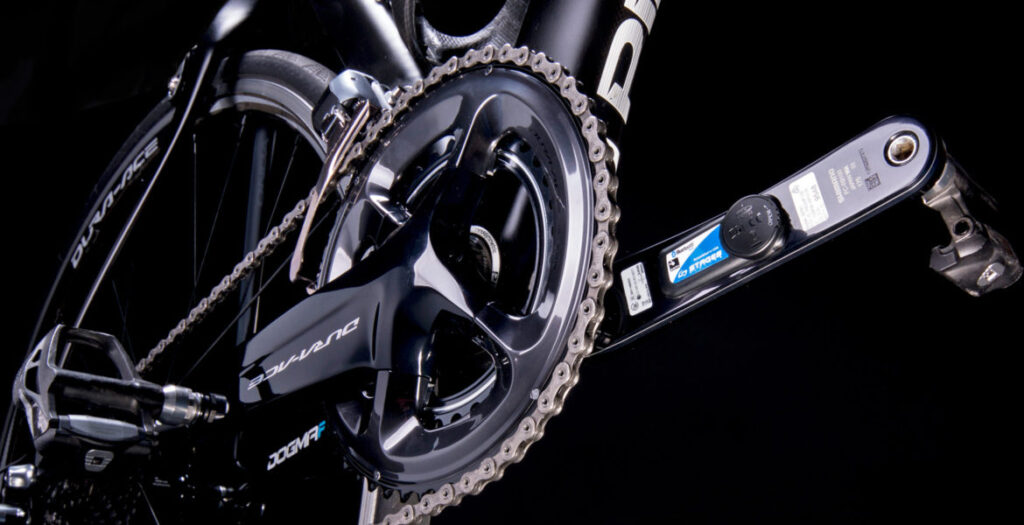
Power meters used to be niche tools reserved for elite racers and data-obsessed cyclists. Today, they’re mainstream training equipment. Prices have dropped, accuracy has improved, and installation is easier than ever. More importantly, riders now understand why power matters—not just that it exists.
A power meter doesn’t make you faster by itself. What it does is remove guesswork. It tells you exactly how hard you’re working, whether you’re pacing a climb, managing fatigue, or training efficiently with limited time. Heart rate lags. Speed lies. Power is immediate and honest.
This guide breaks down the best power meters available in 2026, explains the different types, and helps you choose the right option for your bike, budget, and riding goals—without drowning you in marketing claims or lab jargon.
Why Train With Power
Power-based training has matured. It’s no longer just about FTP tests and interval spreadsheets.
Modern riders use power to:
- Pace long climbs and endurance rides
- Avoid overcooking efforts early in races or events
- Track fitness trends over time
- Train effectively indoors and outdoors
- Compare effort across terrain, wind, and conditions
With platforms like TrainingPeaks, Zwift, and Garmin Connect now deeply integrated, power data is easier to interpret than ever.
Power Meter Types: What’s Changed and What Still Matters
1. Pedal-Based Power Meters
Pedal-based systems remain the most versatile option. They’re easy to swap between bikes and don’t require drivetrain compatibility.
Pros
- Simple installation
- Easy to move between bikes
- Usually dual-sided options available
Cons
- Pedal choice affects shoe compatibility
- Slightly more exposed in crashes
2. Crank Arm Power Meters
These attach to one or both crank arms and offer a clean, reliable solution—especially for Shimano users.
Pros
- Excellent accuracy
- Protected location
- Often more affordable
Cons
- Bike-specific
- Swapping bikes takes time
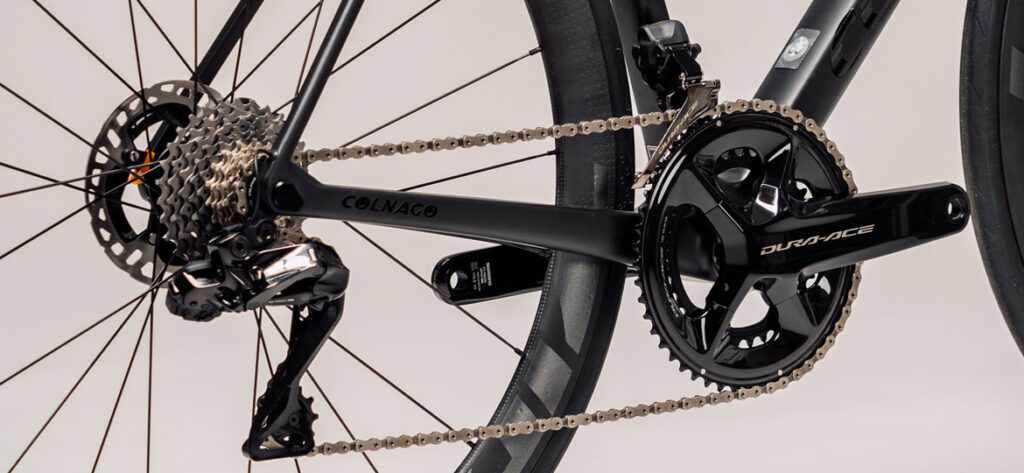
3. Spider-Based Power Meters
Spider units measure power at the crankset spider, capturing total system output before drivetrain losses.
Pros
- Highly accurate
- Balanced left/right measurement without estimation
- Clean integration
Cons
- More expensive
- Requires crankset compatibility
4. Hub-Based Power Meters
Once common, now increasingly rare.
Pros
- Extremely consistent data
- Not affected by crank or pedal flex
Cons
- Locked to one wheel
- Limited wheel choice
- Largely obsolete in 2026
Best Power Meters
Best Overall Power Meter: Garmin Rally RS200
Garmin’s Rally pedals are the most complete power meter system available in 2026. Accuracy is excellent, reliability is proven, and the ecosystem integration is unmatched.
The RS200 (SPD-SL) version fits road riders best, while Rally XC and Rally RK options cover off-road and Look users. Dual-sided measurement gives true left/right balance, cycling dynamics, and consistent data across all conditions.
Why it stands out
- Accurate and stable across temperatures
- Excellent battery life
- Deep Garmin ecosystem support
- Easy to swap between bikes
Best for: riders who want maximum flexibility and long-term platform support.
Best Value Pedal Power Meter: Favero Assioma Duo
Favero Assioma pedals continue to be the benchmark for value, accuracy, and simplicity. They’re lighter than Garmin Rally, extremely accurate, and famously reliable.
The Duo version provides true dual-sided measurement, while the Uno offers a more affordable single-sided option. Installation takes minutes, calibration is automatic, and battery life is excellent.
Why riders love them
- Outstanding accuracy
- Rechargeable batteries
- Minimal setup hassle
- Strong price-to-performance ratio
Best for: riders who want reliable power data without paying Garmin-level prices.
Best Single-Sided Power Meter: 4iiii Precision 3+
Single-sided power meters remain a popular entry point, and 4iiii’s Precision 3+ is one of the best executions.
It mounts cleanly to the left crank arm, offers excellent accuracy, and works well for riders primarily focused on pacing and training load rather than perfect left/right balance.
Strengths
- Affordable
- Lightweight
- Accurate enough for structured training
Trade-offs
- Left/right balance is estimated
- Bike-specific installation
Best for: budget-conscious riders and first-time power meter users.
Best Spider-Based Power Meter: Quarq DZero / DFour
Quarq remains the gold standard for spider-based power measurement. Whether paired with SRAM or Shimano cranksets, the data is clean, consistent, and nearly maintenance-free.
Because power is measured before drivetrain losses, spider-based systems provide a true representation of rider output without relying on balance estimation.
Why it’s trusted
- Exceptional reliability
- Clean data
- No pedal or crank arm bias
Best for: riders who want “set it and forget it” accuracy.
Best Budget Power Meter: Magene PES P505
Magene has quietly become a serious contender in the budget power meter space. The P505 offers dual-sided measurement at a price point that undercuts most competitors.
While the ecosystem isn’t as polished, accuracy is solid and compatibility is improving year over year.
Best for: riders who want dual-sided data on a tight budget.
Accuracy: How Much Does It Really Matter?
In real-world training, consistency matters more than absolute accuracy. A power meter that reads 2% high—but does so consistently—is far more useful than one that fluctuates.
Most modern power meters in 2026 claim ±1–2% accuracy, which is more than sufficient for:
- FTP testing
- Interval training
- Pacing events
- Tracking fitness trends
Chasing marginal accuracy gains only makes sense at the elite level.
Single-Sided vs Dual-Sided: The Honest Answer
Dual-sided power meters provide more data—but not always more actionable insight.
Dual-sided makes sense if you:
- Are rehabbing an injury
- Want detailed pedaling analysis
- Race or train at a high level
Single-sided is enough if you:
- Train for fitness
- Pace long rides
- Want consistent workload tracking
For most riders, single-sided power is perfectly adequate.
Compatibility Pitfalls to Avoid
Before buying, confirm:
- Crank length compatibility
- Bottom bracket standards
- Pedal cleat type
- Head unit compatibility (ANT+/Bluetooth)
Most modern units support both ANT+ and Bluetooth, but older head units can still cause headaches.
Battery Types: Coin Cell vs Rechargeable
Coin cell (CR2032)
- Easy to replace
- Long life
- Carry spares
Rechargeable
- Environmentally friendly
- No battery swapping
- Must remember to charge
Neither is inherently better—it’s preference.
Who Actually Needs a Power Meter?
Great fit for:
- Structured training
- Time-limited riders
- Endurance events
- Indoor trainer users
- Riders pacing long climbs
Not essential for:
- Casual riding
- Social group rides
- Riders uninterested in training data
Power meters are tools—not requirements.
Common Power Meter Questions
Do power meters work indoors and outdoors?
Yes. They’re ideal for both, especially when paired with smart trainers.
How long do power meters last?
Most last many years with minimal maintenance.
Can one power meter work across multiple bikes?
Pedal-based meters excel here.
Do I need calibration?
Modern systems auto-calibrate, but occasional zeroing is still good practice.
Quick Comparison Snapshot
| Power Meter | Type | Best For |
|---|---|---|
| Garmin Rally RS200 | Pedal | Best overall |
| Favero Assioma Duo | Pedal | Best value |
| 4iiii Precision 3+ | Crank arm | Budget / beginners |
| Quarq DZero | Spider | Accuracy purists |
| Magene P505 | Spider | Budget dual-sided |
Closing Thoughts: Choosing the Right Power Meter in 2026
The best power meter isn’t the most expensive—it’s the one that fits your bike, your training goals, and your tolerance for complexity.
If you want flexibility and ecosystem integration, Garmin Rally remains the benchmark. If value and reliability matter most, Favero Assioma continues to dominate. For riders stepping into power training for the first time, single-sided crank options still make a lot of sense.
Power doesn’t make riding more complicated—it makes it more honest. And in 2026, there’s never been a better time to add that clarity to your training.
FAQ
What’s the best power meter for most riders in 2026?
For most riders, pedal-based meters are the easiest “buy once, move between bikes” option. If you want a proven, no-drama setup with strong compatibility, a quality pedal meter is usually the safest pick.
Is single-sided power accurate enough?
Yes—single-sided power is accurate enough for pacing, structured training, and tracking fitness trends, as long as you understand it estimates total power from one leg. Consistency matters more than perfection for most riders.
Pedal, crank, or spider: which type should I choose?
- Pedal-based: best if you swap between bikes or want the simplest install
- Crank arm: best budget-friendly option if you’re staying on one bike
- Spider-based: best for clean “total power” data and set-and-forget reliability
Do power meters work with any head unit?
Most modern power meters broadcast via ANT+ and/or Bluetooth. As long as your head unit or phone app supports those, you’re good. Older computers can be the limiting factor.
How often do I need to calibrate or “zero” a power meter?
Many units auto-zero while coasting, but it’s still smart to do a quick manual zero before important rides or tests—especially if temperatures have changed since your last ride.
Can I use a power meter for indoor training?
Absolutely. A bike-mounted power meter pairs well with indoor apps and can be used to compare indoor vs outdoor performance more consistently than trainer estimates alone.
Are power meters worth it if I don’t race?
Yes, if you like training with structure, pacing long climbs, or improving efficiently with limited time. If you ride purely for fun without tracking progress, it may be optional.
What accuracy spec should I look for?
Anything in the ±1–2% range from a reputable brand is more than good enough for real training. The bigger difference is usually stability (repeatability) and reliability.
Coin cell vs rechargeable: which battery type is better?
Neither is “better,” just different:
- Coin cell: quick swap, carry a spare
- Rechargeable: no disposables, but you must remember to charge
What’s the biggest mistake first-time buyers make?
Buying without checking compatibility—pedal cleat type, crank model, bottom bracket, or head unit support. The second biggest mistake is chasing perfect accuracy instead of choosing the simplest system they’ll actually use.
Related Content:
- Best Road Bikes
- Best Budget Road Bikes
- How to Wash a Bike Safely
- Best Commuter Bikes Guide
- Best E-Bike Brands
Why Trust This Guide?
BestBikeBrands is built by lifelong cyclists with decades of real-world experience — in the shop, on the trail, and behind the wrench. Our goal is simple: to help riders choose the best bikes and gear with confidence, backed by expert insights and hands-on testing. Learn more about us →