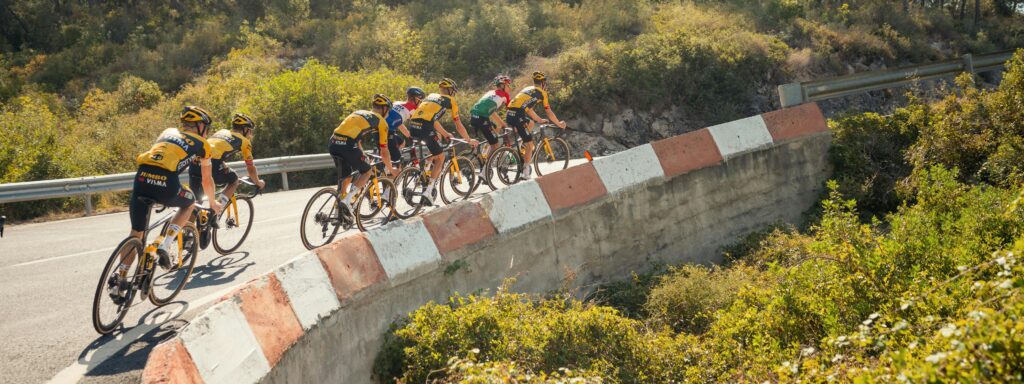
Few bike brands have reshaped modern road cycling the way Cervélo has. While others built their reputations on heritage, style, or racing romance, Cervélo took a different route: numbers first, feelings second. Aerodynamics, stiffness, efficiency — if it made the bike measurably faster, it mattered. If it didn’t, it was ignored.
From the original Soloist to today’s S5, Cervélo has consistently pushed the industry toward data-backed design. Long before “aero road” was a category, Cervélo was already testing frames in wind tunnels and publishing drag numbers when most brands were still talking about tube shapes in vague terms.
Founded in Canada in the mid-90s, Cervélo built its identity around solving problems other companies weren’t yet willing to admit existed. By 2026, it stands as one of the most engineering-driven brands in cycling — respected, sometimes debated, but never ignored.
This is a look at how Cervélo got here, what they build today, and who these bikes actually make sense for.
The Cervélo Story
Cervélo was founded in 1995 by Phil White and Gérard Vroomen, both engineering students at McGill University in Montreal. They weren’t trying to start a bike brand in the traditional sense. They were trying to fix inefficiencies.
At the time, road bikes were designed largely by convention. Tube shapes looked the way they did because that’s how they’d always looked. Aerodynamics were discussed, but rarely measured in any meaningful way. White and Vroomen approached the problem like engineers: test everything, question assumptions, publish the results.
Early Cervélo frames were wind-tunnel tested at a time when that was still considered overkill. The name itself — a blend of cervello (Italian for “brain”) and vélo — made the point clear. This was meant to be a thinking rider’s brand.
Through the late 1990s and early 2000s, Cervélo gained credibility quickly. Models like the P2 and Soloist weren’t just fast on paper — they won races. When Team CSC and later Garmin rode Cervélos at the highest level, the brand moved from “engineering experiment” to legitimate performance player.
By the 2010s, Cervélo was deeply embedded in pro cycling and triathlon. Its acquisition by Pon Holdings gave it access to broader resources while allowing it to stay focused on performance rather than lifestyle branding. That focus hasn’t changed much since.
Brand Philosophy: Engineering Before Everything Else
Cervélo’s design philosophy hasn’t softened with success. It’s still rooted in efficiency, even when that makes the bikes feel a little less romantic than their Italian counterparts.
Aerodynamics as a Starting Point
Cervélo didn’t add aerodynamics later — it started there. Frames like the Soloist and S5 were built around drag reduction long before “aero road” bikes became mainstream. Dropped seatstays, truncated airfoil tubes, deep forks — Cervélo normalized ideas that the rest of the industry eventually adopted.
Stiffness Where It Matters
Rather than chasing absolute lightness, Cervélo has always focused on stiffness-to-weight. Bottom brackets, head tubes, and chainstays are engineered to resist flex under real load, not just lab conditions. The result is a bike that feels tight and direct when pushed hard.
Data Over Intuition
CFD modeling, finite element analysis, wind-tunnel testing — these aren’t marketing bullet points for Cervélo. They’re design tools. Every frame goes through iterations based on measured performance, not aesthetic preference.
Minimalist by Choice
Cervélo bikes tend to look restrained. Logos are subtle, paint schemes are conservative, and lines are clean. That’s intentional. The brand has never chased visual drama — it assumes riders who care about speed don’t need it.
Cervélo Lineup Overview
Cervélo’s lineup is wide now, but still coherent. Everything feels like it comes from the same engineering mindset, even when aimed at very different riders.
S5 — Pure Aero Intent
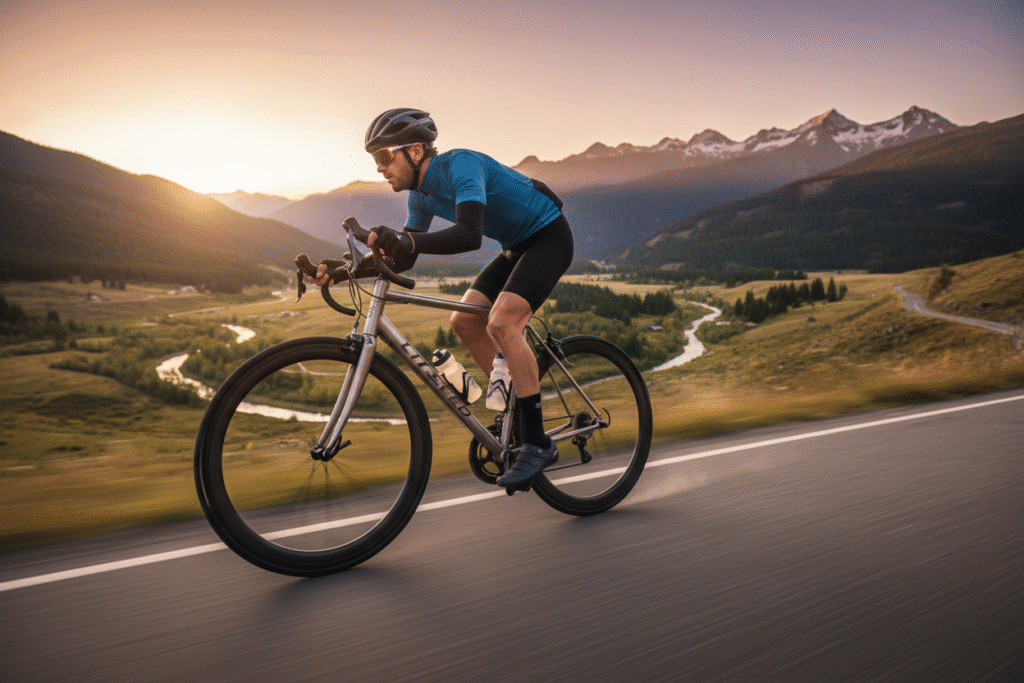
The S5 is Cervélo’s most uncompromising road bike. It’s built for speed on flat and rolling terrain, where aerodynamics dominate everything else.
Deep tube profiles, an aggressively integrated cockpit, and a frame that prioritizes airflow management over ease of adjustment define the bike. The 2026 version improves weight slightly, but it’s still not trying to be a climber’s bike.
This is a bike for riders who understand what they’re trading: adjustability and simplicity for outright speed.
Who it suits: sprinters, strong racers, and riders who care deeply about watts at 45 km/h.
R5 — Lightweight Without Drama
The R5 exists for one reason: climbing efficiently while still handling like a modern race bike. It’s lighter, more compliant, and less visually aggressive than the S5.
Unlike many lightweight bikes, the R5 doesn’t feel fragile or twitchy. The geometry remains firmly race-oriented, and the frame stiffness keeps the bike composed on fast descents.
It’s a bike that feels sharp without feeling nervous.
Who it suits: climbers, stage racers, and riders who want speed without full aero complexity.
Soloist — The Sensible Race Bike
The return of the Soloist name makes sense. It fills the space between the R5 and S5 without forcing riders into extreme design choices.
Aerodynamic shaping is present, but not overwhelming. Cable routing is cleaner than older bikes, but serviceable. Weight is competitive without being obsessive.
For many riders, this is the Cervélo that actually makes the most sense.
Who it suits: serious enthusiasts, club racers, and riders who want performance without constant wrenching.
Caledonia & Caledonia-5 — Built for Real Roads
The Caledonia line acknowledges something Cervélo once avoided admitting: not every fast ride happens on perfect pavement.
These bikes maintain Cervélo’s efficiency-first approach, but with geometry and carbon layups tuned for longer days and rougher surfaces. Tire clearance is generous, and the ride feel is noticeably calmer.
They still feel quick — just less demanding.
Who they suit: endurance riders, gran fondo riders, and anyone who values speed without constant fatigue.
Áspero & Áspero-5 — Gravel, Cervélo Style
Cervélo’s gravel bikes don’t chase comfort first. They chase speed.
The Áspero feels like a road bike that wandered onto dirt. Steering is quick, the frame is stiff, and aerodynamics still matter. The adjustable TrailMixer fork lets riders tune handling depending on tire size — a very Cervélo solution to a gravel problem.
It’s not the bike for slow touring, but that’s the point.
Who it suits: gravel racers and fast mixed-surface riders.
P-Series — Time Trial and Triathlon DNA
Cervélo’s dominance in triathlon is no accident. The P-Series remains one of the most aerodynamically efficient platforms available.
Integration is deep: hydration, storage, fit adjustment, and cable routing are all part of the system. These bikes are designed to disappear beneath the rider once set up correctly.
They reward patience and precision.
Who they suit: serious triathletes and time trial specialists.
ZHT-5 & ZFS-5 — A New Direction
Cervélo’s move into mountain biking surprised a lot of people, but the execution was on-brand.
Lightweight, stiff, and race-focused, these bikes don’t try to reinvent MTB design — they apply Cervélo’s efficiency mindset to it. Geometry is modern, not radical. Weight is competitive. Performance is the priority.
They feel less playful than some competitors, but very fast.
Who they suit: XC racers and performance-driven off-road riders.
Ride Feel: What Cervélos Actually Feel Like
Cervélo bikes share a common personality across categories.
They feel tight. Not harsh, but controlled. Power transfer is immediate, and feedback from the road is clear. Some riders love this. Others find it less forgiving than brands that prioritize compliance.
Handling is precise rather than playful. Descents feel stable and predictable, especially at speed. These are bikes that reward clean inputs.
Comfort exists where it’s intentional — most notably on the Caledonia — but it’s never the headline.
Where Cervélo Excels
- Aerodynamics that matter outside the wind tunnel
- Consistent race geometry across models
- Exceptional high-speed stability
- Engineering transparency
- Strong dealer-based support compared to DTC brands
Where Cervélo Loses Some Riders
- Pricing climbs quickly at the top end
- Fully integrated bikes demand experienced mechanics
- Ride feel can feel firm for casual riders
- Branding lacks emotional flair compared to Italian rivals
Who Cervélo Makes Sense For
Cervélo tends to attract riders who enjoy understanding why their bike is fast.
If you care about watts, CdA, and repeatable performance, these bikes make a lot of sense. If you want a bike that feels relaxed, expressive, or indulgent, other brands may resonate more.
Cervélo is a brand for riders who trust engineering — and who are willing to accept its trade-offs.
Closing Thoughts
Cervélo has never tried to be everything to everyone. It builds bikes for riders who believe speed should be earned through design, not storytelling.
By 2026, the brand feels mature rather than softened. It’s expanded into new categories without losing its identity, and its bikes remain some of the most efficient tools you can ride on pavement or dirt.
They won’t charm everyone. They don’t try to.
But for the rider who values clarity, purpose, and performance that can be measured, Cervélo continues to do exactly what it always has — quietly make bikes faster.
Related Content:
- Colnago Bikes Review
- Best Road Bike Brands
- Trek vs Specialized
- Cervelo Bikes Review
- Pinarello Bikes Review
Why Trust This Review?
BestBikeBrands is built by lifelong cyclists with decades of real-world experience — in the shop, on the trail, and behind the wrench. Our goal is simple: to help riders choose the best bikes and gear with confidence, backed by expert insights and hands-on testing. Learn more about us →