Overview
Ask any seasoned mechanic or longtime e-bike rider about motor types, and you’ll almost always hear the same sentiment: the motor defines the entire personality of an e-bike. It dictates how the bike climbs, how it handles, how predictable it feels under load, and whether the assistance feels silky smooth or a bit more mechanical. And although the tech has evolved dramatically over the last decade, mid-drives and hub motors still create very different riding experiences in 2026.
Choosing the right system isn’t about which one is universally “better.” It’s about which aligns with your terrain, riding habits, and expectations. Mid-drives shine when you want natural pedaling, efficient climbing, and balanced handling. Hub motors excel when simplicity, affordability, and straightforward power delivery matter most. Both motor types have improved enough that neither feels like a compromise—just different tools for different styles of riding.
This guide breaks down how each system works, where each one excels, where they fall short, and how you can match the motor to the riding experience you actually want.
Key Takeaways
Mid-drives feel the most natural, using your gears and torque to climb efficiently.
Hub motors feel simpler, providing direct assistance without relying on drivetrain input.
Mid-drives are ideal for hills, heavier riders, cargo bikes, and long-term durability.
Hub motors are best for commuting, budget builds, and riders wanting low-cost reliability.
Mid-drives cost more but deliver stronger real-world performance.
Hub motors are easier to service, repair, and replace.
The right choice depends on terrain, load, and riding style—not hype.
1. How Each Motor Works (In Plain Terms)
Mid-Drive Motors
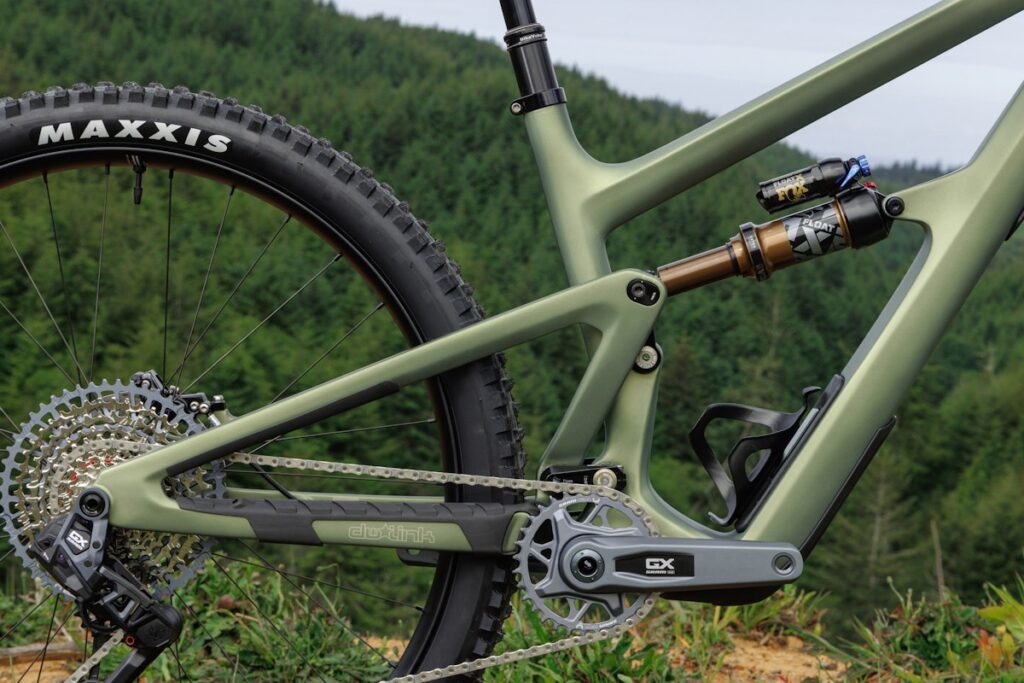
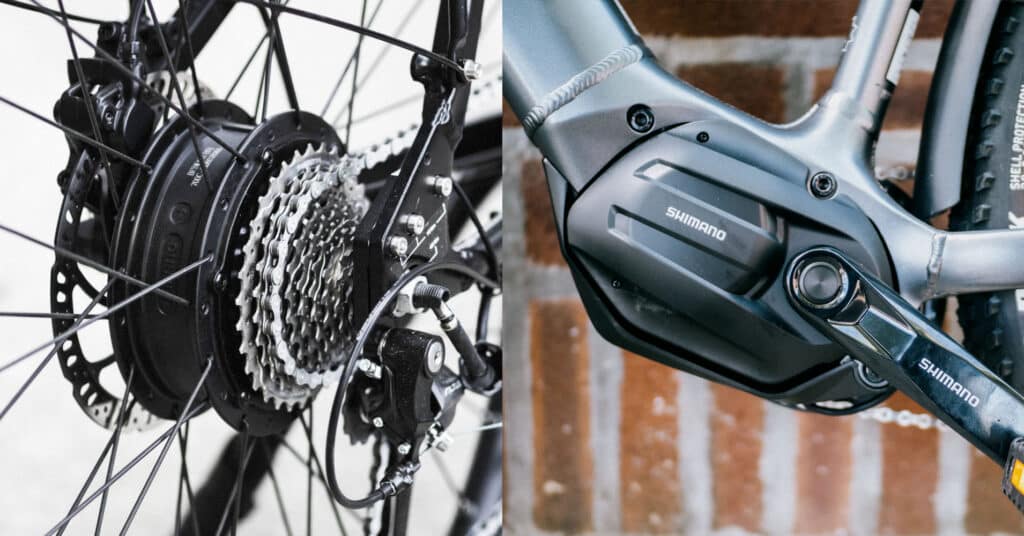
A mid-drive sits at the bottom bracket and powers the cranks. Instead of spinning the wheel directly, it works through your chain and gears—meaning the drivetrain becomes part of the motor system.
What That Means on the Bike
- Your gears matter
- Motor output responds to your pedaling torque
- Assistance feels smooth and very rider-dependent
- Downshifting increases torque and efficiency
A good mid-drive feels like a fitter version of you—amplifying your input instead of overpowering it.
Hub Motors
A hub motor is built into the front or rear wheel (rear is far more common). It bypasses the drivetrain entirely and simply turns the wheel.
What That Means on the Bike
- No need to shift for power
- Power delivery is steady and gear-independent
- Pedaling can feel separate from the assist
- Very few moving parts
Hub motors feel more like being pushed from behind (or pulled from the front), depending on placement.
2. Ride Feel: Natural vs. Power-on-Demand
Mid-Drive Ride Feel
If “natural” assistance is your priority, mid-drives win easily. Most use torque sensors that read your input instantly and respond in a way that feels proportional and intuitive.
Riders usually describe mid-drives as:
- Smooth
- Controlled
- Predictable
- Excellent at low-speed maneuvers
- Stable on technical terrain
Because power is tied to your effort, mid-drives reward good shifting and consistent cadence.
Hub Motor Ride Feel
Hub motors deliver a more uniform push—great for casual riders who just want easy forward motion without thinking much about shifting.
They tend to feel:
- Boosty and eager
- Less dependent on your torque
- Occasionally abrupt from a stop (cadence sensor systems)
- Very easy for beginners
Higher-end hub systems have smoothed this out, but even then, the feel is different from the leg-like behavior of a mid-drive.
3. Climbing Performance (Major Difference)
Mid-Drive on Climbs
Mid-drives dominate on climbs because they can use low gears to multiply torque. The ability to shift down dramatically increases efficiency at slow speeds.
Why mid-drives climb better:
- They use mechanical advantage
- They avoid bogging down at low RPM
- They stay cooler on long climbs
- Torque output rises when you shift properly
Best suited for:
- Steep urban hills
- Mountain riding
- Cargo bikes
- Heavier riders
- Off-road terrain
Hub Motor on Climbs
Hub motors can handle mild to moderate hills, but steep or extended climbs expose their limitations. Because they can’t leverage gearing, they lose torque quickly at low speeds.
Signs a hub motor is struggling:
- Sluggish acceleration
- Audible strain
- Excess heat buildup
- Inconsistent assist
They’re still perfectly fine for:
- Short hills
- Gentle inclines
- Light commuter loads
4. Weight Distribution & Handling
Mid-Drive Handling
A mid-drive places weight low and centered—mechanics and advanced riders love this. The bike feels balanced, predictable, and composed in rough terrain.
Benefits:
- Natural cornering
- Better traction
- Stable climbing and descending
- Precise control in technical areas
This is why nearly every performance-oriented e-MTB uses a mid-drive.
Hub Motor Handling
Hub motors shift weight to one of the wheels, subtly changing how the bike behaves.
Handling characteristics:
- Rear hubs feel slightly rear-weighted under load
- Front hubs add a touch of steering inertia
- Hard acceleration can spin out easier
- Less balanced feel on rough terrain
Totally manageable on pavement but noticeable off-road.
5. Drivetrain Wear & Maintenance
Mid-Drive Maintenance
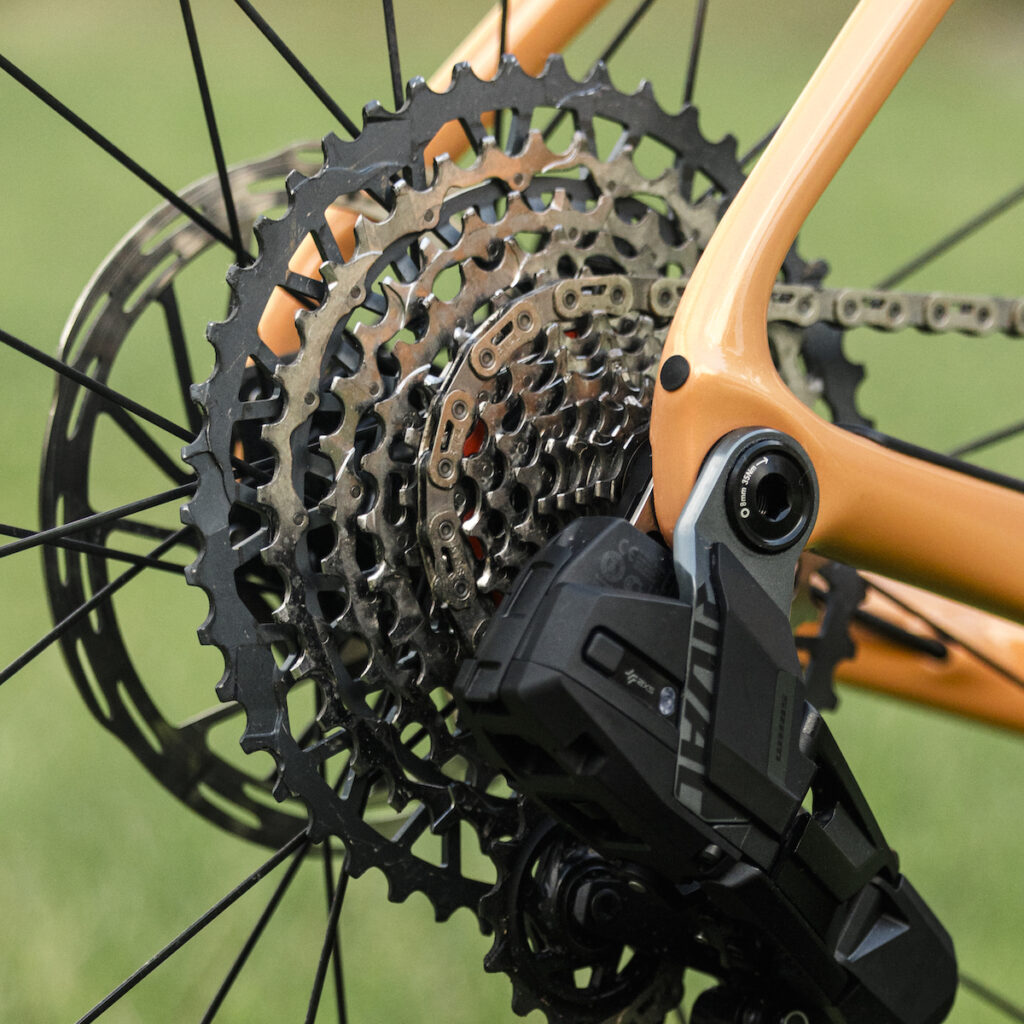
Because the motor drives the chain and cassette, wear increases.
Expect:
- More frequent chain replacements
- Faster cassette wear
- Higher stress on chainrings
This isn’t a problem with proper maintenance, but budget drivetrains may struggle under powerful mid-drives.
Hub Motor Maintenance
Hub motors do not interact with the drivetrain, which means:
- Less chain wear
- Less cassette wear
- Simpler long-term maintenance
Hub systems are closed, durable, and easy to work on.
6. Noise Levels
Mid-Drive Noise
Most modern mid-drives are quiet, but under heavy load you’ll hear a soft mechanical hum.
Hub Motor Noise
Hub motors—especially geared versions—are often nearly silent.
If stealth is important, hub motors generally have the edge.
7. Efficiency and Range
Mid-Drive Range
Mid-drives use gearing to stay within their ideal RPM zone. This can extend range significantly—often 20–40% better than a similarly sized hub-motor battery.
Great for:
- Long commutes
- Touring
- Steep terrain
- Heavy riders and cargo
Hub Motor Range
Hub motors are less efficient at low speeds or on steep hills, which can drain the battery more quickly.
Still great for:
- Flat commutes
- Recreational cruising
- Errands around town
8. Cost Differences
Mid-drives cost more because they’re more sophisticated:
- Precision torque sensors
- More advanced integration
- Higher manufacturing costs
Hub motors keep things simple:
- Lower price
- Easier to mass-produce
- Popular on budget-friendly e-bikes
If your budget is tight, hub motors offer the most approachable entry point into e-cycling.
9. Reliability & Repairability
Mid-Drive Reliability
Mid-drives are extremely robust, but repairs require specialized service and proprietary parts—not ideal for DIY repairers.
Hub Motor Reliability
Hub motors are simple inside (usually only a few key components). If something fails, replacing the entire wheel is often the easiest fix.
Hub motors win for ease of service.
Mid-drives win for durability under heavy load.
10. Who Each Motor Is Best For
Choose a Mid-Drive If You:
- Ride hills regularly
- Value natural, intuitive pedal feel
- Carry heavy loads
- Plan long rides or commutes
- Ride off-road or mixed terrain
- Want maximum handling stability
- Care about efficiency
Choose a Hub Motor If You:
- Want the most affordable e-bike option
- Ride flat or lightly rolling terrain
- Prefer a simple, steady boost
- Want to minimize drivetrain wear
- Value low-maintenance operation
- Are buying a commuter or recreational bike
A Few Last Impressions
Mid-drive motors deliver the most capable all-around performance—especially for riders who tackle steep hills, carry extra weight, or want a ride that feels intuitive and natural. They climb more efficiently, handle with better balance, and stretch battery life further. If you value refinement and versatility, the mid-drive experience is hard to beat.
Hub motors, on the other hand, shine in their simplicity and affordability. They’re quiet, reliable, and perfect for flat-to-rolling terrain, short commutes, or riders who want easy electric assistance without overthinking the mechanics. They get the job done with minimal fuss.
Ultimately, the right choice depends on your terrain and your expectations.
If your riding demands more from the motor, a mid-drive rewards you every time you turn the pedals.
If your rides are casual, practical, and predictable, a hub motor keeps things simple—and keeps costs down.
FAQ
Which motor type lasts longer?
Mid-drives last longer under heavy load; hub motors last longer on flat, easy terrain.
Do hub motors overheat?
They can on steep, prolonged climbs. Mid-drives handle heat better thanks to gear leverage.
Is a mid-drive worth the extra money?
For hilly terrain, cargo loads, or off-road riding: absolutely.
Which motor is better for commuting?
Hub motors are perfect for flat, predictable commuting. Mid-drives are better for mixed or hilly routes.
Do mid-drives wear chains faster?
Yes. They put more torque through the drivetrain, especially in high-assist modes.
Are front hub motors good?
They work for light commuting, but rear hubs offer better traction and handling.
Which system gives better range?
Mid-drives, thanks to higher efficiency and better use of gears.
Related Content:
Why Trust This Guide?
BestBikeBrands is built by lifelong cyclists with decades of real-world experience — in the shop, on the trail, and behind the wrench. Our goal is simple: to help riders choose the best bikes and gear with confidence, backed by expert insights and hands-on testing. Learn more about us →