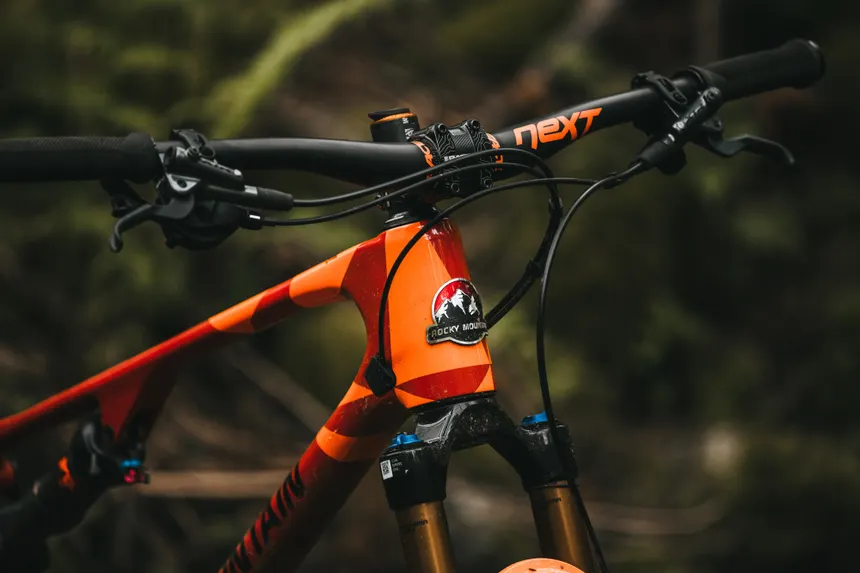
Few bike companies embody the heart of mountain biking like Rocky Mountain Bicycles. Born in the shadow of Canada’s rugged North Shore and refined on legendary trails from Whistler to Moab, Rocky has been shaping what a “real trail bike” feels like since 1981.
In 2026, the brand is still doing what it’s always done best: building bikes that feel at home when the trail gets real—steep, rooty, slick, unpredictable, and fast. Their lineup covers the full spectrum: light carbon XC bikes that don’t panic on descents, enduro platforms you can actually climb, e-MTBs that still feel like mountain bikes (not scooters), and hardtails built for riders who want to keep things simple and rowdy.
If you’re looking for a brand that cares more about ride quality, durability, and raw mountain DNA than marketing flash, Rocky Mountain belongs near the top of your list—especially if you ride technical terrain, ride in bad weather, or ride bikes hard enough that “ownership experience” actually matters.
Brand Heritage
Rocky Mountain started in the early 1980s as a small collective of riders and mechanics in Vancouver’s West End who were doing what early mountain bikers did everywhere: experimenting. They were modifying frames, swapping parts, breaking things, fixing things, and slowly figuring out what worked in real off-road terrain.
Those experiments grew into some of the first purpose-built mountain bikes in Canada—and a company founded around a simple idea: build bikes for the trails we actually ride, not the trails we wish existed.
Through the 1990s and 2000s, Rocky became closely tied to the technical, root-filled lines of British Columbia. That matters because BC trails don’t let bikes hide behind nice conditions. Wet roots and rock slabs don’t care about spec sheets. If your geometry is awkward, you’ll feel it. If your suspension gets overwhelmed, you’ll feel it. If your pivots and bearings can’t handle grit, you’ll feel it—in your wallet.
Bikes like the Element and Slayer weren’t just popular models—they helped define categories before the industry even had names for them. Rocky was also early to ideas that are now totally normal: adjustable geometry, tunable suspension feel, and “one frame, many personalities” thinking that modern riders take for granted.
Today, Rocky Mountain still feels independent in spirit, with design and testing based in Vancouver and assembly spread between Canada and select global partners. And unlike brands that “borrow” authenticity by hiring the right influencers, Rocky’s credibility comes from something less glamorous: the bikes work where they’re from.
Design Philosophy
Rocky’s internal mantra—often summarized as “Ride Your Way”—shows up in the product more than it shows up in the slogans. The brand’s design DNA is a blend of adjustability, real-world testing, and a preference for balanced handling over geometry one-upmanship.
Geometry Tunability
If there’s one thing Rocky is known for, it’s tunable geometry. Most models use RIDE-9 (or the simpler RIDE-4) adjustment system, which lets you change:
- head-tube angle
- bottom-bracket height
- effective seat angle / rider position
- suspension kinematics and feel
And importantly: you can do it without replacing parts. It’s not a “buy a different link for $200” situation. It’s a straightforward, practical system that encourages riders to actually tune their bike instead of just talking about tuning.
This matters because not everyone rides the same trails or wants the same feel. A bike that feels perfect in Squamish might feel wrong in Arizona. RIDE-9 gives you room to make the bike match your terrain and your style.
Real-World Testing
Rocky tests where it hurts. Before a design reaches production, it gets ridden in places that punish mistakes:
- North Shore slabs
- Whistler jump lines and braking bumps
- Squamish climbs and granite
- proper wet-weather misery that exposes weak seals and bad routing
This isn’t just “we rode it on a demo loop.” It’s months of riding where your issues don’t politely wait to appear—they show up immediately.
That feedback loop—especially from riders like Jesse Melamed and the broader race/testing crew—has always been a big part of Rocky’s identity. Their bikes tend to feel like they’ve been argued over by riders and engineers until the rough edges were sanded off.
Balanced Feel Over Pure Numbers
Some brands chase the longest reach, slackest head angle, lowest BB—because it looks impressive on paper. Rocky tends to be more restrained. Their bikes usually land in a sweet spot: modern enough to feel confident at speed, but not so extreme they feel awkward on everyday trails.
The result is a ride character that’s surprisingly consistent across the lineup:
- efficient enough to pedal all day
- confident when the trail steepens
- stable without feeling dead
- playful without feeling sketchy
Rocky bikes don’t feel like they’re trying to prove something. They feel like they’re trying to work.
2026 Model Lineup Overview
Rocky’s lineup in 2026 is broad, but it doesn’t feel bloated. Each model has a clear job, and there’s a common thread running through them: they’re built for trails, not for parking-lot impressions.
1. Instinct
The Instinct remains Rocky’s “do most things well” trail bike—and it’s a big reason people fall into Rocky ownership.
- Travel: 140 mm rear / 150 mm front
- Wheel size: 29″
- Character: all-mountain efficiency with enduro confidence
The Instinct is the bike you’d pick if you want one bike for:
- long trail rides
- technical singletrack
- occasional bike-park days
- mixed terrain where climbing matters but descending still counts
With RIDE-9, you can set it up snappy and efficient for big mileage, or slack and planted when you’re riding steeper, faster trails. For 2026, carbon models lean lighter and cleaner: refined routing, better finishing details, and practical upgrades like frame storage on select builds.
What makes the Instinct feel special isn’t that it wins a category—it’s that it rarely feels out of place.
2. Altitude
This is Rocky’s enduro race machine—the bike that shows up when the terrain is serious and the speeds are high.
- Travel: 160 mm rear / 170 mm front
- Purpose: enduro racing, big-mountain durability, park laps that aren’t gentle
The Altitude has that “race bike that still pedals” personality. It’s stable, calm, and built to carry speed through rough terrain without feeling like it’s trying to toss you.
For 2026, the focus is refinement: better mid-stroke support, improved anti-squat behavior, and a more dialed leverage curve that works well across common shock setups (air or coil, depending on build and rider preference). It’s the kind of bike that rewards commitment—but doesn’t punish you for doing normal trail rides either.
3. Element
The Element has quietly become one of the smartest bikes Rocky makes: light enough to be fast, capable enough to be fun.
- Travel: 120 mm rear / 130 mm front
- Purpose: XC speed with down-country confidence
This is for riders who want to cover ground—fast—but don’t want an XC bike that feels nervous when the trail points down. The Element’s modern geometry makes it feel more confident than old-school XC bikes, and Rocky’s tuning keeps it from feeling like a pogo stick.
For 2026, updates like a stronger pivot layout and future-friendly compatibility details (including UDH on relevant builds) are the kind of “boring improvements” that matter a lot after a few seasons of ownership.
4. Slayer
The Slayer is Rocky’s freeride heart still beating in 2026. This is not a polite bike.
- Travel: 170 mm rear / 180 mm front
- Frame: 6066-T6 alloy or carbon
- Vibe: steep lines, big compressions, park laps, and riders who hit things hard
The Slayer remains one of the few production bikes that can legitimately be built coil or air and still feel balanced. It has that bomb-proof, big-hit confidence that makes rough terrain feel smaller. If you grew up watching freeride edits and still ride like that’s your religion, the Slayer makes sense.
It’s also a cult classic in Western Canada for a reason: the bike matches the terrain.
5. Altitude Powerplay / Instinct Powerplay
Rocky’s e-bikes don’t feel like a side project. They’ve been in this space long enough that the lineup feels mature—and importantly, different.
The standout is the Dyname drive system. Instead of using a common off-the-shelf motor, Rocky developed its own mid-drive platform with a ride feel that a lot of riders describe as “more analog.”
- Battery: 720 Wh in-tube, user-swappable
- Torque: 108 Nm (high, and you feel it on steep climbs)
- Tuning: app-based adjustment for power delivery and diagnostics
The Powerplay bikes are built to climb nasty terrain without that laggy, delayed feeling some systems can have. They’re especially popular with riders who do technical climbs and want the motor to feel like an extension of pedaling—not a separate thing bolted to the bike.
If you’re the kind of rider who wants an e-bike that still feels like mountain biking, this is where Rocky’s personality comes through strongest.
6. Growler
The Growler is the hardtail that refuses to apologize for being a hardtail.
- Wheel: 29″
- Fork travel: 140 mm
- Character: affordable, tough, and ready for real trails
This is a simple bike for riders who want:
- fewer moving parts
- lower cost of ownership
- a bike that can take abuse
- a direct, connected trail feel
The 2026 Growler builds continue the theme: progressive geometry, wide tire clearance, and a frame that’s built like it expects you to ride it hard.
Ride Impressions
Rocky Mountain bikes tend to share a certain feel across models. It’s not “every bike feels the same,” but there’s a common personality: centered, predictable, and confidence-friendly in technical terrain.
Climbing
One of Rocky’s calling cards is how well even longer-travel bikes climb. A lot of brands build bikes that descend like monsters but feel like they’re dragging a mattress uphill. Rocky bikes usually avoid that.
Why?
- Smoothlink suspension tends to maintain traction without wallow
- anti-squat is tuned to feel supportive without harshness
- geometry can be adjusted to steepen the seat angle and improve position
- the bikes feel like they want to stay “in motion,” not sink and stall
On long climbs, that matters. Not everyone wants an enduro bike that only feels good after the chairlift.
Descending
Descending is where Rocky bikes feel most “at home.” The handling tends to keep you centered—less “riding on top of the bike,” more “in the bike.” That’s the feeling that gives you confidence to commit to steep lines.
The RIDE-9 system makes a noticeable difference here. You can slacken the bike for park days or steep trails, or keep it tighter for rolling terrain and quick direction changes. It’s not a gimmick—you can feel the adjustment in steering behavior, stability, and how the suspension sits in its travel.
Durability
Canadian riding conditions are brutal: rain, grit, mud, and constant wet-weather wear. Rocky tends to build accordingly:
- sealed bearings
- sensible cable routing and ports
- replaceable hardware and frame protection
- designs that assume you’ll ride in bad weather, not just pose in it
It’s not unusual to see older Rocky bikes still getting ridden daily in BC, which says a lot. Plenty of bikes feel great when new. Fewer bikes feel great after years of wet rides and neglect.
Technology and Innovation
Rocky’s tech tends to be practical—things that you actually use, not things you brag about once and forget.
RIDE-9 / RIDE-4 Adjustment
This is the headline feature for many riders, and it’s worth it if you’re the type who likes dialing in feel.
- What it does: changes geometry + suspension feel
- Why it matters: lets one bike cover more terrain and riding styles
If you’re riding long days one weekend and bike-park laps the next, this system helps you get closer to “right bike, right day” without owning four bikes.
Smoothlink Suspension
Rocky’s dual-link platform is tuned for:
- efficient pedaling
- traction on technical climbs
- supportive mid-stroke feel
- controlled progression on big hits
The best compliment you can give a suspension platform is that you stop thinking about it. Rocky’s systems tend to disappear under you—in a good way.
Dyname Motor System
Rocky’s in-house drive system is a big differentiator. It’s powerful, quick to respond, and tuned to feel natural—especially on technical climbs where lag is the enemy.
If you’re shopping e-MTBs and you care about ride feel more than brand-name motors, Rocky’s approach is worth serious attention.
E-Bike Focus
Rocky entered e-MTBs early, but instead of copying the market, they built their own thing. That decision carries risk (service networks and familiarity matter), but it also gave them freedom to tune the ride experience around how Rocky bikes are supposed to feel.
The Powerplay bikes are especially strong for riders who:
- ride steep, technical climbs
- want immediate torque response
- don’t want the bike to feel rear-heavy or awkward
- want an e-bike that still handles like a mountain bike on descents
The removable battery setup is also practical if you actually ride: it makes charging, travel, and long-term ownership less annoying.
Sustainability and Community
Rocky Mountain is still deeply embedded in Canadian mountain culture. They sponsor trail associations, maintain demo fleets in key riding zones, and contribute to events and trail work that keep the sport alive.
Their community presence doesn’t feel performative. It feels local, because it is local.
On the sustainability side, the biggest thing Rocky does (intentionally or not) is build bikes that people keep. Longevity is underrated sustainability. A bike that lasts seasons, that can be rebuilt, that stays supported with parts—those things matter more than a trendy green slogan.
Customer Support and Warranty
Rocky’s support reputation is generally strong in regions where the dealer network is healthy—especially Canada and the Pacific Northwest.
Typical ownership perks include:
- solid frame warranty structure (varies by frame material and region)
- crash replacement programs
- long-term parts availability
- a network that understands the product because the bikes are common locally
In an industry where “good customer support” can sometimes feel like a myth, Rocky tends to do better than average—especially if you’re in a strong dealer region.
Price and Value
Rocky Mountain sits firmly in the premium category, but pricing tracks reasonably with brands like Santa Cruz, Yeti, Pivot, and high-end Trek/Spec builds.
Typical ranges:
- Hardtails: around $1,600 USD and up
- Trail bikes: roughly $3,000–$5,000 depending on build
- Carbon enduro: $6,500+
- Powerplay e-MTBs: roughly $6,999–$11,000
The value proposition isn’t “cheap.” It’s “worth keeping.” If you hold onto bikes for multiple seasons and ride hard, Rocky’s durability and tunability can pay off in the long run.
Who Rocky Mountain Bikes Are For
Rocky Mountain tends to fit riders who actually ride trails—often technical ones—and care more about feel than hype.
| Rider Type | Why It Fits |
|---|---|
| Aggressive trail riders | Tunable geometry + balanced suspension for technical terrain |
| Enduro riders/racers | Altitude and Slayer stay composed at speed |
| E-MTB explorers | Powerplay bikes climb extremely well and feel natural |
| All-round adventurers | Instinct and Element cover huge terrain range |
| Budget-minded trail riders | Growler delivers real trail geometry without the premium price |
How They Compare to Competitors
Rocky lives in a specific “serious trail bike” tier. Here’s the real-world difference:
- Santa Cruz: premium finishing, strong warranty culture; Rocky often wins on adjustability and that “climbs better than it should” feeling
- Yeti: race-tuned precision and boutique vibe; Rocky can feel more versatile and less niche (plus Rocky’s motor ecosystem is its own lane)
- Norco: similar Canadian roots and aggressive options; Rocky often feels a touch more refined in handling balance
- Trek/Specialized: massive support networks and broad lineups; Rocky feels more “built by riders who live in this terrain,” with smaller-batch character
Rocky isn’t trying to be everyone’s brand. It’s trying to be the brand that feels right when the trail is messy and real.
Highlights and Updates
Rocky’s updates tend to be evolution, not drama—and that’s usually a good sign.
Common 2026 themes:
- lighter carbon refinements on key frames
- improved integration (routing, storage, service access)
- firmware and tuning refinements on the Dyname platform
- spec improvements that matter (modern drivetrains, practical build choices)
- expanded “Ride Your Way” style customization programs in some markets
It reads like a brand that’s listening to riders who actually own the bikes.
The Part That Actually Matters
Rocky Mountain isn’t the loudest brand in the room, and it doesn’t need to be. The respect is earned the old-fashioned way: people ride the bikes hard, in real terrain, for years—and keep coming back.
A Rocky tends to feel like it belongs on trail systems where the surface is imperfect, the climbs are technical, and the descents ask for trust. That’s the brand’s natural habitat.
If your ideal weekend involves steep lines, sloppy weather, big climbs, and that feeling of getting away with something when you clean a technical section, Rocky Mountain will feel familiar in the best way.
Pros and Cons
Pros
- Real Canadian trail heritage (and it shows in the ride)
- RIDE-9 adjustability is genuinely useful, not just a talking point
- Powerplay e-bikes climb extremely well and feel natural
- Durable frames with long ownership support
- Balanced handling that works across a lot of terrain
Cons
- Premium pricing (especially carbon + e-MTB builds)
- Dealer availability can be thin outside North America
- Adjustability can overwhelm riders who just want to “set it and forget it”
- Some builds and models can be hard to find in stock due to demand/production cycles
Closing Thoughts
Rocky Mountain Bicycles is what happens when a brand stays close to the trails that built it. The bikes feel thoughtful, tough, and tuned for real riding—not just for looking good online.
Whether you end up on an Element, Instinct, Altitude, Slayer, or a Powerplay, you’re buying into a style of mountain biking that’s equal parts technical and joyful. It’s not precious. It’s not flashy. It’s just good—especially when conditions get rough and the trail starts asking real questions.
If you want a bike that feels like it was designed by people who actually ride the same kind of terrain you do, Rocky Mountain deserves a serious look for 2026.
Related Content:
- Best E-Bike Brands
- Best Mountain Bike Brands
- Trek vs Specialized
- Santa Cruz Bikes Review
- Norco Bikes Review
Why Trust This Review?
BestBikeBrands is built by lifelong cyclists with decades of real-world experience — in the shop, on the trail, and behind the wrench. Our goal is simple: to help riders choose the best bikes and gear with confidence, backed by expert insights and hands-on testing. Learn more about us →