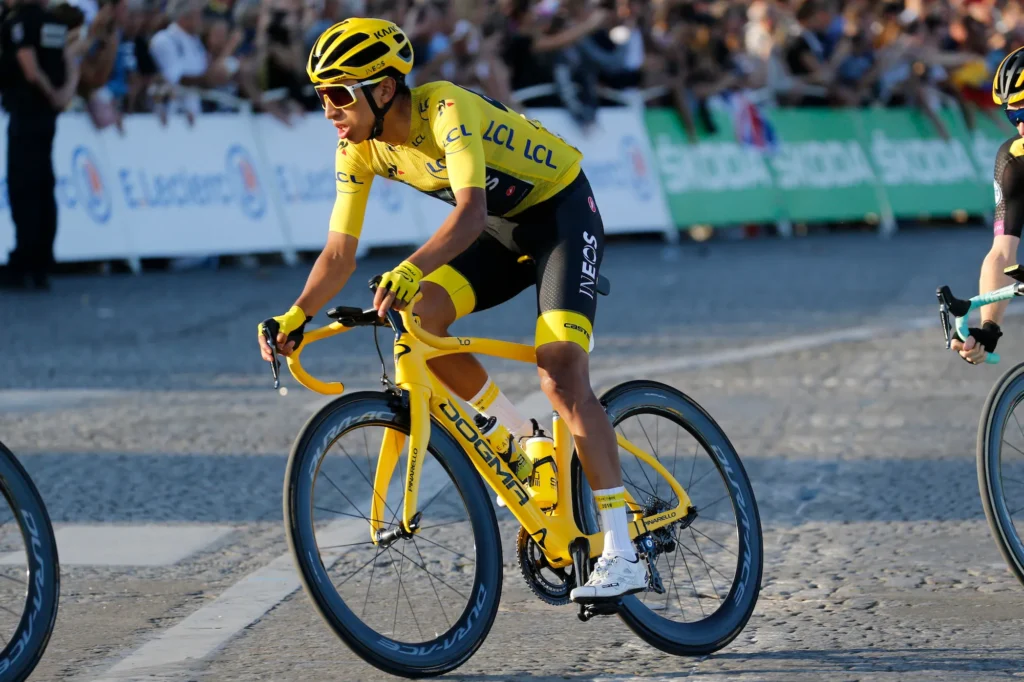
There are bike brands that follow trends—and then there are the ones that quietly steer the whole conversation. Pinarello sits in that second group. The Italian marque from Treviso has spent more than seven decades refining race bikes that feel equal parts sculpture and weapon. From Roubaix cobbles to Tour de France summit finishes, few names carry the same mix of prestige, recognition, and pure emotional pull.
Pinarello doesn’t just build bikes—it builds statements. Every frame, from the flagship Dogma F to the more attainable F-Series and the endurance-leaning X-Series, reflects a house style: obsessive craftsmanship, aero thinking that shows up on real roads (not just in marketing diagrams), and a road feel that’s unmistakably Italian. In this brand review, we’ll dig into Pinarello’s roots, design DNA, technology, lineup, and where it stands among the world’s best cycling brands right now.
The History of Pinarello
Pinarello’s story starts in 1952, when Giovanni “Nani” Pinarello, a passionate racer from Treviso, opened a small shop after years in Italy’s amateur racing scene. At first it was humble work—repairs, builds, frame prep for local riders. But Giovanni’s eye for detail and his insistence on performance quickly became his calling card.
The brand’s breakthrough arrived in the 1970s, when Pinarello frames began showing up under professionals in Europe’s biggest races. By the 1980s, the name carried real weight—ridden by legends like Miguel Induráin and Pedro Delgado, and later under powerhouse teams like Team Telekom, Movistar, and Team Sky (now Ineos Grenadiers).
Then came the modern carbon era, where Pinarello’s dominance became almost routine. Between 2012 and 2023, Pinarello bikes racked up multiple Tour de France titles, cementing the brand’s place as one of cycling’s most successful race-bike names. Through it all, the company stayed rooted in Treviso—still Italian in voice and attitude, even as the technology became global and ultra-modern.
Brand Philosophy: Performance, Passion, Precision
Pinarello’s design ethos is basically a balancing act—tradition with technology, art with aerodynamics, feel with function. Underneath the prestige, the guiding idea is simple: a race bike should deliver emotion as well as efficiency.
1. Racing Is the DNA
Pinarello was born in competition, and that’s still the heartbeat. Whether it’s the Dogma F under world champions or an X-Series under a rider chasing long, fast miles, there’s a shared handling philosophy rooted in pro racing: stability when it’s fast, sharpness when it matters, and confidence when the road gets ugly.
2. Italian Elegance
No one confuses a Pinarello with anything else. The curves, the shaping, the asymmetry—it’s all instantly recognizable. Some brands try to look “clean.” Pinarello looks designed. It’s the kind of bike that draws attention at a café stop without asking for it.
3. Continuous Refinement
Pinarello doesn’t usually do dramatic reinventions just to keep the internet entertained. It evolves. The asymmetrical frame concept, the ONDA fork line, the tube shaping—these are the product of years of small, deliberate tweaks aimed at making the bike faster and calmer, not just “new.”
4. Integration and Feel
Modern Pinarellos are built as systems: frame, fork, cockpit, and drivetrain integration designed to work together. The goal isn’t just reduced drag—it’s a specific ride sensation: fast, planted, and intuitive.
The result is a ride that can feel both brutally efficient and oddly soulful, which is a very Pinarello thing to pull off.
The Lineup Overview
Dogma F — The Flagship
The Dogma F remains the center of gravity for the brand. It’s Pinarello at full volume: light, aero, stiff, stable, and tuned with input from top-level racing.
- Frame Material: Toray T1100 1K Dream Carbon
- Intended Rider: Elite performance, pro-level road racing
- Why it’s iconic: It’s not just fast—it’s balanced. It sprints like a race bike and descends like it’s on rails.
F-Series (F9, F7, F5, F3, F1)
The F-Series is where Pinarello spreads that Dogma DNA to riders who want the feel without the full flagship bill. The geometry stays race-focused, while carbon layups and build tiers scale across price points.
Highlights:
- Toray T900 or T700 carbon depending on model
- Race geometry closely aligned with the Dogma philosophy
- Clean internal routing; more integrated setups on upper-tier builds
- A strong “serious rider” option, especially for committed club riders and amateur racers
If the Dogma is the halo car, the F-Series is the version people actually drive daily—still sharp, still special, just less rarefied.
X-Series (X9, X7, X5)
The X-Series is for riders who want the Pinarello feeling without living in a constant race posture. Geometry is more relaxed, comfort is more deliberate, and clearance for 32mm tires makes it more realistic for imperfect roads.
- Intended Rider: Endurance cyclists and sportive riders
- Vibe: Smooth, stable, refined—still quick, just less intense
Gravel Line: Grevil & Dogma GR
Pinarello’s gravel bikes don’t pretend to be rugged farm tools. They feel like race machines that happen to like dirt.
Key Traits:
- Aero shaping adapted for gravel speeds
- Dual wheel compatibility (700c/650b) depending on setup
- Clearance up to 45mm tires
- Fast, responsive, unapologetically “performance first”
Mountain Line: Dogma XC
The Dogma XC is Pinarello’s statement that it wants credibility beyond asphalt. It’s a carbon XC race bike aimed at the sharp end of off-road racing, and it’s already showing up in elite competition—less “brand experiment,” more “we’re here to play.”
Engineering & Technology
Asymmetric Frame Design
Pinarello’s asymmetry isn’t just visual branding. The idea is to account for the drivetrain-side forces and create a more balanced stiffness profile—so the bike doesn’t feel like it twists or loads unevenly when you’re sprinting or stomping up a climb. Whether you describe it in engineering terms or “it feels direct,” this is one of Pinarello’s defining design moves.
ONDA Fork
The ONDA fork is another trademark: that wave-like blade shape that’s become part of Pinarello’s silhouette. The intent is controlled flex for comfort while keeping steering precise—especially useful when roads are rough and speeds are high.
Carbon Excellence
Pinarello’s relationship with Toray is a big part of the brand’s modern identity. Different carbon grades and layups across models aren’t just price-tier signaling—they’re a way of tuning ride feel: stiffness where you want it, compliance where you need it, and durability where life happens.
Aerodynamics
Pinarello’s aero approach tends to be subtle but meaningful: shaping that reduces drag without turning the bike into a crosswind nightmare. Real riders notice this in how stable the bike feels when the wind shifts—fast bikes are great, but calm fast bikes are the ones people keep.
Integration & Tire Clearance
Full internal routing is now standard in the Pinarello world, and 32mm tire clearance on road models is a big deal for real-world comfort and grip. That’s Pinarello acknowledging modern roads while still building bikes meant to be ridden hard.
Ride Quality & Performance
Acceleration & Power Transfer
Pinarellos feel immediate. There’s a snap when you get on top of the pedals—like the bike is eager to move. The combination of stiffness and that balanced chassis feel makes climbs feel efficient even if the numbers on a scale aren’t always the lightest.
Handling & Balance
This is where Pinarello earns its reputation. Steering is sharp, but not nervous. The front end feels planted, and cornering is predictable in a way that encourages you to carry speed rather than second-guess it.
Comfort & Compliance
The “Pinarellos are stiff” reputation is half-true. They’re stiff where it matters, but modern carbon tuning and the fork design keep the worst road buzz from becoming punishment. The X-Series especially is built to keep you feeling fresh deep into long rides.
Descending Stability
Pinarello’s descending reputation is real. The geometry and front-end confidence are a big part of why so many riders describe these bikes as “locked in” when the road turns steep and fast.
Real-World Feel
On paper, there are bikes that look lighter, or more aero, or “better value.” On the road, Pinarello’s strength is that the whole package feels cohesive. You’re not riding a list of features—you’re riding a very specific interpretation of speed.
Strengths
- Unmatched Racing Heritage: Decades of elite wins and modern dominance
- Timeless Aesthetic: The design language is instantly recognizable
- Balanced Geometry: Stable at speed, precise in corners
- Engineering Consistency: Asymmetry and ONDA aren’t “random”—they’re core principles
- Endurance Options: X-Series gives non-racers a real entry point
- Resale Value: Demand stays strong because the name still means something
Weaknesses
- High Entry Cost: Even “accessible” Pinarellos are still premium-priced
- Weight vs. Competition: Not always the lightest carbon frames on paper
- Complex Serviceability: Integrated cockpits and routing can be labor-intensive
- Limited Dealers: Demo rides and local service can be harder in smaller markets
- Less Versatility: Road models lean heavily toward performance, not utility
Competitor Comparison
Pinarello vs. Colnago
Colnago is heritage and craftsmanship with a romantic, handmade aura. Pinarello is race-driven precision with a more modern “systems engineering” feel. Colnago is the connoisseur’s classic; Pinarello is the champion’s scalpel.
Pinarello vs. Specialized
Specialized wins on reach, R&D scale, and mainstream support. Pinarello wins on exclusivity and that intangible “this feels like something” factor. A Specialized can feel like the smartest choice. A Pinarello can feel like the choice you actually wanted.
Pinarello vs. Trek & Giant
Trek and Giant lean hard into accessibility, distribution, and technical consistency. Pinarello’s edge is identity—design, emotion, and that Italian performance character that people either fall for instantly or don’t care about at all.
Pinarello vs. BMC & Cervélo
BMC and Cervélo can match the aero obsession, but they don’t carry the same historical gravity or visual charisma. Pinarello is one of the few brands that can be both technically serious and openly stylish without it feeling forced.
Ideal Rider Profile
Pinarello fits riders who see cycling as more than transportation or fitness—people who want their bike to feel like an extension of personality.
You might be a Pinarello rider if:
- you care about ride feel as much as raw data
- you want a bike that’s beautiful and brutally efficient
- you like heritage, but you still want modern integration and aero thinking
- you want to look at your bike and feel that little “yeah… this is it” moment
It’s not the most practical choice for everyone. But for the riders who “get it,” a Pinarello stops being just a purchase and starts being a long-term attachment.
The Future of Pinarello
Looking toward 2026 and beyond, Pinarello’s direction feels clear: continue refining aero systems and integration, keep pushing electronic drivetrain compatibility and cockpit solutions, and keep expanding gravel and e-road without watering down the race identity.
The brand’s racing presence keeps it sharp, but the endurance and gravel lines show it understands where real riders are spending their time. Expect more comfort and practicality baked into the performance framework—not a pivot away from Dogma DNA, but a widening of how that DNA gets expressed.
So, Is a Pinarello the Right Bike for You?
Buying a Pinarello isn’t a purely logical decision — and it never has been. On paper, you can find bikes that are lighter, cheaper, or easier to live with day to day. That’s not the point.
What Pinarello does better than almost anyone is feel. The handling is confident without being nervous. The stiffness shows up when you’re on the gas, not when you’re just trying to enjoy the ride. And there’s a sense of balance — between speed, stability, and comfort — that makes the bike feel composed no matter how hard you’re pushing.
It’s also a bike you don’t grow out of. Many riders buy a Pinarello thinking it’s a “dream bike” and end up keeping it far longer than planned, because it never stops feeling special. You don’t just ride it — you connect with it.
That said, Pinarello isn’t trying to win over everyone. If you want the most affordable performance, the easiest ownership experience, or a purely utilitarian tool, there are better options. But if you care about ride quality, design, heritage, and the way a bike makes you want to ride — not just how fast it goes — Pinarello still delivers something rare.
It’s a bike you choose with your head and your gut. And for the riders who value that combination, Pinarello continues to earn its place at the very top.
Related Content:
Why Trust This Review?
BestBikeBrands is built by lifelong cyclists with decades of real-world experience — in the shop, on the trail, and behind the wrench. Our goal is simple: to help riders choose the best bikes and gear with confidence, backed by expert insights and hands-on testing. Learn more about us →